
We look at a lot of horror movies and series here, and often times it’s a making-of feature or what we like to call “What Happened to…” such and such. One of the interesting things about horror movies is that they can follow characters just as deeply as the movie series themselves, and most of the time, it’s the bad guy. We could look at what happened to Michael Myers across all the damn timelines of his movies, or Freddy Krueger as he developed from a Nightmare on Elm Street boogeyman into a one-liner-spewing MTV star. But what interests me the most is what exactly happened to everyone’s favorite hockey-mask-wearing, body-count-collecting mama’s boy, Jason Voorhees.
Jason went from a throwaway MacGuffin to having his name replace the original series title, only to disappear from the big screen for years. Even a new television show based on his franchise doesn’t put him front and center. The question is, do we even need horror icons like this to stick around? How many merchandising avenues can we explore without actually putting him in a movie? And finally, what if his latest hurrah is an officially licensed short film that doubles as an advertisement?
Strap in as we find out what happened to Jason Voorhees.
Why Jason Voorhees Became a Horror Icon
Jason Voorhees has long had a reputation for a high body count and a silent, well, mostly silent approach to what he does. After 2009’s Friday the 13th reboot, which still presented him as an overbearing menace to teens who wanted to get laid and do drugs, he just kind of vanished. 2009! That’s 17 years, and that seems like a crazy amount of time considering his character appeared in nine movies in just a 13-year span. Even after that initial run, he had another three-movie stretch over eight years, which isn’t nothing considering the character and how popular horror can be.
Since then, he’s been relegated to video games, comics, toys, and even alcohol, but nothing on the big screen. And even when a show about the Friday the 13th property arrived, he wasn’t the focal point. At least, not as we know him. But we’re getting ahead of ourselves.
What makes Jason so cool and appealing to audiences in the first place? Well, for a while, he was the most consistent thing we had. He had a four-year head start on his mouth-razor-claw-wielding buddy Freddy Krueger, and his Haddonfield counterpart, Michael Myers, decided to take a seven-year hiatus. Really, Jason was the comfort food we all wanted.

Friday the 13th: Jason’s Journey From MacGuffin to Main Attraction
Friday the 13th (1980): The Boy in the Lake
Let’s look at Jason’s rise to fame. In the first Friday the 13th movie, he’s essentially the MacGuffin of the story. He’s the plot device that explains why Betsy Palmer’s Mrs. Voorhees goes on her killing spree, but we do see him, at least in a dream sequence experienced by final girl Alice. A zombie-child Jason lurches up over the boat to take revenge for Alice killing his mom.
Of note, I recently saw this movie in theaters, and while the experience was great at this smaller theater by me, the movie itself really isn’t anything overly special. Its biggest contributions are Kevin Bacon, Betsy Palmer being the villain, which was rare for the time, and, of course, getting the series started so Jason could eventually take the form he became famous for. Is it important? Absolutely. Would I rather watch over half of the other movies instead of this one? 100%.
The next movie brings Alice back as one of the few returning characters in these movies outside of Jason himself and, of course, Tommy Jarvis. Oh, and Ralph, I guess. Everyone loves Ralph.

Friday the 13th Part 2 (1981): The Baghead Killer
It would still take two movies and input from a couple of individuals to get the Jason we would come to know and love. Friday the 13th Part 2 was a slam dunk after the success of the first movie, and Paramount was eager to get another installment moving. It was also almost not a direct sequel, but rather the kind of anthology approach John Carpenter wanted for the Halloween series. They nearly made Friday the 13th a yearly anthology franchise featuring different stories set on the superstitious day, without carrying over characters. But Phil Scuderi, one of the original film’s three producers, insisted that the sequel feature Jason Voorhees, even though he had only been included in the first movie as a jump scare.
Yes, you can argue that this is the first appearance of zombie Jason, since the boy was reported dead in the first movie, but it’s not THE zombie Jason we would get later on. It’s also not quite the same Jason in general.
Baghead Jason is fun, but he runs and isn’t quite as intimidating as later iterations. They were still figuring HIM out, even if they had the formula down pat.
It was also quite the quick turnaround, with the sequel arriving less than a year after the first entry. Either way, thanks for your contribution, Phil.
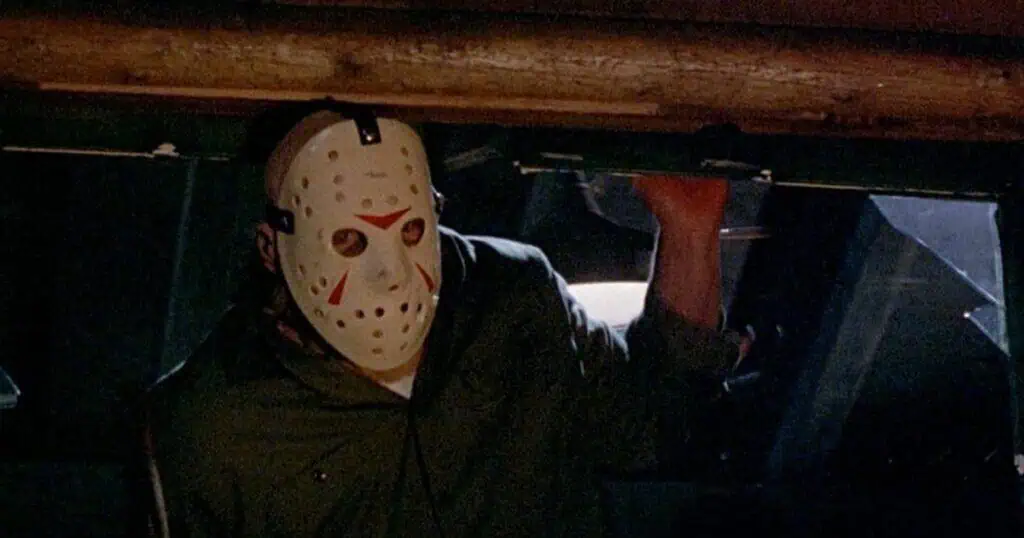
Friday the 13th Part III (1982): The Hockey Mask Changes Everything
Part III, in the ever-popular 3D format of the time, was just as instrumental in Jason’s formation. Whether or not they knew it at the time, this is the movie where Jason became the star.
They were even considering bringing Amy Steel back to make a traumatized Ginny the focus of the story. Instead, the film gave us a new heroine and, more importantly, Jason’s signature look.
Martin Sadoff not only suggested that the film be shot in 3D but, as a massive hockey fan, was the one who handed director Steve Miner a hockey mask as a way to cover Jason’s face. A couple of other people tweaked the look, and the mask has changed over the course of the series, but it remains his signature style.
Decisions by Phil Scuderi and Martin Sadoff, names you definitely don’t associate with the popularity of the series, changed the course of Jason and slashers in general over just two movies and two years.

Friday the 13th: The Final Chapter (1984): The Perfect Jason
Oddly enough, Jason would have just one movie with his hockey mask before he was drastically changed again. 1984’s Friday the 13th: The Final Chapter—HA!—gave us the version of Jason that many fans would consider definitive. He had his hockey mask, moved the way we expected him to without running too quickly, and was silently brutal without humor, an important point to touch on later.
And what did that get him? A machete to the head courtesy of Corey Feldman.
He was dead. Like DEAD, dead. The producers wanted to take the franchise in a whole different direction. Well, kind of. Jason as we know him is the killer in Part V until he isn’t.

Friday the 13th: A New Beginning (1985): The Movie Without Jason
Part V is a sleaze fest and ridiculously entertaining to watch, but it’s also a divisive black sheep for the franchise. The famed body-count killer Jason Voorhees is replaced by a dude named Roy.
The plan was to completely change the course of the series, potentially making Tommy Jarvis the new Jason after Roy temporarily took over the role of killer. The franchise was still making money, and diminishing returns are still returns, but the producers didn’t think they needed Jason anymore.
Well, that didn’t pan out. The making of A New Beginning was a mess, with the director clashing with actors and some of the cast apparently thinking they were making a different movie. The film itself didn’t receive a particularly good reception, and it was called out for NOT having Jason, the real Jason, as its antagonist. Audiences had grown accustomed to seeing him in the previous three entries. I say antagonist, but let’s be real, people: especially nowadays, fans actually root for Jason and cheer him on as he hunts and stalks the grounds around Crystal Lake.
He was the star of the movies, and that was about to become even more obvious.

Jason Lives and the Peak of Jason Voorhees’ Popularity
Friday the 13th Part VI: Jason Lives (1986)
Friday the 13th Part VI: Jason Lives arrived in 1986, and that year really marked the beginning of Jason’s pop-culture peak. The sixth movie in seven years had one mandate: bring Jason back.
Director Tom McLoughlin wasn’t a stranger to horror, having made One Dark Night in 1982. He drew on his love of the old Universal horror films and brought Jason back in a way reminiscent of Boris Karloff’s resurrection in Frankenstein. With a lightning strike, we got the most recognizable and beloved shade of Jason: the supernatural zombie version.
While his body would physically decay over the next few movies, his supernatural strength and relentless nature would become permanent parts of his repertoire.
The movie also helped Jason bleed into other areas of pop culture, particularly music. Alice Cooper recorded “He’s Back (The Man Behind the Mask),” a song that came with a music video featuring footage from the film and Jason stalking teens at a midnight screening. C.J. Graham, who played Jason in the movie, also portrayed him in the video. The video was popular and introduced Jason to an even bigger audience through appearances on the insanely popular MTV.
Elsewhere in 1986, Jason appeared in his first video game, Friday the 13th: The Computer Game, developed by British company Domark for the ZX Spectrum, Commodore 64, and Amstrad CPC. It’s primitive by today’s standards, but it features gore, teens getting killed, and digitized screams. The box art is based on the poster for The Final Chapter, while the game itself apparently draws on the second movie, despite arriving when the sixth film came out. Odd, but our guy was now in video games and could be found on store shelves in all his glory.

The First Friday the 13th TV Show Didn’t Need Jason
While there wouldn’t be a Jason movie in 1987, one of only two years in the decade that went Voorhees-less, a television show called Friday the 13th premiered as a first-run syndicated series on October 3 of that year. Originally called The 13th Hour, it was renamed Friday the 13th and even given similar lettering to intentionally draw in audiences. But Jason never appeared in the series, which also had no plot connection to the movies or their characters.
It was an anthology show about cursed artifacts. It shared some hallmarks of the film series, including gore and sex that pushed television boundaries, and there was an overlap of cast and crew. Frank Mancuso Jr., who produced the Paramount sequels, was among the people behind it.
Still, they somehow had the restraint never to put Jason in an episode. It makes sense, as he doesn’t chat like Freddy Krueger and couldn’t serve as a horror host for his own series like the Springwood Slasher. But it was the first of two missed opportunities set 40 years apart.
Even in a year without his masked killer appearing on the big screen, Jason remained an unmistakable pop-culture icon.

Toys, The New Blood, and Jason Takes Manhattan
In 1988, Jason returned to our screens and entered our homes again through another character first. Screamin’ Toys introduced a build-it-yourself Jason figure. The likeness wasn’t ripped directly from any one film, but it featured his disfigured face, tattered clothes, hockey mask, and trusty machete.
The movie itself, Friday the 13th Part VII: The New Blood, was famously neutered by the MPAA and received awful scores from critics. It has since become a fan favorite, however, and introduced us to Kane Hodder, arguably the most recognizable performer to play Jason.
Still, the movie marked the beginning of the end of his heyday. Most of the character’s fan-favorite moments were cut, and the box office returns weren’t as strong as those of earlier entries.
The filmmakers continued anyway, doubling down on the character’s popularity by putting his name back in the title, as they had with Jason Lives. This time, Jason was taking Manhattan.
That was a gross overstatement, considering how little of the film actually takes place in the Big Apple, but the movie came with some memorable promotional opportunities.
First, Jason got another video game with LJN and Atlus Software’s Friday the 13th for the NES. The killer looked great on the box art and in the game itself. You could even fight the floating head of his mother to get the best ending. It wasn’t based on any particular movie, but hindsight shows it to be a fun, character-appropriate game.
Jason also made a talk show appearance when Kane Hodder appeared in full costume on The Arsenio Hall Show, remaining completely silent. He was big enough to show up in person to promote his own movie. How many ’80s slashers can say that?

Why Jason Voorhees Beat Michael Myers and Freddy Krueger in the 1980s
To understand just how big Jason became, we need to look at how the slasher genre worked during its heyday.
The purpose of these movies was to make a profitable horror film on the cheapish side, with some gore, some sex, and other R-rated tropes. These weren’t movies trying to appeal to PG-13 audiences. Well, partially because the rating didn’t exist until 1984, but also because filmmakers knew which audience they wanted to bring in.
Slashers landed in varying tiers. Many were one-and-done releases that weren’t particularly memorable, like Sweet Sixteen from 1982 or Blood Tracks from 1985. There are dozens of these movies that tried to replicate the formula laid down by better, earlier films. They were cheap imitations hoping to provide enough thrills and titillation to make a profit. These aren’t always bad movies, and most are worth watching for a kill or two or some eye candy. There’s just, quite frankly, so much mediocrity that it’s staggering.
The next level includes movies that didn’t become franchises but are undisputed quality and have earned spots on many horror fans’ must-watch lists. Think The Prowler and My Bloody Valentine, both from 1981. Wow, 1981 was a great year for slashers. Maybe the best, even. These movies are great watches, and while they didn’t necessarily need sequels, filmmakers could have found a way to continue them through recurring characters. In some ways, it’s good they only received one entry, because that makes them special. Even someone like Cropsey from The Burning, also from 1981—geez, there it is again—could have carried a minor franchise.
Then we have movies that DID turn into franchises but aren’t quite as legendary as the heavy hitters. That group includes Silent Night, Deadly Night and Prom Night. Interestingly, Prom Night eventually introduced a slasher icon of its own in Mary Lou, starting with the second movie. She’s an underdiscussed but great villain with some memorable moments.
But if we’re talking about the ’80s, it really comes down to the slasher characters who carried their franchises. Chucky, Leatherface, and Pinhead all became recognizable horror figures, though their series continued in different directions. And we all know the big three we’re talking about: Michael Myers, Freddy Krueger, and Jason Voorhees.

Michael Myers: The Problem With Long Hiatuses
Michael had a couple of things going against him. For one, he didn’t have quite the same singular identity or tragic backstory that helped make Jason so memorable. He also didn’t have Jason’s consistent output, nor was he always the focal point. There was Laurie Strode, Sam Loomis, and later Jamie Lloyd. Even when Jason battled Tommy Jarvis, the fact that three different actors played Tommy across three movies didn’t help matters.
Michael also had a big gap. He apparently died in 1981’s Halloween II, and then the filmmakers tried to change the series, ironically in a way similar to what Friday the 13th had considered doing. They attempted an anthology installment that didn’t need Myers to stand tall. That killed the franchise’s momentum until 1988, so Michael lost quite a lot of steam.

Freddy Krueger: Jason’s Greatest Competition
Freddy is Jason’s only real competition, and even then, he got a later start. His first movie arrived when Jason already had four films under his belt.
Honestly, they’re two sides of the same coin. Freddy talks and starts delivering one-liners after the first couple of movies. While he nearly caught up to Jason’s eight ’80s movies with five of his own, he also changed considerably as a character. It wasn’t something zombie-related like Voorhees, but Freddy’s mythology and tone shifted from dark horror to comedy and black comedy, before eventually returning to darker territory.
He’s also a singular person, sorry, Jackie Earle Haley, with Robert Englund synonymous with the famed dream slasher. Freddy became a pop culture icon in similar ways, through video games, music, and talk show appearances, but I’d argue that his fame came later than Jason’s and perhaps lasted a little longer, in no small part because Englund could play the character for so long.
Jason may have won the ’80s, but the decade had to end, and with it came the decline of the slasher craze.

Why Jason Voorhees Disappeared From the Big Screen
Jason Takes Manhattan and the Rights Problems
Jason Takes Manhattan was the last of a lot of things. It marked the end of the Jason we had known for basically eight movies, and it also arrived as rights issues began to complicate the franchise’s future. New Line secured the Jason character but opted not to use the Friday the 13th name. That’s arguably one of the biggest victories for the character, whose name would become the sole link between the series’ later installments. But the character as we knew him wouldn’t even appear in his recognizable form for very long.
In my opinion, the worst movie in the series also took a whopping four years to come out after Jason Takes Manhattan, the biggest gap we had seen yet. The mishandling of the movie, the character, and a misunderstanding of what a slasher could be in the ’90s would lead to a nearly 10-year gap before Jason X arrived in 2002.
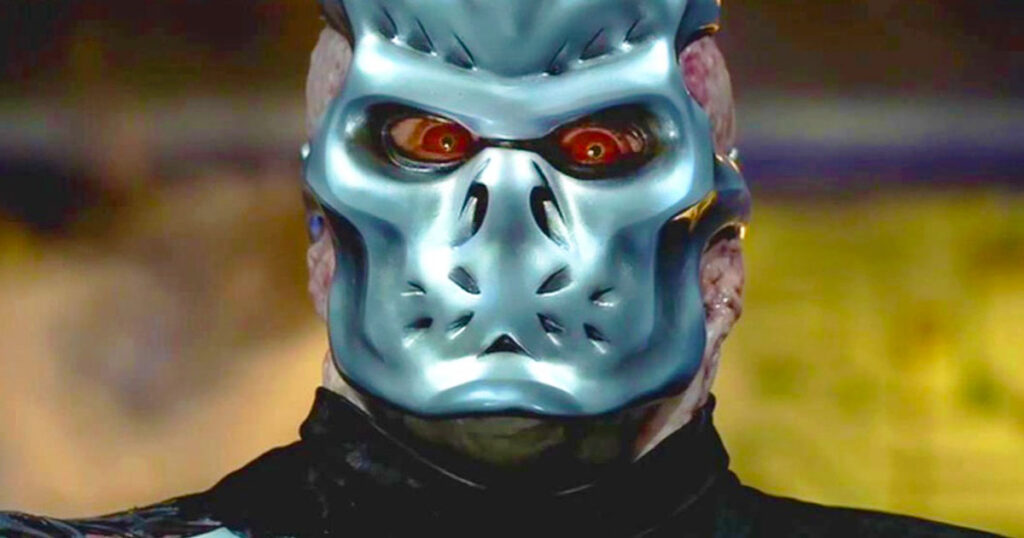
That’s not to say there weren’t attempts to bring him back sooner. Jason remained a fan favorite, appearing in other movies, cartoons, television shows, toys, comics, and novels. New Line tried to merge its two biggest slasher characters, Freddy and Jason, into a battle for horror supremacy, but that wouldn’t happen until the following film.
Jason continued to outlive his series through Jason Goes to Hell: The Final Friday, Jason X, and Freddy vs. Jason. Horror fans still loved him, but the general public didn’t seem to have much use for him.
The 2009 Friday the 13th Reboot
After Freddy vs. Jason, a string of horror remakes did well, including The Texas Chainsaw Massacre, The Hills Have Eyes, and The Amityville Horror. The next logical step for Jason was a remake—or, as it turned out, a reboot.
The 2009 Friday the 13th blended elements of the first three movies before moving into an original story. This Jason was bigger, faster, smarter, and more brutal. The movie had everything fans were looking for, and it also made brand-new fans want to rediscover the other films and bring them back into the limelight.
What did the filmmakers do to capitalize on that? Absolutely nothing, unfortunately.
The series has remained dormant on the big screen, like Jason himself chained to the bottom of Crystal Lake, waiting to come back up.

But the character hasn’t died. He’s lived on through more comics, including crossovers with Freddy and Ash from The Evil Dead series, and video games that finally let you play as him. He appeared in Mortal Kombat and became a central attraction in Friday the 13th: The Game, which allowed players to experience the franchise in a new way. He also appeared in Dead by Daylight, a game that has hosted nearly every horror icon you can imagine.
Then there are the increasingly impressive fan films, which have brought back old characters from the movies, sometimes using the original actors, and put Jason in places we never got to see, from snowy landscapes to rural cities.
Even as the movies dried up, the character remained in the zeitgeist. But a lingering question remains: Do we need him on our screens again? And after Sweet Revenge, do we want that?

Sweet Revenge: Has Jason Voorhees Become a Walking Advertisement?
In 2025, a short film called Sweet Revenge appeared with a new Jason design by Greg Nicotero. It stands as another official take on Friday the 13th, following the original series of films and the 2009 reboot. It’s 13 minutes of someone making a new version of the story, and it’s nothing special. On top of that, it’s co-sponsored by Angry Orchard and amounts to little more than a long commercial that puts Jason on a can of alcoholic seltzer.
Jason had appeared in plenty of non-movie products before, but nothing this official that felt quite so bland and lifeless. This was an officially licensed production, yet it didn’t give us much reason to get excited about his return.
If this is what he’s going to become, do we actually need him anymore? Or can we let the memories we have, along with the other outlets that feature him, continue to capture our imaginations? Basically, have we lost the plot and forgotten what Jason is and should be?
Does Jason Voorhees Need to Return?
That’s a loaded question, because we could very well get another Friday the 13th like the 2009 movie, or we could end up with something more akin to the A Nightmare on Elm Street remake, where the filmmakers didn’t understand the source material or the character well enough to replicate the magic. We’ve also had characters like Art the Clown take over some of the territory Jason once occupied. Art is silent like Jason, but far crueler, and the Terrifier movies fill the need for the kind of slasher entertainment horror fans look for.
A better comparison might be the excellent Hatchet series. Those movies created a backstory for a character with a distinctive look that remained consistent throughout the series. Victor Crowley is also mute, and in a fun bit of horror legacy, he’s played by Kane Hodder, the most recognizable performer to play Jason, who gave the character some of his best moments.
Then there’s the latest high-profile entry into the Friday the 13th universe, which is, once again, a television show that doesn’t feature Jason in the way we know him. Crystal Lake focuses on Pamela Voorhees, including events before and after Jason’s drowning, making her the central figure in a new chapter of the franchise.
For me, Jason doesn’t have to come back. We have so much good material to look back on with this character, and honestly, why not get some new slasher blood involved? Give us something that reinvents the genre like Terrifier, or something that pays enough homage to the classics that it feels like what we’re getting is good enough.
Jason Voorhees will never be truly dead, either as a character or as an idea. And I think he’s fine exactly where he is.
The post What Happened to Jason Voorhees? The Rise, Fall, and Future of the Friday the 13th Icon appeared first on JoBlo.


No comments:
Post a Comment