Showing posts with label movies. Show all posts

Friday, October 2, 2026

Crystal Lake is bringing Camp Crystal Lake to New York Comic Con and Linda Cardellini shared an opening scene sneak peek

Crystal Lake is almost ready to welcome Friday the 13th fans back to Camp Crystal Lake. With Peacock’s long-awaited prequel series premiering later this month, the streamer has announced a special Camp Crystal Lake experience for New York Comic Con, while star Linda Cardellini has shared a sneak peek at the show’s opening scene.

The Peacock and A24 series will take over Booth 1359 at the Javits Center during New York Comic Con, giving attendees the chance to step into a 1970s version of Camp Crystal Lake. The free experience will run throughout the convention from October 8 through October 11.

And if you can’t make it to New York, Cardellini has provided another way to get a taste of what’s coming. The actress, who plays Pamela Voorhees in Crystal Lake, shared a sneak peek at the opening scene on Instagram ahead of the show’s October 15 premiere.

Crystal Lake is bringing Camp Crystal Lake to NYCC

Peacock’s New York Comic Con experience will transport fans back to the 1970s and put them in the middle of Camp Crystal Lake. The free interactive experience is designed around the fictional summer camp, complete with in-world thrills, photo opportunities, and Crystal Lake giveaways. Attendees will apparently even have the chance to find out whether they can survive their camp counselor orientation.

The experience will be available at Booth 1359 at the Javits Center during the following hours:

  • Thursday, October 8: 10 a.m. to 7 p.m.
  • Friday, October 9: 10 a.m. to 7 p.m.
  • Saturday, October 10: 10 a.m. to 7 p.m.
  • Sunday, October 11: 10 a.m. to 5 p.m.

Linda Cardellini shares a sneak peek at Crystal Lake

Linda Cardellini stars as Pamela Voorhees, the mother of Jason Voorhees and the central character in this new prequel. The series takes place years before the events of the original Friday the 13th, with Pamela dealing with the aftermath of Jason’s drowning at Camp Crystal Lake.

Peacock’s official trailer has already made it clear that Crystal Lake isn’t simply going to retell the original movie. The series is expanding the mythology around Pamela, Jason, and the town of Crystal Lake while setting the story in the early 1970s. Peacock describes it as an expanded prequel to the Friday the 13th franchise.

And we now know from creator Brad Caleb Kane that the series will also address some of the biggest questions surrounding Jason’s origins, although he has promised that the explanations are grounded in reality.

If you want to know what the show is actually like, Chris Bumbray has already seen the first two episodes. In his Crystal Lake review, he praised Cardellini’s performance as Pamela.

Callum Vinson plays young Jason. The series also features William Catlett, Devin Kessler, Cameron Scoggins, and Gwendolyn Sundstrom.

Brad Caleb Kane, who previously worked on It: Welcome to Derry, serves as creator, writer, and showrunner. The eight-episode first season is directed by Michael Lennox, Celine Held and Logan George, and Quyen Tran.

The series is also leaning into its connection to the original movies, with original composer Harry Manfredini contributing new music for the title sequence and the production returning to Blairstown, New Jersey, a location used for the original Friday the 13th.

When does Crystal Lake premiere?

All eight episodes of Crystal Lake season 1 will premiere on Peacock on October 15, 2026. That means Friday the 13th fans are now less than two weeks away from finally seeing what Brad Caleb Kane and A24 have done with the Voorhees family.

Between the new Camp Crystal Lake experience at New York Comic Con, Cardellini’s opening scene sneak peek, and the first reviews coming out of TIFF, we’re getting a pretty good idea of what to expect. Are you looking forward to Crystal Lake? Let us know in the comments.

The post Crystal Lake is bringing Camp Crystal Lake to New York Comic Con and Linda Cardellini shared an opening scene sneak peek appeared first on JoBlo.


Sam Raimi production Every House Is Haunted finds new home at 20th Century Studios

The long-developing horror movie Every House Is Haunted has finally found a new home. According to Deadline, 20th Century Studios has acquired the Sam Raimi-produced project from Netflix, which had previously been developing the movie.

The movie is based on Ian Rogers’ short story The House on Ashley Avenue and already has Don’t Move directors Adam Schindler and Brian Netto attached to direct. The duo will now do their own pass on the existing screenplay by Jason Pagan and Andrew Deutschman.

Schindler and Netto’s involvement was first reported earlier this year, when they replaced The Nun and The Hallow director Corin Hardy. The latest development is that the project has moved to 20th Century Studios.

20th Century Studios has acquired Every House Is Haunted

Netflix acquired Pagan and Deutschman’s Every House Is Haunted script in 2021, but the project never made it into production there. Now Netflix has sold the movie to 20th Century Studios, giving the horror project another chance to finally make it to the screen.

Raimi and Zainab Azizi are producing Every House Is Haunted for Raimi Productions, alongside Roy Lee and Andrew Childs for Vertigo Entertainment. Ian Rogers and Starlight Media, which helped kickstart development by optioning the source material, are executive producing.

Schindler and Netto previously worked with Raimi on 50 States of Fright before directing Don’t Move, the 2024 Netflix thriller starring Kelsey Asbille and Finn Wittrock. That movie reached No. 1 on Netflix’s global film chart during its first two weeks on the service.

The duo is also in post-production on Nightwatching, a survival thriller starring Mila Kunis and Corey Hawkins and produced by Ridley Scott.

What is Every House Is Haunted about?

Every House Is Haunted follows an insurance investigator who tries to debunk claims that a couple’s deaths were caused by a haunted house. His skepticism begins to fade when he encounters a psychic and witnesses mysterious occurrences that are much harder to explain away.

There is currently no release date for Every House Is Haunted, and no cast has been announced.

I’ve been waiting for this one for a while, so I’m glad to see it hasn’t disappeared into the haunted house of development hell. What do you think of Every House Is Haunted moving to 20th Century Studios? Let us know in the comments.

The post Sam Raimi production Every House Is Haunted finds new home at 20th Century Studios appeared first on JoBlo.

Scream Score app lets horror fans measure how scared they really get

How scary was that haunted house? Was that new horror movie actually terrifying, or were you just pretending to be scared because your friends were watching? There’s now an app for that. Scream Score, a free app created by zoologist and immersive experience designer Heather Doggett, uses a smartphone and compatible smartwatch or wearable to track your body’s biometric response during scary experiences and turn it into a personalized fear score. The newest version is now available on iOS and Android, just in time for Halloween.

So instead of arguing about which friend screamed the loudest, you can actually compare your scores and find out who got the most freaked out.

How does Scream Score work?

Scream Score pairs your phone with a compatible wearable device and tracks biometric responses while you’re experiencing something scary. The app can be used at haunted attractions and while watching horror movies, allowing users to see how their bodies reacted throughout the experience. The app also has a competitive element. Friends can compare their scores, create challenges, and see who handled the scares the best or, more importantly, who turned out to be the easiest person in the group to terrify.

Scream Score has been designed as entertainment rather than a medical device or diagnostic tool.

Why was Scream Score invented?

The idea for Scream Score came from a conversation Doggett had with her then-15-year-old, who wanted to visit an especially intense haunted attraction. That led to a difficult question: How scary is too scary? Doggett decided to see whether the body’s response to fear could actually be measured and turned into something people could have fun with.

“I wanted to give people a way to settle the argument,” Doggett said. “Not ‘Was that scary?’ but ‘How scared did you actually get?’ and ‘How scared are my friends?’”

Scream Score launched in 2024 with a focus on the haunted attraction industry. It has since been tested at haunted attractions around the country and used with audiences watching 28 films at the Nightmare in the Ozarks Film Festival. The technology has also been demonstrated at events including MidSummer Scream and TransWorld’s Halloween & Attractions Show.

Now you can use Scream Score with horror movies

The latest version expands Scream Score beyond haunted attractions and makes it possible to use the app with horror movies as well. That opens up an entertaining possibility for horror fans. You could watch the same movie with a group of friends, let Scream Score track everyone’s reactions, and then find out who was actually the most scared.

Of course, there’s a potential problem with that plan. If you spend the entire movie watching your smartwatch instead of the screen, you might miss the part that was supposed to scare you. Still, being able to compare your reaction to the same movie with someone else’s could make for a fun experiment. And if you think you’re impossible to scare, Halloween is a pretty good time to put that theory to the test.

What about your heart rate data?

Because Scream Score uses biometric information, privacy is naturally part of the conversation. According to the company, scores are anonymous, and Scream Score does not sell users’ heart rate data. Participating haunted attractions receive anonymous, aggregated information rather than identifying information about individual guests.

The app’s current store listings also provide privacy information for the respective platforms. Google Play currently states that the developer does not share data with third parties, while Apple’s listing says the developer reports that the app does not collect data.

Where can you try Scream Score?

Scream Score is currently available as a free app for iOS and Android, with compatibility depending on the phone and wearable being used. Apple devices require iOS 17 or later and a compatible Apple Watch, while Android users can pair the app with compatible Wear OS smartwatches and wearables.

The company is also offering demonstrations throughout the Halloween season, including live and on-camera “measure YOUR fear” demonstrations, appearances at haunted attractions and horror events, and podcast and livestream appearances.

So the next time somebody insists that that haunted house wasn’t scary, or that that horror movie barely made them flinch, there’s a new way to settle the argument. Just strap on your smartwatch and let the fear score decide.

Will you be using the Scream Score app? Let us know by leaving a comment below.

The post Scream Score app lets horror fans measure how scared they really get appeared first on JoBlo.


Thursday, October 1, 2026

CREATORVC wants fans to help shape Terminator Expanded documentary

What do you get when the people behind Aliens Expanded and The Thing Expanded decide to tackle James Cameron’s The Terminator and Terminator 2: Judgement Day? Apparently, the answer is Terminator Expanded, a new documentary that aims to take a deep dive into Cameron’s first two Terminator movies, and CREATORVC wants fans to help shape it.

CREATORVC has officially entered development on Terminator Expanded, with Ian Nathan, the writer and director of Aliens Expanded and The Thing Expanded, returning to lead the project. Before production gets underway, however, the documentary team is asking Terminator fans to read the proposed synopsis and provide feedback.

You can check out the Terminator Expanded proposal and submit your feedback through the project’s official website.

What will Terminator Expanded cover?

The documentary will focus specifically on The Terminator and Terminator 2: Judgement Day, exploring how Cameron and his collaborators brought the two movies to life and examining their lasting impact.

The project plans to feature brand-new interviews with cast and crew members who were involved in the making of the movies. But CREATORVC isn’t stopping there. Terminator Expanded will also seek out Hollywood filmmakers and experts in artificial intelligence and computer technology to discuss the ways Cameron’s movies anticipated technological developments that have become increasingly relevant in the real world.

That’s an interesting direction for a Terminator documentary in 2026. The idea of artificial intelligence becoming an existential threat was science fiction when Cameron made The Terminator in 1984. Today, conversations about AI are everywhere, making the franchise’s relationship with technology and its warnings about the future worth another look.

Producer Josh Weiss pointed to the growing presence of AI as one of the reasons the timing feels right for Terminator Expanded.

“The time has never been riper for a trip down the Skynet rabbit hole,” Weiss said in the announcement.

CREATORVC wants Terminator fans involved

One of the more interesting things about Terminator Expanded is that CREATORVC isn’t simply announcing the documentary and moving on to production. The company is asking the Terminator fan community what it should cover. That’s become part of the CREATORVC approach. The company describes its documentaries as community-powered projects, with fans able to contribute feedback on concepts and early cuts during production.

Executive producer Robin Block says the goal with Terminator Expanded is to explore Cameron’s movies in unprecedented detail while looking at their impact on pop culture from a new perspective.

“We’re doing it hand in hand with the fandom, because no one knows this franchise better than they do,” Block said. “Our goal is simple: to make the greatest Terminator documentary ever made.”

Ian Nathan, meanwhile, describes Terminator Expanded as his “boldest, biggest, most challenging documentary yet.”

The Terminator and T2 get the Expanded treatment

There’s no shortage of documentaries about The Terminator and Terminator 2: Judgement Day, but CREATORVC’s projects tend to take the “leave no stone unturned” approach to their subjects.

The Terminator introduced Arnold Schwarzenegger’s seemingly unstoppable T-800 in 1984, with Michael Biehn’s Kyle Reese traveling back through time to protect Sarah Connor, played by Linda Hamilton. Cameron followed it seven years later with Terminator 2, turning Schwarzenegger’s machine into an unlikely protector while introducing Robert Patrick’s liquid-metal T-1000. Terminator Expanded will have the opportunity to examine not only how the films were made, but why they have continued to resonate more than three decades later.

And given the subject matter, it seems inevitable that the documentary will have plenty to say about Cameron’s vision of a future where artificial intelligence develops beyond humanity’s control.

No release date has been announced for Terminator Expanded yet, but CREATORVC has invited fans to become part of the process. So if you’ve ever wanted to tell a Terminator documentary exactly what it should cover, this is your chance.

The post CREATORVC wants fans to help shape Terminator Expanded documentary appeared first on JoBlo.


Hellboy: How Guillermo del Toro Brought the Ultimate Monster Superhero to Life

Kier

Hellboy is an anomaly. He was born in Hell, raised to serve the greater good on Earth, and in some ways is more human than… humans.

But what you may not know is just how meaningful the creation and continued publication of this big red spawn of Satan has been to comic books and comic book cinema.

From the pages of Dark Horse to the big screen, and many failed franchise attempts in between, Hellboy remains one of the greatest characters in comic book history. The character’s first cinematic outing is still one of the most enjoyable and beloved superhero movies out there, and the fight to get it made (and made the way it was) was the stuff of legend. And unlike the characters of Marvel and DC, the successes (and failures) of this character rest on the shoulders of just one man. Mike Mignola.

Today we’re exploring the complete story of Hellboy, from Mike Mignola’s earliest sketches, to the comic book that changed independent publishing, to the failed movie attempts that nearly killed the character’s chances of reaching Hollywood, and finally to the Guillermo del Toro films that introduced Hellboy to millions of viewers around the world. And spoiler alert, it was one HELL of a journey. Let’s get into it.

The Creation of Hellboy

Years before the first appearance of Hellboy, his eventual creator, Mike Mignola, was already breaking into comics with a reputation for being talented beyond his years. In 1982, Mignola was working at Marvel Comics and making his living by drawing Hulk and even doing some early work on Rocket Raccoon. He was respected for being unique and ignoring what was popular in comics at the time. Instead of rendering characters with subtle thin lines and excessive detail, he made oblong shapes and shrouded them in black shadows, which created a cinematic and rich visual style. Where most artists focused on anatomy and muscle definition for their heroes, Mignola was more interested in what was hiding in the shadows. And in the ’80s, this became his trademark.

The idea for Hellboy reportedly emerged in the early 1990s when Mignola sketched a demon character for a convention promotional image. The drawing featured a large red demon carrying a belt full of skulls. The character had a simple label underneath…

“Hell Boy.”

After drawing it up, Mignola would find himself constantly thinking about the sketch and mentally making notes on who the character was. Mignola is famously obsessed with horror, specifically Victorian-era folklore and monster stories. He would spend hours at a time thinking about a comic book world where all the gothic creepy-crawlers and mysterious ghouls existed in the same place and time.

Instead of creating another superhero, Mignola envisioned the hero of his world as a paranormal investigator who traveled the world battling monsters, ghosts, witches, vampires, and ancient gods. The twist was that the hero himself was a demon. Being that Mignola was already in the industry, it wouldn’t take long for this concept to find its way into print. In 1993, Dime Press published a book that featured a promotional image of Hellboy tucked away inside the back pages. No information about the character was given, but readers would notice the character. Later that same year, San Diego Comic-Con Comics issue #2 was released at the event. In that issue was a 4-page mini-story that introduced readers to the character with a proper panel-to-panel story.

Seed of Destruction

And by 1994, Hellboy would go from an underground indie character in other comics to being the star of the show in his very own dedicated series when Dark Horse Comics came to Mignola with an offer. They wanted to publish a series called Hellboy: Seed of Destruction and would give Mignola full creative control. He’d retain his rights to the character and lore, and he’d be able to get paid to draw monsters all day while writing the stories his way… which, by the way, included having scripting assistance from the legendary John Byrne. This was a dream come true for comic artists in those days. Other than Image Comics, Dark Horse was the only other credible independent publisher in those days. Mignola signed the deal and readers loved the comics.

Hellboy: Seed of Destruction was a smash hit. In the span of just 2 years, Mignola went from being a freelance artist at the Big 2 publishers to being one of the most respected breakout creators in the industry. All he ever wanted to do was draw monsters and make a living with his imagination, and he was overwhelmed by the success. And then… he did something risky.

Instead of immediately resuming with a new series of Hellboy books, Mignola did a bunch of spinoff and miscellaneous one-shots to flesh out the world Hellboy lives in, rather than strictly focusing on the character himself. But that didn’t matter. Readers were eating it up as Mignola and Byrne dominated the indie comics game. Hellboy’s comic book popularity would continue to grow, attracting readers more and more as the comics came out. And when something is making waves in one industry, it doesn’t take long for other industries to start capitalizing on it.

Hollywood Comes Calling

Hollywood got word of this indie comic phenomenon, and talks of adapting it to film began as early as the late ’90s. Producers began gauging studio interest, letters and meeting requests began showing up at Mignola’s office, and all the while the fans were clamoring for more Hellboy. But there was a problem…

In the ’90s, comic book movies weren’t seen as gigantic blockbuster events that raked in stupid amounts of money. They were risky, niche, and usually pretty bad, with the only comic book movies at the time being things like Superman in the ’70s and ’80s, Howard the Duck, Dolph Lundgren’s Punisher, and Tim Burton’s Batman movies. Simply put, this was unknown territory in terms of predicting its success. Hellboy was popular, but he wasn’t Batman. He wasn’t Superman or Spider-Man or the X-Men; he was the strange demonic Victorian hero who investigates monsters. And for some reason… studios found that “too hard to market.”

This makes sense, as looking at the source material leaves a lot of questions on the table when adapting it to film. The character looked unusual, the mythology was dense, the tone blended horror, fantasy, comedy, and action, and the makeup and VFX alone would likely cost a fortune. This was NOT an easy sell. And while this is all going on, one die-hard Hellboy fan was making his own waves in the movie industry… mister Guillermo del Toro.

Guillermo del Toro Enters the Picture

Long before directing the film, Guillermo del Toro fell in love with Mignola’s comics. And this wasn’t surprising at all. I mean, del Toro’s creative interests overlapped perfectly with Mignola’s. Both creators were obsessed with monsters, they both loved gothic folklore, they both embraced shadowy, haunting imagery, and most importantly, both men viewed monsters as tragic, sympathetic figures rather than simple villains. When del Toro read Hellboy, he immediately recognized something special. He began pursuing the rights and advocating for a film adaptation. Of course… the challenge was convincing studios that audiences would actually watch it.

So, del Toro gets in touch with Mignola and starts expressing his immense interest in the property. His good friend Ron Perlman was also interested and seemed to relate to Hellboy in a way which made him feel protective of the character. And obviously, looking at Ron Perlman, you can clearly see that he was getting involved because he was born to play the character. Del Toro would pitch his ideas to Mignola and just about every studio in town between movies for years, while other indie characters like Todd McFarlane’s Spawn would see massive success with its HBO animated series and then flop hard with the theatrical film. In some ways, the failure of Spawn in live action only lowered del Toro’s chances of convincing a studio to greenlight his Hellboy movie. But then the new millennium came.

Bryan Singer’s X-Men, Sam Raimi’s Spider-Man, del Toro’s Blade II, and the soon-to-be Nolan Batman trilogy were proving to be financially viable movies in Hollywood. The age of black leather and dark heroism was upon us, and that gave Hellboy some traction. At least enough to attract Lionsgate, who greenlit Hellboy in 2005 for a theatrical release in 2007. But there was another problem… as is the case with so many adaptations in Hollywood, the studio had their own ideas about how to adapt the comic. They wanted a tried-and-true leading man for the titular character. Someone with star power who could get this thing off the ground and bring in audiences. The problem was that del Toro had spent so much time developing ideas with Ron Perlman that he wrote the script with his specific sensibilities in mind, even going as far as writing in his contract that he wouldn’t make the movie unless Perlman was cast as Hellboy. This wasn’t ideal for studios, and it caused a lot of back-and-forth negotiations before del Toro was actually ready to walk away. Only then did Lionsgate come to their senses and offer Perlman the role.

Next, Lionsgate wanted something commercially appealing like Spider-Man. Again, this makes sense because those movies were making huge money at the box office. But del Toro wasn’t interested in dumbing down the lore or watering down the character. He wanted to make HIS Hellboy movie, not A Hellboy movie. Another thing Mignola respected about the filmmaker.

Del Toro got his way, though, and he delivered what many fans (including myself) consider to be the definitive film version of the character.

Hellboy Hits the Big Screen

In the film, which borrows heavily from Seed of Destruction, we open in 1944 when the villain, Grigori Rasputin, and his group of Nazi soldiers build an interdimensional portal to Hell in hopes of releasing an army of demons to recruit them to the war. Thanks to a scientist called “Broom” and his team of patriotic mercenaries, they stop the Nazis before the ritual is complete. With their interference, one soul is able to escape. A tiny red creature with a giant stone fist, a tail, and a set of horns. While the creature is clearly a demon, its behavior elicits sympathy from Broom and his squad, and they adopt the baby demon with intentions to raise him as a member of their task force, but also as a son to Broom. He lovingly calls this adorable little hellion Hellboy.

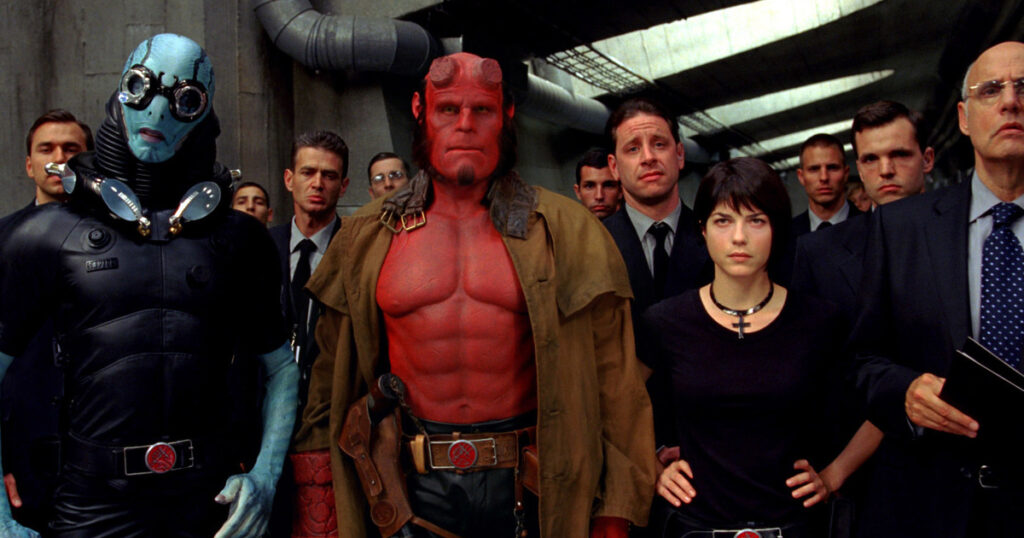
Years later, the task force has evolved into a government organization called BPRD (Bureau for Paranormal Research and Defense), and Hellboy is their most trusted (and reckless) agent. Joining him are his new human handler, Officer John (that schmuck—and played by Rupert Evans), Abe Sapien, the human fishboy (Doug Jones), and the apple of Hellboy’s eye, Liz Sherman (Selma Blair).

Together the crew must battle demons, monsters, and all forms of evil in their ultimate goal to stop Rasputin once and for all. And this movie kicks so much butt. It didn’t feel like your run-of-the-mill superhero movie. Instead of diluting it for mass consumption, del Toro fully leaned into Mignola’s visual style and created a living comic book. But not JUST a living comic book, a living MIKE MIGNOLA comic book.

Bringing Mignola’s World to Life

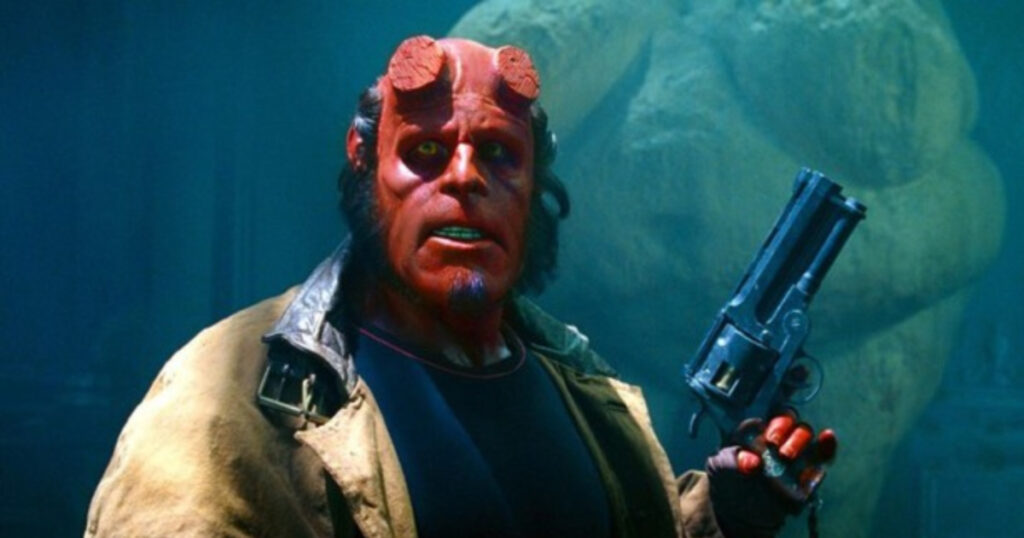
Many of Mignola’s visual ideas were translated directly to the screen. Del Toro wasn’t interested in making Hellboy look realistic. He wanted the movie to feel like a dark fairy tale. Something that the director has made his trademark in the years since. And the practical makeup effects became one of the film’s greatest strengths. If this movie had been made by a mega studio like Disney or WB, this character would be CGI and would probably just look like the red Hulk with stumps for horns, but not here. Ron Perlman disappeared beneath hours of prosthetic work, yet his performance remained warm, funny, and deeply human. This character wasn’t beyond taking a beating, cracking a joke, or shamelessly failing to keep a low profile while stalking Liz on her date with John. His personality was developed with care. Audiences connected with the character because Perlman captured the central contradiction at Hellboy’s core. He looked like a monster, but he behaved like a regular blue-collar guy. This demon was (dare I say) charming.

Much of this distinctive look comes from del Toro’s lifelong fascination with monsters. Unlike many superhero films of the era, where monsters were typically portrayed as villains to be defeated, Hellboy treats its creatures as characters with personality and emotion. Practical makeup, elaborate prosthetics, animatronics, and detailed costumes give the film’s creatures a tangible physical presence that computer-generated imagery simply couldn’t replicate at the time. Abe Sapien is a perfect example. Nearly every detail of the character, from the translucent fins to the expressive eyes, was achieved through practical craftsmanship, making him feel like a real being sharing the screen with the actors rather than a digital creation.

The Production Design

The film’s production design is equally important. The headquarters of the Bureau for Paranormal Research and Defense isn’t a futuristic high-tech base like the X-Mansion or the Batcave. Instead, it’s an aging underground labyrinth filled with pipes, rusted machinery, ancient stonework, and dim industrial lighting. It feels less like a superhero headquarters and more like an abandoned castle hidden beneath modern civilization. This combination of gothic architecture and industrial machinery creates a visual identity that perfectly reflects Hellboy himself, a supernatural creature living in the modern world.

Color also plays a major role in distinguishing the film. Many superhero movies of the early 2000s either leaned into bright comic-book colors or adopted the desaturated blue-and-gray palettes that would become popular throughout the decade. Hellboy instead embraces rich earth tones, warm ambers, deep reds, and muted greens. Firelight, candlelight, and golden practical lighting dominate many scenes, giving the movie a warm, storybook atmosphere. Hellboy’s bright red skin becomes an intentional focal point against these darker environments, ensuring the character always commands attention without relying on exaggerated digital enhancement.

The film’s costume also does the movie a lot of favors. Hellboy doesn’t wear a sleek superhero costume or armored suit made of CG. His outfit is remarkably ordinary, actually, with a worn leather trench coat, cargo pants, combat boots, and his oversized stone Right Hand of Doom, which looks so good in this movie. The clothing looks used rather than pristine, reinforcing the idea that Hellboy is a working-class paranormal investigator rather than a glamorous superhero. Every scratch, stain, and wrinkle contributes to the lived-in realism that defines the film’s visual style.

Action and Atmosphere

Even the action sequences prioritize atmosphere over spectacle. Rather than relying on rapid editing and excessive CGI destruction, del Toro stages many confrontations inside elaborate practical environments such as nasty abandoned subway tunnels, crumbling mausoleums, and shadow-filled cathedrals. These locations become characters in their own right, enhancing the sense of mystery and history surrounding the story. The monsters don’t just randomly appear in generic city streets; they emerge from places steeped in myth and forgotten history.

Why Hellboy Works

But what this singular film really accomplished was understanding the source material. Many comic characters become trapped by continuity. Their stories grow increasingly complicated. Hellboy avoided that problem. At its core, the premise remains incredibly simple—a demon chooses to be a good person. Everything else builds from that idea. The stories can be funny, they can be tragic, they can even be horrifying.

But the emotional center never changes. Hellboy constantly faces expectations about who he should become. His greatest act of heroism is refusing to accept those expectations. That’s what made readers connect with the comics, and that’s what made audiences connect with the film.

A man obsessed with drawing monsters got a film adaptation from a man obsessed with filming monsters, and they delivered us a VERY GOOD movie about monsters. But also, a very good movie about choosing your own path and deciding your own identity.

The Legacy of Hellboy

The del Toro films became cult classics and introduced millions of people to a character who might otherwise have remained a comic book secret. Even decades later, Hellboy continues to stand apart from other comic heroes. He’s not the strongest. He’s not the smartest. He’s not the most famous. But few characters feel as personal to their creator. Most comic worlds don’t feel as rich and distinctive, and few heroes have spent so much time proving that destiny doesn’t define who you are. For a demon summoned to bring about the end of the world, that’s a pretty remarkable legacy.

The movie received a sequel titled Hellboy: The Golden Army, which some say is better than the original and some say is not as good. If you’d like to hear me talk about that one, or the very disappointing David Harbour reboot, or the low, LOW-budget Hellboy: The Crooked Man installment, let me know in the comments because I’ve got plenty to say.

The post Hellboy: How Guillermo del Toro Brought the Ultimate Monster Superhero to Life appeared first on JoBlo.

Wednesday, September 30, 2026

Wednesday Season 3 Wraps: Jenna Ortega Clacks Out Final Words as Production Buries the Latest Chapter

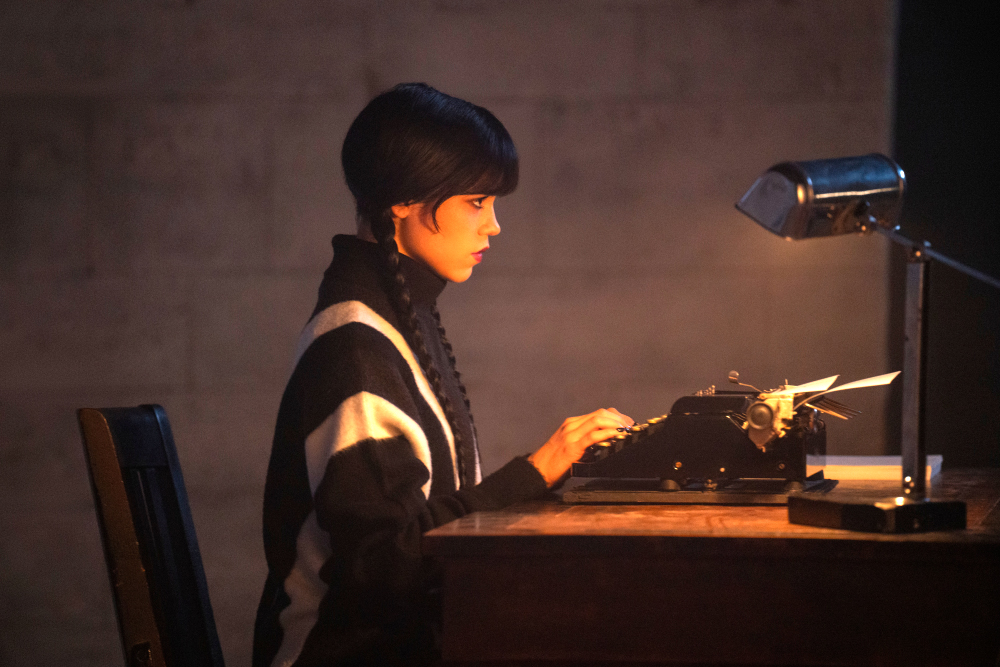
Netflix is officially putting the final nail in the coffin of production for Wednesday Season 3, celebrating the wrap with a striking new photo of Jenna Ortega clacking away on a vintage 1934 Juwel Model 3 portable mechanical typewriter.

The hit show’s sophomore run saw Netflix release the season in two distinct batches. The strategy paid off massively, with the first four episodes racking up a staggering 50 million views in their initial five days alone. That explosive start tied the launch of Season 1, which firmly retains its crown as Netflix’s most-watched English-language series of all time. While the Tim Burton-directed phenomenon focuses heavily on Wednesday Addams’ macabre individual exploits, it also seamlessly integrates the rest of her famously peculiar family directly into the overarching mystery.

Wednesday, Season 3, Jenna Ortega

New Blood and Family Secrets: Expanding the Cast

Season 3 promises to expand that eccentric family tree even further. After subtly teasing her arrival in the sophomore chapter, the new season officially welcomes Eva Green as Ophelia Frump, Morticia’s unhinged sister and Wednesday’s newly arrived aunt. Beyond setting up a buzzworthy reunion between Winona Ryder, her Beetlejuice Beetlejuice co-star Ortega, and visionary director Burton, the third installment throws open its doors to an impressive array of series newcomers. Fans can expect to see Lena Headey, James Lance, Oscar Morgan, Chris Sarandon, Noah Taylor, and Kennedy Moyer stepping into Nevermore’s shadows.

Hunting Alpha Werewolves: Where Season 3 Takes Off

Guard-rail plot details for Season 3 remain notoriously scarce, but the Season 2 cliffhangers leave plenty of room for speculation. The previous finale saw Wednesday reluctantly teaming up with her chaotic Uncle Fester (Fred Armisen) on an urgent rescue mission to track down Enid (Emma Myers), who completely gave in to her inner beast, transformed into a full alpha werewolf, and fled deep into the wild northern wilderness toward the Canadian border. With camera operations wrapped and post-production underway, the countdown begins for Wednesday’s next morbid adventure.

The post Wednesday Season 3 Wraps: Jenna Ortega Clacks Out Final Words as Production Buries the Latest Chapter appeared first on JoBlo.

Jessica Rothe, Kiana Madiera, and Mike P Nelson were all about avoiding campiness for their killer snake movie, Beware Boiúna

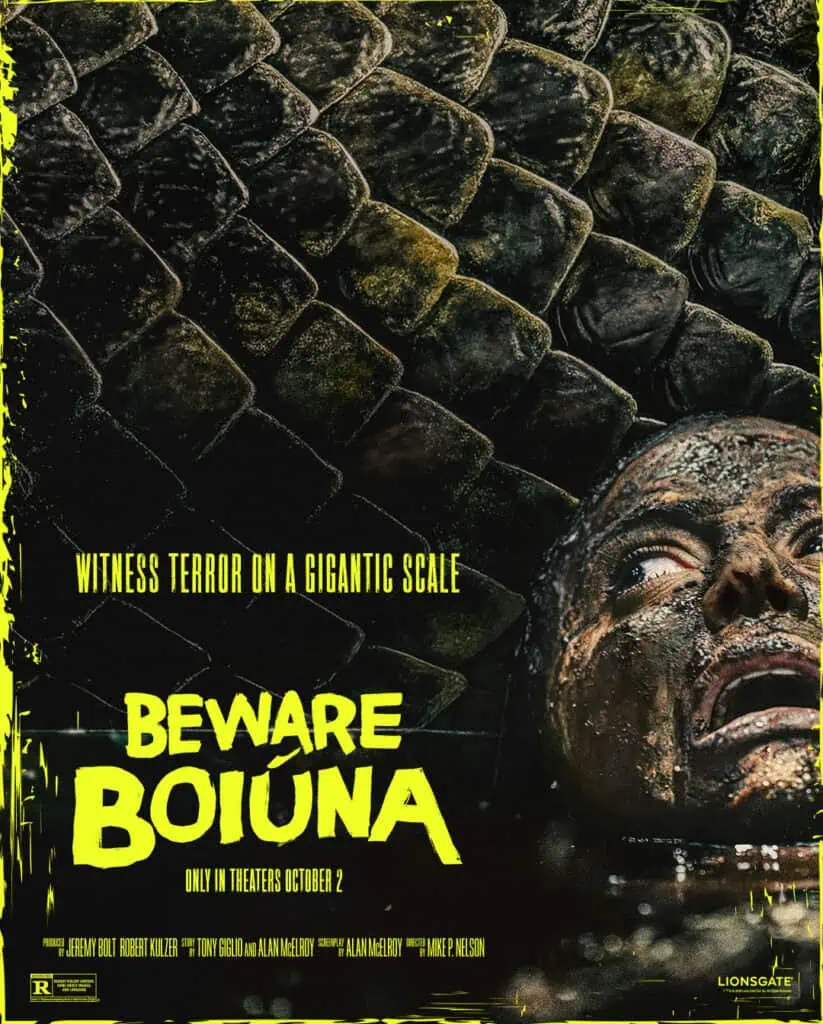
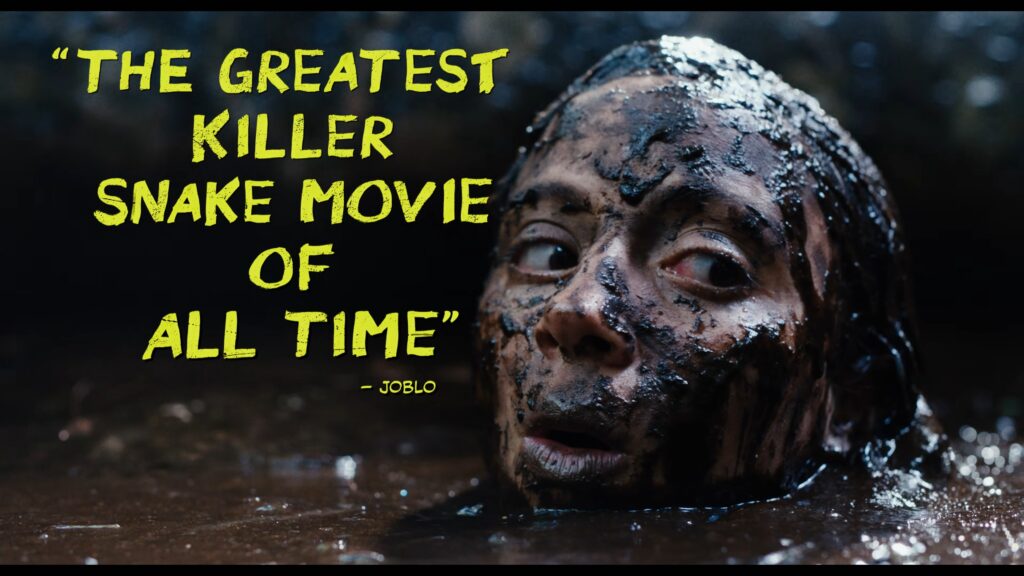
So it turns out that the summer of the shark should have actually been the summer of the snake all along. Because there’s one creature feature that stands above the rest, providing plenty of thrills, scares, and chaos, Beware Boiúna. After last year’s Anaconda, it really felt like any kind of serious take would be relegated to streaming. Thankfully, this is everything I want from a creature feature, avoiding campiness and giving us some actual characters that you care about. And it has to be experienced in a theater. You can check out my glowing review HERE.

I spoke with stars Jessica Rothe and Kiana Madiera, as well as co-writer/director Mike P Nelson, about the film. It was cool to be able to tell them that I legitimately think that Beware Boiúna is the greatest killer snake movie ever made. The competition isn’t tough, but hell, the same could be said for Jaws. Rothe discusses how much fun it is for her to play with audience expectation and Madiera tells us what phrase she recited to get back into her character’s South American accent. This was also well before the news of Nelson directing a new Saw, because as a massive fan, there’s no way I would have not picked his brain about that one. You can check out the full interview in the embedded video above.

Beware Boiúna plot:

A team of doctors embarks on a local mission in the Amazon rain forest, but it soon becomes clear that not everybody – or everything – is happy to see them. Their sudden appearance draws the attention of a predatory animal, the “Boiúna.”


Beware Boiúna is playing in theaters on October 2nd, 2026.

beware boiuna
beware boiuna

The post Jessica Rothe, Kiana Madiera, and Mike P Nelson were all about avoiding campiness for their killer snake movie, Beware Boiúna appeared first on JoBlo.

Tuesday, September 29, 2026

Michael Leavy wants to play Freddy Krueger, and he already played a young Robert Englund

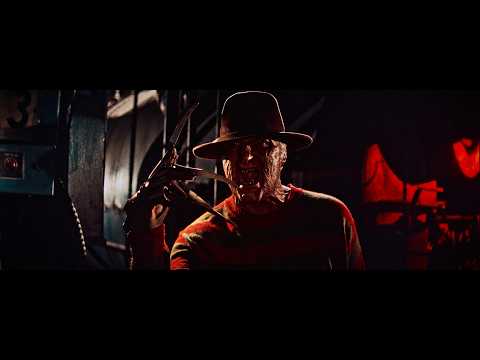
Michael Leavy wants to be the next Freddy Krueger, and he has gone beyond just saying it. The Stream director and Terrifier producer has shared a video of himself in full Freddy makeup, giving horror fans a look at what he could potentially look like under the iconic hat and glove. Check it out in the embed above!

Leavy actually has a pretty great connection to Robert Englund and Freddy Krueger that goes back more than a decade. In the 2014 horror movie Fear Clinic, Leavy played the younger version of Englund’s character, Dr. Andover. So if Leavy eventually gets the chance to take over the role of Freddy, it would be the second time that he and Englund have shared a character.

Leavy released his new Freddy video after fans asked to see him in the full makeup, using the hashtag #LeavyForKrueger and making it clear that he’d love the opportunity to play the character made famous by Englund. His brother Jason Leavy threw his support behind the campaign, saying that nobody is better suited to put on the glove.

Michael Leavy already played Robert Englund’s character

Fear Clinic was directed by Robert Green Hall and starred Robert Englund as Dr. Andover, a psychiatrist who uses an experimental device called the Fear Chamber to treat patients suffering from severe phobias. The movie also featured Fiona Dourif, Danielle Harris, Kane Hodder, and Corey Taylor.

Leavy appeared in the movie as Young Andover, making his connection to Englund’s character especially appropriate now that he’s campaigning to play Freddy Krueger. And this isn’t some random fan deciding he would look cool in Freddy makeup. Leavy has spent much of his career working in the horror genre, both in front of and behind the camera.

He has produced movies including Terrifier 2, Terrifier 3, Screamboat, Stream, Hollywood Dreams & Nightmares: The Robert Englund Story, and Penance Lane. He also directed Stream and the Leprechaun Revenge short, among numerous other projects.

Michael Leavy previously made a Leprechaun short

Last year, Leavy and his brother Jason made Leprechaun Revenge, a proof-of-concept fan film designed to show Lionsgate what they could do with the Leprechaun franchise. The short starred Mark Holton as Ozzie Jones, the character he played in the original Leprechaun in 1993, and Linden Porco as the Leprechaun. Maren Altman also appeared in the film. The story follows an older Ozzie who has spent decades preparing for the Leprechaun’s possible return, only to discover that his paranoia wasn’t so unreasonable after all.

Leavy made no secret of his desire to direct an official Leprechaun movie. He described the short as a love letter to the original franchise, with a darker modern twist while still preserving the horror-comedy balance that made the series so much fun. That particular plan hasn’t worked out yet. Lionsgate is now developing another Leprechaun movie, with Saw sequel writers Patrick Melton and Marcus Dunstan writing the screenplay. Oren Koules and Miles Koules are producing, while the plot, cast, director, and production schedule remain under wraps.

So Leavy isn’t currently attached to the new Leprechaun movie, but that doesn’t mean he’s done trying to get his hands on a classic horror character.

For now, you can watch his Freddy Krueger transformation above and decide for yourself: could Michael Leavy be the next actor to put on Freddy’s glove?

The post Michael Leavy wants to play Freddy Krueger, and he already played a young Robert Englund appeared first on JoBlo.


They Follow: It Follows sequel adds James Jordan of Landman to the cast

The cast of They Follow, the long-awaited sequel to David Robert Mitchell’s It Follows, just got a little bigger. Deadline reports that Landman star James Jordan has joined the cast of the Neon horror movie, although the details of his role are being kept under wraps. Jordan’s casting brings him into an increasingly impressive ensemble surrounding returning star Maika Monroe. Neon has not commented on the casting, and plot details remain under wraps.

Jordan is best known for playing petroleum engineer Dale Bradley on Paramount+’s Landman, where he appears alongside Billy Bob Thornton. He has also worked extensively with Yellowstone co-creator Taylor Sheridan, appearing in Yellowstone, 1883, Mayor of Kingstown, Wind River, and Those Who Wish Me Dead. Jordan currently stars in Sheridan’s Lioness as well.

The actor joins a cast that already includes Monroe, reprising her role as Jay Height, and Naomi Ackie in a new role. The ensemble also features Jackie Earle Haley, Justine Lupe, Anna Mirodin, Jayne Taini, Michael Gandolfini, Tom Pecinka, Melora Walters, Ben Krieger, Natalie Shinnick, and Jan Hoag.

What is They Follow about?

That’s a very good question. They Follow is the sequel to Mitchell’s 2014 horror movie It Follows, which starred Monroe as Jay, a college student who becomes the target of a relentless supernatural entity after a sexual encounter. The entity can take the form of different people and slowly but relentlessly follows its victim, creating one of the most memorable horror concepts of the 2010s.

The sequel takes place 10 years after the events of It Follows, but Mitchell and Neon have yet to reveal the story beyond that basic setup. Monroe has previously teased that the sequel will take a very different approach from the original, describing it as more grounded and focused on two women dealing with significant emotional struggles.

Mitchell is once again directing from his own screenplay, with Neon holding worldwide rights and planning a theatrical release in the United States. The movie does not yet have an announced release date.

Who else is returning for They Follow?

Monroe isn’t the only connection to the original movie. Mitchell is back behind the camera, and Disasterpeace is returning to compose the score. The original film’s electronic soundtrack became a major part of its unsettling atmosphere.

It Follows premiered at Cannes in 2014 before becoming a breakout horror hit. Made for a reported budget of just over $1 million, the movie earned roughly $23 million worldwide and helped establish both Monroe and Mitchell as major names in modern horror.

Now that filming has wrapped and another cast member has been revealed, They Follow is one step closer to finally reaching theaters. The big question is what, exactly, has been following Jay for the past decade — and whether whatever comes next will be even worse than what she faced the first time around.

The post They Follow: It Follows sequel adds James Jordan of Landman to the cast appeared first on JoBlo.


Deathgasm 2: Goremageddon Review: A Killer Mix of Gore, Laughs and Heavy Metal

PLOT: When Brodie, a washed-up metalhead, resurrects his dead bandmates for a battle-of-the-bands, the result unleashes riffs, gore, and apocalyptic carnage only DEATHGASM can deliver.

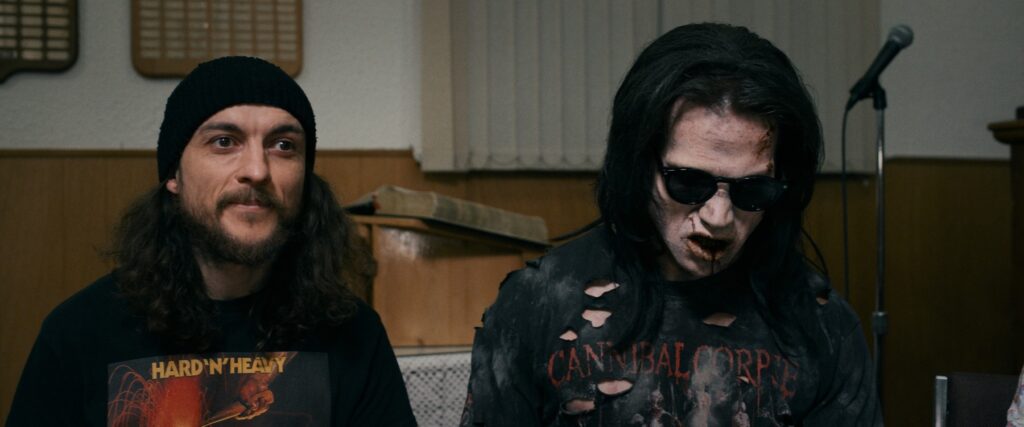
REVIEW: I loved Deathgasm so much when it first released in 2015, as it was the perfect combination of comedy, horror, and metal that only the Kiwis can pull off. Metalheads Brodie and Zakk were lovable losers, and I found myself rooting for the love story between the former and Medina. So I was over the moon with the announcement of its sequel Deathgasm 2: Goremageddon. Now, we’re picking up a decade later, where Brodie’s life hasn’t exactly turned out the way he wanted it to: he’s unemployed, single, and his life seems to be crumbling around him. He wants to bring back his dead friends so that life can be like the old days. Only, things don’t go as planned, and he has to stop his friends from trying to end the world.

Despite Brodie having the cards stacked against him in just about every way, Milo Cawthorne is still able to make him likable. I’m sure it helps that we’re seeing an active Brodie versus the more passive one who lost his girlfriend in between films. But even while he’s making bad decisions, I still found myself rooting for him and being charmed by his clueless nature. James Joshua Blake’s Zakk was actually a bit of a dick in the first film, making some pretty selfish decisions. Oddly enough, his zombie transformation actually makes him a bit more likable, while still keeping his character consistent. He will be a rebel no matter what, even if it means not eating flesh as a zombie. The man is the ultimate contrarian.

deathgasm

I did feel as though we don’t get enough of Kimberley Crossman’s Medina, as she’s gone from the film for large chunks and largely away from Brodie. That’s too bad, as they were such a linchpin with the first film, and they have such a fun chemistry together. Medina is off with another musician, Jesse Dead, who is the epitome of a douchey rocker. But as much as Deathgasm was about their love story, this second film is really about Brodie finding himself and becoming his own person. Jesse is the opposite of Brodie, as a musician who is motivated to succeed, yet is an awful person to be around so there’s an interesting parallel there.

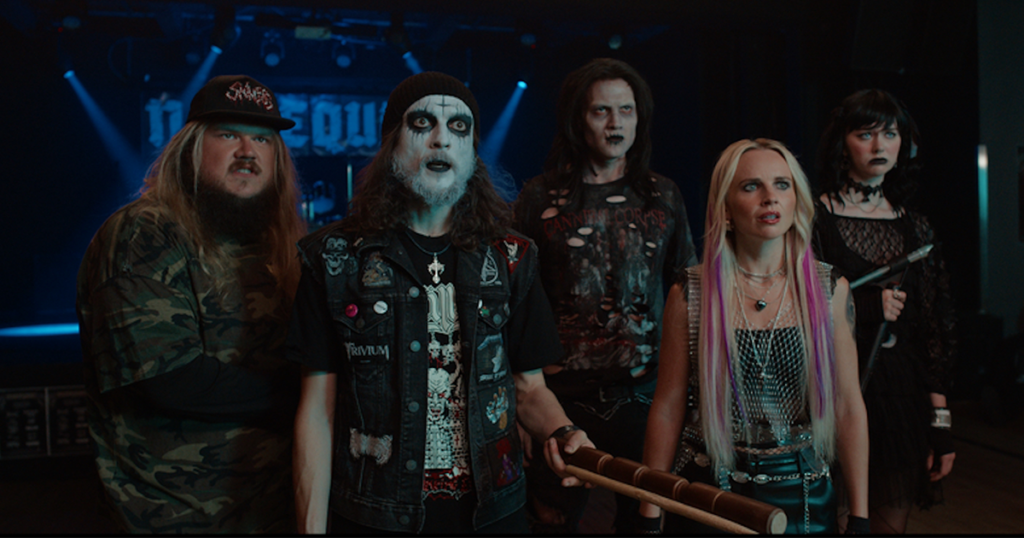
The occult and metal music go together like peanut butter and jelly, and Deathgasm 2 really takes advantage of that. The score is all very metal, and it helps to keep the energy up at all times. Brodie’s ultimate goal is to win a battle of the bands-style competition, which brings in even more metal acts to spew their satanic music. There are even some really fun cameos from famous metalheads GWAR and Trivium‘s Matt Heafy. So, whether you’re into horror, comedies, or metal, there’s enough to latch onto. There’s even a very random cameo from former WWE superstar Braun Strowman AKA Adam Scherr, where he says his wrestling catchphrase.

Whether it’s Dead Alive, Housebound, or even What We Do In The Shadows, there’s just something special about how horror comedy is made in New Zealand. They manage to always nail the tone, never over-explaining the jokes, and focusing on entertainment over everything. There are some fun meta moments, with the characters interacting with on-screen graphics and even breaking the fourth wall. They strike just the right balance, and it never overstays its welcome.

deathgasm

If you’re going to put Goremageddon in your title, then you’d better deliver some solid gore. Thankfully, the kills are practical and look incredible, with plenty of blood and guts, calling back to the early days of Peter Jackson. There’s a whole sequence with a glory hole that had me wincing with each new participant. And I’m never going to look at a pencil sharpener the same way again.

On a technical level, Deathgasm 2 always impresses and never lets its lower budget hamper it. The world is living and breathing, and the scope never feels too small. I will always appreciate the classic “animated lightning” that was so prominent in the 80s and ’90s, so it’s nice to see it utilized throughout. We need that brought back in more films.

I absolutely loved getting to experience more of the Deathgasm world again, as this style of horror-comedy has always appealed to me. Deathgasm 2: Goremageddon is able to recreate the magic of the first, without missing a beat. While Medina is underutilized, Dion and Zakk’s zombie forms provide such a hilarious dynamic, allowing the story to push forward naturally, while avoiding needless side tangents. I love these characters and could spend ten more movies with them. Metal and horror make for such a wonderful marriage, improved even further by the humor that never takes itself too seriously. This is downright hilarious, nasty, and one of the most fun times I’ve had with a film this year.

Deathgasm 2: Goremageddon releases to theaters in the US and Canada on September 29th, 2026.

Deathgasm 2

GREAT

8

The post Deathgasm 2: Goremageddon Review: A Killer Mix of Gore, Laughs and Heavy Metal appeared first on JoBlo.


Monday, September 28, 2026

Mike Flanagan has a three-season plan for Carrie

Mike Flanagan isn’t thinking about Carrie as a one-and-done story. The filmmaker behind The Haunting of Hill House, Midnight Mass, Doctor Sleep, and The Fall of the House of Usher has revealed that he has a three-season plan in mind for his new Carrie show, which brings Stephen King’s classic horror story to life as a TV series for the first time.

That doesn’t mean Prime Video has ordered three seasons. The streamer currently has the first season, consisting of eight episodes, arriving on October 7. But if Flanagan gets his way, Carrie could become a three-season story.

“In my dream scenario, I think it’s three seasons,” Flanagan said in a new interview with Collider at the Toronto International Film Festival. “I think Carrie has a wonderful three-step arc. It’s a trilogy, really.”

That’s an intriguing statement considering how familiar the basic story of Carrie is, but Flanagan has already made it clear that he isn’t interested in just remaking what Brian De Palma did with his classic 1976 adaptation of the concept.

Mike Flanagan Sees Carrie as a Trilogy

Flanagan was asked about the long-term roadmap for Carrie and what the ideal number of seasons would be if he could snap his fingers and make it happen. His answer was three.

The filmmaker emphasized that the team has been focused on making the first season work rather than planning too far ahead. He said they put all their energy into making sure this first season works and didn’t allow themselves to spend too much time thinking beyond it. Now that the series is finished, however, Flanagan admitted that he has a larger vision for where the story could go.

For now, Flanagan isn’t revealing anything about the potential three-season structure. He didn’t explain what each season would cover.

Carrie Is More Than a Remake of the Stephen King Classic

The story of Carrie has already been adapted several times, most famously in Brian De Palma’s 1976 film starring Sissy Spacek. There was also a 2002 television movie starring Angela Bettis and the 2013 feature starring Chloë Grace Moretz. Flanagan believes there’s little point in making yet another version of Carrie unless he can bring something new to the material. His series uses the longer television format to expand King’s story and its characters, while bringing Carrie White into the modern world.

Summer H. Howell stars as Carrie, a sheltered teenager who enters the world of public high school following the death of her father. She has spent most of her life isolated by her mother, Margaret, and suddenly has to deal with school, bullying, social media, and the emergence of her telekinetic abilities.

Prime Video describes the series as a story about kindness versus cruelty and the making of a hero, a monster, or something more complicated. All eight episodes of the first season will premiere on October 7.

So if the first season is designed to expand the world surrounding Carrie, building toward the famous prom sequence, what happens if Flanagan gets two more seasons to continue expanding that world?

Stephen King Is Supporting Mike Flanagan’s Carrie

Stephen King serves as an executive producer on the Prime Video series, alongside Flanagan. Flanagan has also spoken about being able to ask King for his thoughts as he explores parts of the Carrie universe that the original novel only hints at.

Will Carrie Get a Season 2?

That’s the big question. For now, Prime Video has confirmed only the eight-episode first season of Carrie. Flanagan himself seems perfectly aware that a three-season plan means nothing unless audiences actually want to keep watching. He stressed that the team is currently focused on getting through the launch and seeing how the show is received.

That means viewers shouldn’t go into the first season expecting Prime Video to have already committed to a trilogy, but it’s interesting to know that Flanagan has one in mind.

Would you want to watch three seasons of Carrie TV show? Share your thoughts on this one by leaving a comment below.

The post Mike Flanagan has a three-season plan for Carrie appeared first on JoBlo.


The Escape from New York novelization adds some wild Snake Plissken backstory

Do you remember in Escape from New York when we found out how Snake Plissken lost his eye? Or why Hauk had an extra reason for being posted as warden of the New York prison? Or what was happening on the West Coast in 1997? No? Well, that is probably because those details were only expanded upon in the thrilling and now very collectible book version of the movie. Originally published in 1981, the Escape from New York novelization has been brought back into print by Echo On Publications, along with a number of other great movie tie-in books. And no, I don’t mean the book the movie was based on, because that doesn’t exist. I’m talking about the tie-in novel written specifically for the film, and boy, is it a fun one.

So buckle in and forget everything you think you know about the characters and the movie as we look at the Snake Plissken Extended Universe, specifically what the Escape from New York novelization added to an already legendary movie.

Escape from New York Was Already a Classic

When Escape from New York came out in July 1981, it was a smash success, grossing around $50 million from a budget of just $6 million. It was John Carpenter‘s third hit in a row after Halloween in 1978 and The Fog in 1980, so naturally it was time to capitalize on the movie with some merchandise. There was the now-infamous board game from Games Workshop, but there was also the ever-popular tie-in novelization.

We talked about the first three Halloween movie novelizations and how different they could be from the movies, and after rereading both The Thing and Escape from New York, I realized there were enough interesting additions and changes here to make this worth talking about.

How many differences could there actually be? Well, it kind of changes the complexion of the entire story. No big deal.

What Is Escape from New York About?

Escape from New York follows Snake Plissken, fresh off being caught after a bank robbery, as he is brought into the prison state of New York and offered a pretty tough deal. Snake has to go into the prison by himself, find the President of the United States after Air Force One crashes into Manhattan, make sure the President’s tape reaches a summit, and get back out within 24 hours.

That’s all well and good for a badass former soldier like Snake Plissken, except Manhattan is now an anything-goes prison filled with gangs, cannibals, and other threats. Snake also has explosives implanted in his neck and an escape route that is going to be difficult, to say the least. He runs into colorful characters like Maggie, his old buddy Brain, Cabbie, and the infamous Duke of New York, who runs the place. Snake sneaks, barters, gambles, trades, and fights his way through the city, accomplishing his mission just in time.

But when push comes to shove, Snake isn’t about to let a little bureaucracy get in the way of another world war.

And that’s the story of the movie we all know and love. Even some people (not me) think it is inferior to its glossier mid-’90s sequel, Escape from L.A.. Those people are obviously wrong, but that’s okay. Everyone should have a bad take from time to time. Lord knows I do.

The greatness of Escape from New York goes well beyond the plot, even if that plot has been copied dozens of times. A Guy Pearce movie even got sued for being just a bit too much like this all-time classic.

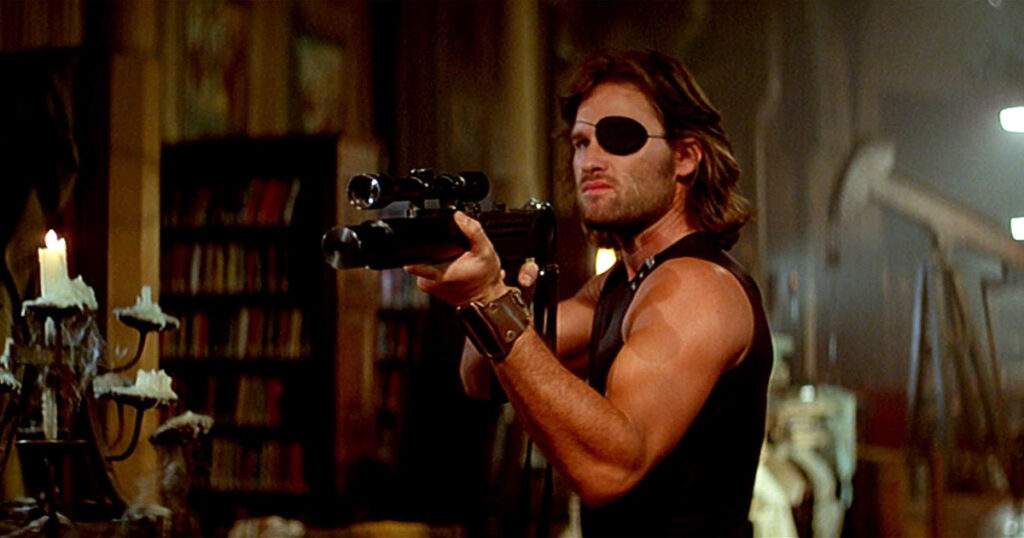
Escape from New York

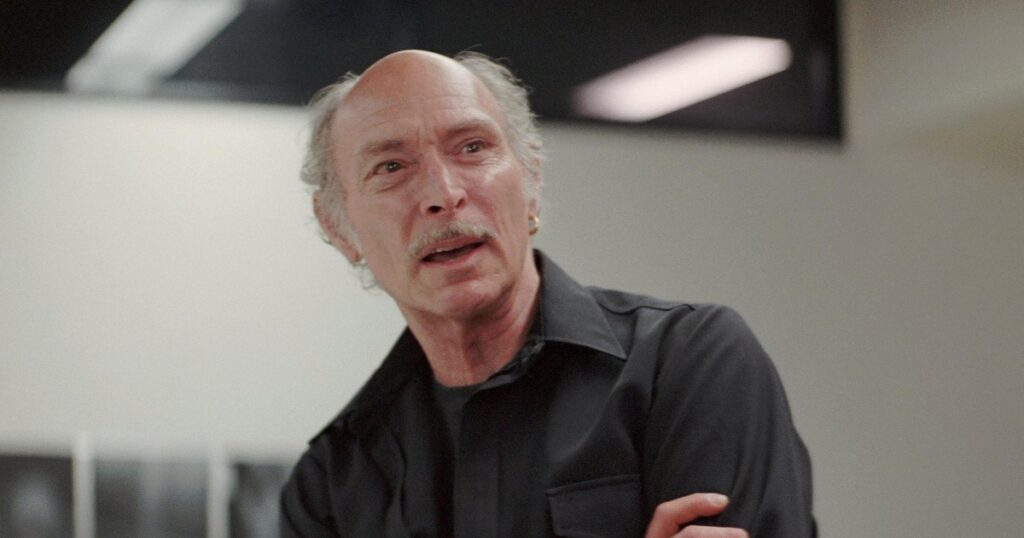
Then you have the cast. Kurt Russell, Donald Pleasence, Isaac Hayes, Harry Dean Stanton, Ernest Borgnine, Adrienne Barbeau, and Lee Van Cleef all play their parts to perfection. Even smaller roles from Tom Atkins and the ever-lovable George Buck Flower add their own zest to the movie.

The music by Carpenter and frequent collaborator Alan Howarth, the cinematography by Dean Cundey, and everything else make the movie about as close to perfect as you can get.

So how do you improve on that? Well, you don’t. But how do you make something this good feel a little new and exciting? That’s where the novelization comes in.

The Escape from New York Novelization

Movie novelizations were a pretty common practice, especially in the 1980s and early ’90s. I remember seeking out these books before I even really understood what they had to offer. I just thought they were cool collector’s items that gave me the opportunity to read the movie whenever I wanted. Little did I know that some of them could add so much more to the story.

Enter author Mike McQuay, who wrote the Escape from New York novelization. The book was originally published in 1981 and became a long-out-of-print collector’s item before Echo On Publications brought it back in 2026. McQuay wrote plenty of other books during his career, including the Matthew Swain and Ramon and Morgan series, as well as books under other names. His career and life were sadly cut short when he died of a heart attack at only 45 years old. He will always be a legend for this novelization, though.

So what’s different? Well, for starters, it’s darker. I know the movie itself is dark, both thematically and visually, but the novel takes it to another level. It has more humor in places, but it is also meaner, more nihilistic, and genuinely more depressing. And that’s saying something for Escape from New York.

The Novelization Makes the World Much Darker

One of the most interesting things about movie novelizations is that they were often written from a screenplay sent over by the studio. That means the author could be working from material that never made it into the finished film. That’s exactly what happens here. The novel expands on the Escape from New York screenplay while incorporating material from earlier versions of the story and scenes that were ultimately cut from the movie. That makes it feel like a slightly different version of the same story rather than simply the movie in book form.

The biggest addition is the state of the world. When Carpenter originally wrote the screenplay, he was reacting to the political and social climate of the 1970s, particularly the Watergate era. The movie already gives us a pretty bleak future. In 1988, crime has become so out of control that Manhattan is converted into a maximum-security prison. The island becomes a no-man’s-land with no guards inside and enormous walls surrounding it.

Then we jump to 1997. The movie gives us just enough information to understand how terrible things have become, but the novel has room to really dig into it. World War III happened. The United States and its enemies agreed not to use nuclear weapons, so they used nerve gas instead. That turned out to be a pretty terrible compromise. Millions died, and the survivors were left dealing with insanity, delusions, and increasingly violent behavior. The West Coast has become almost uninhabitable, eventually setting the stage for the events of Escape from L.A..

Even the movie’s main MacGuffin gets a darker explanation. The tape the President is carrying isn’t simply about a new energy source, as the movie suggests. In the novel, it contains information about a fallout-free nuclear weapon that could give the United States a massive advantage in the global conflict.

So while you can sometimes forget about how bad the rest of the world is when watching the movie, the book keeps reminding you that things are absolutely screwed.

Escape from New York

Hauk Gets a Much Bigger Story

The book also expands the characters, especially Hauk and Snake. Movie Hauk is a hardass, but there’s clearly a reason why he was put in charge of the prison. He holds himself together under pressure, chooses Snake for the mission, understands the respect between them, and gives Snake every opportunity to finish the job.

The book gives him even more depth. Hauk is incredibly jaded toward the military and the government. The helicopter scene at the beginning of the movie plays very differently in the novel because Hauk is actually riding in that helicopter. It stops to blow up potential escapees, but Hauk makes sure they receive a warning first.

He also hates many of the cops and guards who work for him because they seem far too enthusiastic about killing people. Many of them are veterans like Hauk who simply can’t hold it together anymore.

The nerve gas has affected Hauk too, although not as severely as others, and that only makes him more disgusted with what the country has done to its own people.

Then the book gives him a much more personal reason for wanting to be the warden of New York. His son is one of the prisoners inside. Hauk had previously gone into the prison looking for him, but eventually gave up. When Snake heads into Manhattan, Hauk asks him to keep an eye out for his son. If this were a video game, that would absolutely be Snake’s side mission.

Snake Plissken Finally Gets a Backstory

And speaking of our soft-spoken Clint Eastwood impersonator, Snake gets much more backstory and even more emotion. The movie gives us bits and pieces of his history. We know he was the youngest person ever decorated by the President with two Purple Hearts, and we get hints about his military career and the jobs he pulled with Brain.

The novel goes much further. Snake was chosen for a suicide mission called the Leningrad Ruse. He and his team were sent into a battle they were expected to lose so that a double agent could be captured and feed the Russians false information. There were two problems: Snake and his team didn’t know it was a suicide mission, and the Russians saw through the deception. So basically, the entire operation accomplished nothing except getting people killed.

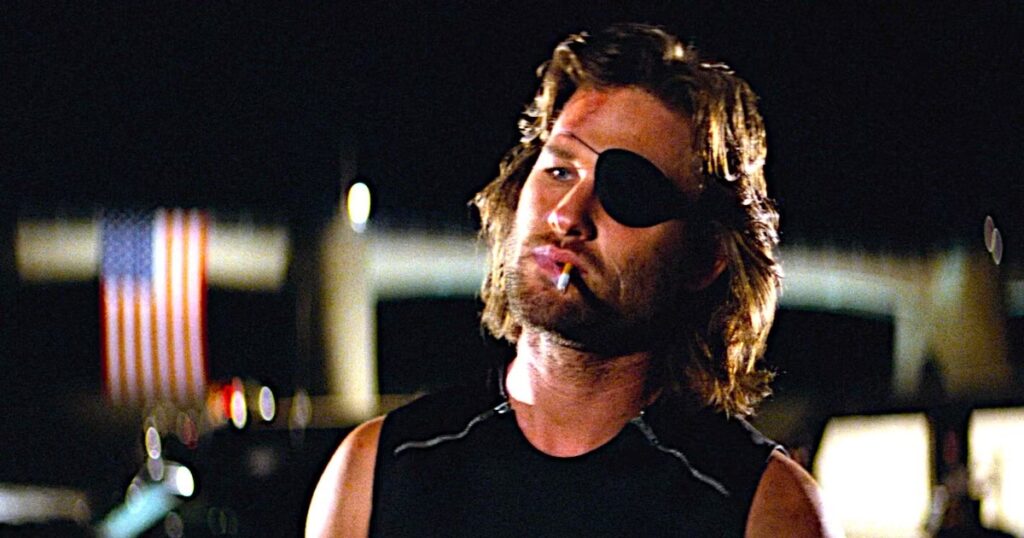
It was also during this mission that Snake lost his eye. Snake survived the battle along with one other teammate, Taylor, but Russian nerve gas was used during the attack. Snake’s goggles broke, and the gas destroyed his eye, leaving him with permanent pain. That goes a long way toward explaining his attitude.

But McQuay doesn’t stop there. Before Snake joined the military, his parents were killed by the prison guards known as the black bellies during a raid. The authorities then froze his family’s assets, helping push him into the military in the first place. This is the kind of backstory that can easily become unnecessary. We’ve seen plenty of prequels and expanded-universe stories that try to explain every little thing about a character when some things are better left mysterious. The Halloween novelizations I covered last year are a good example of that. Here, though, I think it works.

Snake’s history fits the movie’s larger themes about government, authority, war, and betrayal. I’m curious what Kurt Russell would think of all these additions, especially since he had such a major role in creating Snake’s personality and appearance.

The Crazies, Hauk’s Son, and the Missing Scenes

The book doesn’t just add character development. It also restores several pieces of the story that were left on the cutting-room floor. One of the coolest additions involves the Crazies. The disgusting, terrifying people who chase Snake in the movie are even more disgusting and terrifying in the book. One of them has a very specific connection to Hauk.

During the chase, Snake shoots one of the Crazies’ hands off. In the book, he notices that the hand has the word “HAUK” tattooed on it. That’s Hauk’s son.

Snake later gives Hauk some hope by telling him that his son is doing fine and doesn’t need anything. It’s sad and maybe a little hokey, but it gives Snake and Hauk another small connection. Both men are war veterans who have been screwed over by the government, and they understand each other in a way that the movie only hints at.

The novel also opens with Snake and Taylor robbing the Federal Reserve Depository, a sequence that was cut from the finished film. The robbery helps explain how Snake was captured in the first place, while Taylor’s fate gives Snake another reason to hate the authorities.

Escape from New York

There are plenty of other additions scattered throughout the book. Snake takes the stairs down from the World Trade Center after landing on the roof and encounters one of the prison gangs. It feels like the movie might have originally been setting up a much larger gang structure, almost something like The Warriors, but neither the book nor the movie goes very far with that idea.

There is also a sterilization room where prisoners are forcibly castrated, and Snake nearly gets taken there before Hauk intervenes. So, yeah. The New York prison is somehow even worse than you thought.

Some of the Book’s Weirdest Additions

Not every addition changes the story in a major way. Some are simply there to show how cool Snake is. When he tries to enter a musical theater club, he scares off a bouncer by showing him his gun. When a woman underground is being passed around by thugs, Snake doesn’t exactly save her, but he does punch one of the guys in the face.

And then there’s the crystal meth. Hauk gives Snake some crystal meth to help him stay awake when exhaustion starts catching up with him. Unfortunately, Snake loses it. So there is no secret chapter where Snake goes on a crystal meth-fueled rampage through New York. I feel cheated.

The book also expands the final car chase. Instead of the Duke being the only vehicle chasing Snake, several cars are involved, leading to a larger pileup and a bigger explosion.

And then there’s Fresno Bob. The movie gives us the famous line about what happened to Bob, but the novel actually tells us. He was skinned alive by the police after being captured. I’m starting to think McQuay wasn’t the biggest fan of law enforcement either.

The Escape from New York Extended Universe

So there you have it. The novel doesn’t necessarily change the story, but it adds a ton of world-building and character development.

The movie remains an all-time classic and is obviously a much quicker way to experience Snake’s adventure. But the book is absolutely worth your time, especially if you’re the kind of person who loves digging into the weird corners of movie history.

And the Escape from New York universe goes well beyond the novelization. There are board games, a canceled video game, a canceled television series, the long-in-development remake, the never-produced Escape from Earth, Escape from L.A., and several comic book stories.

Marvel published The Adventures of Snake Plissken in 1997. The story takes place between Escape from New York and Escape from L.A. and sends Snake to Chicago after he steals engineered viruses from the Centers for Disease Control. He eventually runs into ATACS, a government robot designed to predict criminal behavior by using Snake’s own personality against him.

Then, in 2003, CrossGen and Hurricane Entertainment published John Carpenter’s Snake Plissken Chronicles, a four-part comic series set shortly after the events of Escape from New York. Snake heads toward Atlantic City and gets involved in another ridiculous criminal adventure involving a very important piece of American history and a character named Captain Ron. Yes, really.

There was even a planned Escape from Earth sequel that would have sent Snake into space. So, yes, the Snake Plissken Extended Universe is real.

Is the Escape from New York Novelization Worth Reading?

Absolutely. If you love Escape from New York, Mike McQuay’s novelization is more than just a prose version of the movie. It expands the dystopian world, gives Snake and Hauk more detailed histories, restores scenes that were cut from the film, and fills in some of the gaps that Carpenter’s lean screenplay intentionally leaves open.

It’s darker than the movie, occasionally stranger, and sometimes goes into more detail than you probably ever expected from a movie tie-in novel. But that’s what makes it fun. The 2026 Echo On reissue also makes the book much easier to find than it has been for decades.

So if you’ve ever wondered how Snake lost his eye, why Hauk really wanted to be warden of New York, what happened to Hauk’s son, or what the hell was going on with the rest of America in 1997, this is where you find out.

Have you read the Escape from New York novelization? If so, what did you think of it? Let us know in the comments, and maybe I’ll see you again when we look at the wildly different The Thing novelization.

A couple of the previous episodes of WTF Happened to This Adaptation? can be seen below. To see the other shows we have to offer, head over to the JoBlo Horror Originals YouTube channel – and subscribe while you’re there!

The post The Escape from New York novelization adds some wild Snake Plissken backstory appeared first on JoBlo.