

Why did the Hellraiser franchise decline?
The decline of the Hellraiser franchise can largely be traced to a combination of studio interference, shrinking budgets, creator exclusion, and rights-retention productions under Dimension Films. While the first two films established a rich mythology guided by Clive Barker’s creative vision, later entries increasingly prioritized the marketability of Pinhead and the maintenance of franchise rights over long-term storytelling. The result was a gradual shift from ambitious theatrical horror films to low-budget direct-to-video sequels that often struggled to maintain the identity that made Hellraiser successful in the first place. Let’s dig in.
| Year | Event | Impact on Franchise |
|---|---|---|
| 1987 | Hellraiser released | Clive Barker writes and directs. Franchise begins under strong creative vision. |
| 1988 | Hellbound: Hellraiser II released | Expands mythology and solidifies franchise potential. |
| 1989–1991 | Rights transition period | Financial troubles at New World and Barker’s Film Futures create uncertainty. |
| 1992 | Hellraiser III: Hell on Earth | Dimension-era approach begins taking shape, with Pinhead becoming the central attraction. |
| 1996 | Hellraiser: Bloodline | Studio interference and reshoots damage confidence in theatrical future. |
| 2000 | Hellraiser: Inferno | Franchise shifts permanently to direct-to-video releases. |
| 2002–2005 | Rick Bota era | Increasing reliance on lower-budget productions and standalone thriller concepts. |
| 2011 | Hellraiser: Revelations | Widely viewed as a rights-retention production. |
| 2018 | Hellraiser: Judgment | Final Dimension-produced film. |
| 2022 | Hellraiser reboot released | Clive Barker returns to an advisory role and franchise receives creative reset. |
What the hell (pun very much intended) happened to Hellraiser? Not the first movie. We’ve covered that before. We’re talking about the franchise as a whole. How did Dimension inherit a horror property that should stand alongside Halloween, Friday the 13th, and A Nightmare on Elm Street, only to watch it slide into straight-to-video obscurity?
From development hell to canceled crossovers and shoehorned scripts, this is the story of how Dimension Films and Miramax repeatedly sabotaged the Hellraiser franchise.
Clive Barker’s Frustration Led to Hellraiser
It’s incredibly disappointing to look at what happened to Hellraiser as a series, especially considering that the first entry is one of the most beloved horror films of the 1980s. The direct sequel, arguably even better, is also widely regarded as one of horror’s greatest follow-ups.
Ironically, the reason Hellraiser exists at all stems from Clive Barker’s own disappointment with how Hollywood was adapting his work. Barker had already become a major figure in horror thanks to his Books of Blood collections. His reputation was boosted even further when Stephen King famously declared: “I have seen the future of horror, and his name is Clive Barker.”
Studios quickly became interested in adapting Barker’s stories. One early example was Underworld (also known as Transmutations), released in 1985. While it wasn’t based on a Barker story, his creative fingerprints were all over it. Unfortunately, the final product wasn’t particularly successful, despite containing elements that would later appear in projects like Nightbreed and Lord of Illusions.
The real turning point came with Rawhead Rex. Based on Barker’s own story, the adaptation made substantial changes that angered him. The experience convinced him that if another project based on his work was going to be produced, he needed creative control. That project became Hellraiser.
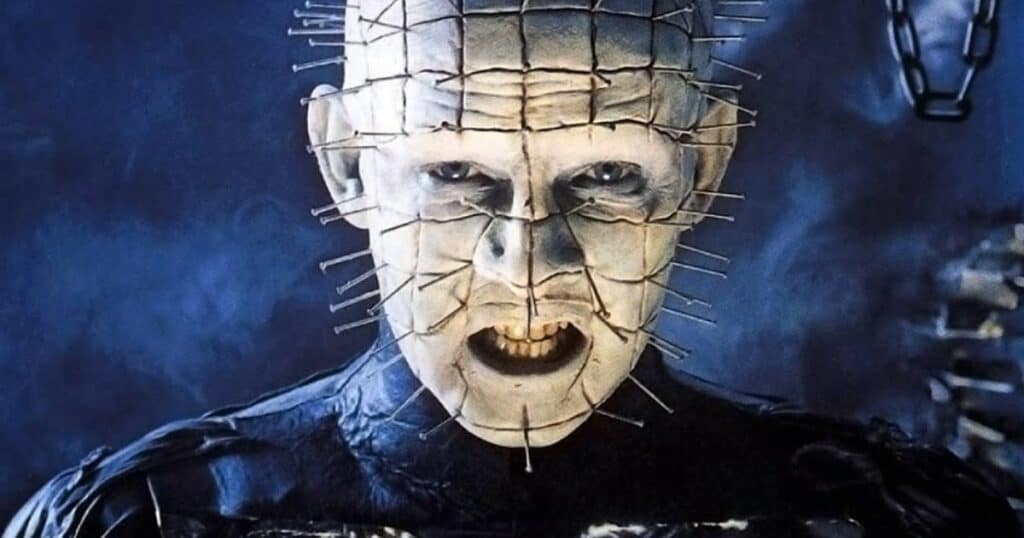
The Birth of a Horror Classic
Released in 1987, Hellraiser was adapted from Barker’s novella The Hellbound Heart. Barker both wrote and directed the movie himself. Produced independently by Film Futures and distributed by Entertainment Film Distributors, the film became a massive success. Made for roughly $1 million, it earned around $30 million worldwide. Every aspect of the production seemed to click:
- Practical effects
- Set design
- Music
- Performances
- Writing
- Direction
Critics responded positively as well, frequently praising Barker’s screenplay and confident debut as a director. Although Film Futures and Entertainment Film Distributors handled production and distribution, Roger Corman’s New World Pictures played a major role in financing the project. Given Corman’s reputation for identifying profitable low-budget productions, that involvement made perfect sense.
The success was so immediate that a sequel was greenlit before the original had even completed post-production.
Why Hellbound Worked
Barker declined to direct the sequel, citing the stress of making the original film, but he remained heavily involved as an executive producer and story contributor.
Many of the ideas for Hellbound: Hellraiser II came naturally. Budget limitations on the first film had forced Barker to leave questions unanswered and abandon scenes during production. The sequel allowed those concepts to be explored more fully.
Peter Atkins wrote the screenplay, while Tony Randel stepped into the director’s chair. Although Hellbound didn’t match the box-office performance of its predecessor, it proved that Hellraiser had franchise potential. The series had:
- A memorable mythology
- A compelling villain in Pinhead
- Endless storytelling possibilities
Looking back, many fans argue that the first two films form a near-perfect duology. Unfortunately, that wasn’t where the story ended. And it’s here that the franchise’s long decline truly begins.
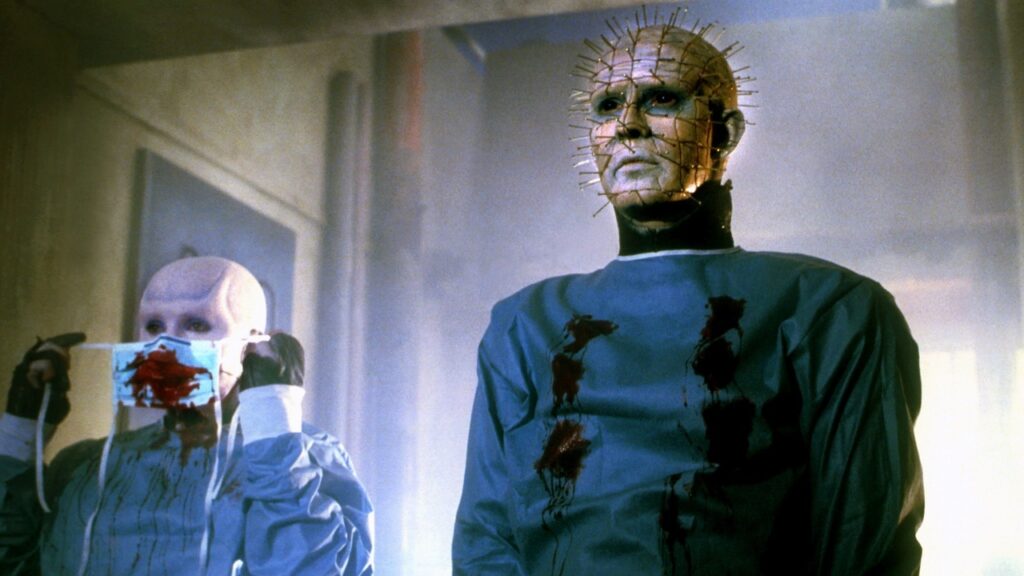
Dimension Takes Control of Hellraiser
The rights to Hellraiser eventually landed with Miramax and its genre-focused label, Dimension Films. Oddly enough, they also acquired the rights to Children of the Corn, another horror franchise that would spend years trapped in a cycle of increasingly cheap sequels.
At first, this didn’t seem like a disaster. But in hindsight, it marked the beginning of a long decline.
The transition happened for several reasons, though 20th Century Fox played a surprisingly important role. During the post-production of Hellbound, New World Pictures and Barker’s Film Futures were already developing a third film. Barker initially envisioned Julia becoming the central character of the next installment. When actress Clare Higgins declined to return, however, Julia was killed off in Hellraiser II.
Several alternative concepts were discussed:
- Pinhead resurrecting himself
- A building functioning as a giant Lament Configuration
- A story set in ancient Egypt
Interestingly, the giant-building concept would eventually resurface decades later in the 2022 reboot. None of these ideas made it into Hellraiser III.
The reason was simple: Nightbreed. Fox badly mishandled the release and marketing of Barker’s ambitious fantasy-horror film, leading to a box-office disappointment. The financial fallout crippled Film Futures and effectively pushed Barker away from direct control of the franchise. With New World Pictures facing financial difficulties of its own, Hellraiser changed hands multiple times before ultimately landing at Dimension.
Barker began distancing himself from the films, at least until late in production. That distance would only grow.
| Era | Barker Involvement | Studio Influence |
|---|---|---|
| Hellraiser (1987) | Extremely high | Minimal |
| Hellbound (1988) | High | Limited |
| Hellraiser III (1992) | Moderate | Growing |
| Bloodline (1996) | Moderate | Heavy |
| Inferno–Hellworld (2000–2005) | Minimal | Dominant |
| Revelations (2011) | None | Total |
| Judgment (2018) | None | Total |
| Reboot (2022) | Significant advisory role | Collaborative |
Hellraiser III: The Beginning of a Different Franchise
Hellraiser III: Hell on Earth remains one of the most divisive entries in the series. It’s undeniably a major step down from the first two films, though its reputation has improved over time. The release of the workprint version and later restorations helped fans reassess what the movie was trying to accomplish.
Tony Randel didn’t return as director, but he did contribute to the screenplay alongside Peter Atkins. Doug Bradley once again returned as Pinhead, and this is the film that transformed Pinhead from a supporting antagonist into the franchise’s main attraction. In the first two films, Pinhead was only one piece of a larger mythology. Beginning with Hellraiser III, he became the equivalent of Freddy Krueger, Jason Voorhees, or Michael Myers: the face audiences expected to see front and center. That shift would define every sequel that followed.
And unlike many horror icons, Doug Bradley’s performance became inseparable from the character. Later attempts to replace him would be met with overwhelmingly negative reactions from fans.
Ashley Laurence also returned briefly, though only in a cameo role. Director Anthony Hickox, known for Waxwork and Waxwork II, was selected to helm the project. Barker wasn’t initially enthusiastic about the choice, viewing Hickox primarily as a comedy director. However, Hickox took the material seriously after meeting with Barker and discussing the franchise’s themes. The result is perhaps the most aggressively 1990s installment in the entire series. The infamous CD-shooting Cenobite alone is enough to prove that.
Despite its flaws, Hellraiser III remains an entertaining horror film. The real problem wasn’t the movie itself. It was what happened afterward.

Two Very Different Versions of the Same Production
The post-production story of Hellraiser III depends entirely on who you ask. According to Anthony Hickox, Bob Weinstein loved the rough cut. The studio allegedly offered additional money and time to improve effects work and shoot a stronger ending.
Clive Barker tells a very different story. According to Barker, he saw the rough cut and found it deeply disappointing. He was so unhappy with the visual effects and ending that he initially refused an executive producer credit. Producers later asked for his honest assessment and requested help improving the film. Barker claims he contributed ideas for additional gore, effects work, and new scenes. Those changes eventually convinced him to accept an executive producer credit and allow his name to be used prominently in the film’s marketing. That association was especially valuable because Barker was simultaneously promoting Candyman, a project in which he had a much stronger creative investment.
Whatever the truth may be, one thing is certain: Hellraiser III became a financial success. And that may have been the worst thing that could have happened to the franchise.
The Success That Changed Everything
Today, Hellraiser III is often viewed as a lesser sequel. In 1992, audiences saw things differently. The film not only received stronger reviews than Hellbound in many outlets, but it also earned more money at the box office. For the newly established Dimension Films, this was a major victory. And it likely reinforced the wrong lesson. Instead of viewing Hellraiser as a creative property that needed careful stewardship, the studio increasingly viewed it as a recognizable brand that could generate reliable returns.
What’s especially interesting is that Dimension treated another acquired franchise very differently. Halloween continued receiving theatrical releases. Even after missteps like Halloween: The Curse of Michael Myers, the studio remained willing to invest in the property. That gamble eventually paid off with Halloween H20, which became a major success. Hellraiser never received the same level of commitment.
One can’t help wondering what might have happened if Dimension had continued pursuing theatrical releases, larger budgets, and ambitious storytelling. Instead, the franchise was heading toward a pivotal moment. A film that could have elevated Hellraiser to new heights. And a studio decision that would derail it for decades.
Hellraiser: Bloodline — Where Everything Went Wrong
Released in 1996, Hellraiser: Bloodline is arguably the most important sequel in the franchise’s history. Not because of what appears on screen. Because of what happened behind the scenes.
Clive Barker remained interested in helping guide the series, though he wanted future installments to move beyond simply repeating the formula established by the first two sequels. Peter Atkins was still writing. This would ultimately become the final chapter of what many fans consider the Peter Atkins era of Hellraiser.
Barker proposed an ambitious concept: A story unfolding across multiple time periods. Atkins expanded that idea by introducing the LeMarchand family storyline, directly connecting the narrative to The Hellbound Heart and the origins of the box itself.
By most accounts, the original screenplay was exceptional. More importantly, Dimension approved it. They read the script. They liked the script. They greenlit the script. Then they started getting nervous.
As production approached, the studio demanded reductions in scale and budget. Director Stuart Gordon was approached but declined the project after reviewing the requested changes, citing creative differences. Eventually, special-effects veteran Kevin Yagher signed on. Unlike some candidates, Yagher became genuinely enthusiastic after reading the screenplay and seeing its potential. For a brief moment, Bloodline looked like it might become the franchise’s most ambitious installment yet.
Then production began. And everything fell apart.
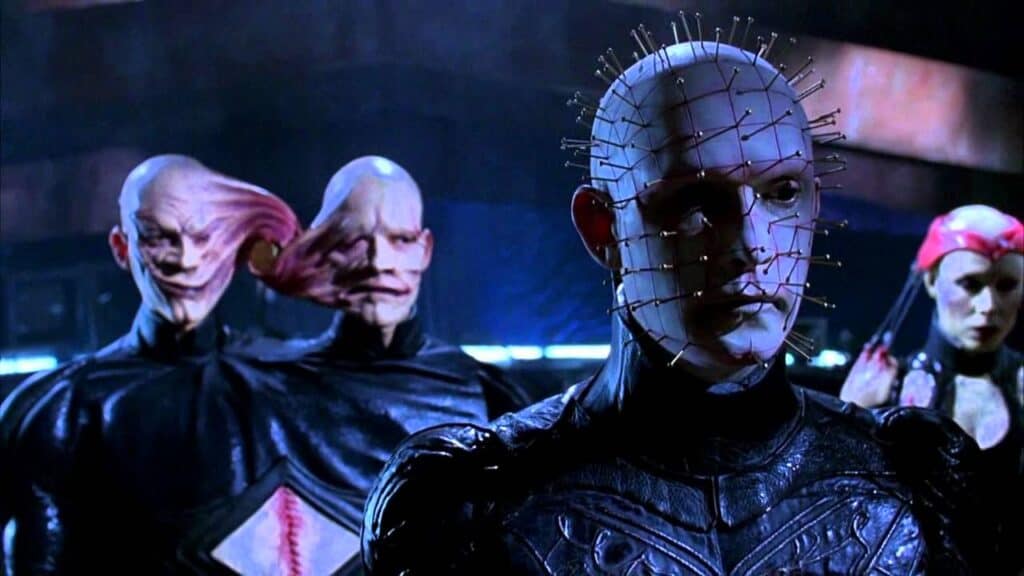
Even with budget cuts and script revisions, Hellraiser: Bloodline still had a chance to succeed. What happened next is the stuff of horror-industry legend. Doug Bradley later described the production as the shoot from hell.
The problems came one after another:
- The original cinematographer had to be replaced.
- The assistant director left because of a family emergency.
- Cast and crew members were hit by a widespread illness.
- The art department and camera crew were abruptly dismissed during production.
Despite all of that, the film was completed on time and within budget, the two things studios usually care about most. Under different circumstances, the result might have been a coherent, ambitious Hellraiser film: a sprawling story connecting the origins of the box, the LeMarchand family, and Pinhead across centuries. But Dimension wasn’t satisfied. They changed course after seeing the film on the reels.
According to Peter Atkins, the studio panicked after seeing the footage. Executives demanded:
- More Pinhead.
- Pinhead appearing earlier in the movie.
- Major restructuring of the plot.
- Additional scenes that changed character motivations and relationships.
Atkins was furious. The screenplay had already been approved. The studio knew what it was buying. But once production was underway, Dimension wanted a different movie.
Kevin Yagher, exhausted from the troubled shoot, had little interest in returning for extensive reshoots. So the studio brought in Joe Chappelle, who had previously directed Halloween: The Curse of Michael Myers for Dimension. These weren’t minor pickups. Doug Bradley later described entire scenes being rewritten and reshot, with new material altering character arcs and the film’s overall structure.
A new writer contributed additional material when Atkins became unavailable. The running time was slashed from roughly 110 minutes to about 85. At that point, it was effectively a different movie.
When Kevin Yagher finally saw the finished film, he wanted his name removed. The Directors Guild approved the request, and the movie was released under the famous pseudonym Alan Smithee. That alone tells you how badly the production had deteriorated, as the Alan Smithee credit is a public sign that the director disowned the film. Alan Smithee was the industry-standard pseudonym used when a director believed the released version no longer represented their work. Seeing it on a major franchise sequel was a visible signal that creative control had broken down.
The released version of Hellraiser: Bloodline underperformed critically and commercially. It earned around $9 million on a $4 million budget and was not screened for critics in advance.
Later workprint releases revealed a larger, more coherent movie underneath the theatrical cut. Even viewers who enjoy the released version often see the workprint as evidence that the franchise’s theatrical future was damaged by studio meddling, not by the concept itself.
Straight to Video
The damage went beyond a single film. Bloodline convinced Dimension that Hellraiser was no longer a reliable theatrical property. That conclusion became self-fulfilling. Instead of investing in rebuilding the franchise, the studio shifted toward lower budgets and direct-to-video releases, the same strategy it had already been using for Children of the Corn.
Peter Atkins left the series, feeling that the story had reached a dead end despite unused material that could have supported further sequels. Clive Barker considered becoming more involved again, but creative conflicts escalated. Dimension eventually removed him as executive producer and blocked him from contributing creative input to future films. The creator was shut out of his own franchise.
That decision became one of the clearest symbols of the growing divide between the studio’s priorities and the identity that made Hellraiser stand out in the first place.

A Surprising Detour: Inferno
The strange thing is that the first direct-to-video sequel wasn’t a complete disaster. For Hellraiser: Inferno (2000), Dimension hired a young director named Scott Derrickson, who would later direct Sinister, Doctor Strange, and other major films. Derrickson and writer Paul Harris Boardman developed a psychological horror story centered on a corrupt detective spiraling into a personal nightmare.
The original concept was apparently much larger, involving returning heroine Kirsty Cotton, a cult, and a massive Lament Configuration threatening London. Dimension rejected that expensive version in favor of a cheaper, smaller production. The final film stars Craig Sheffer, James Remar, and Nicholas Turturro, with Doug Bradley still returning as Pinhead.
This is also where the persistent rumor began that later Hellraiser films were unrelated scripts retrofitted into franchise entries. For Inferno, multiple sources have disputed that claim, but you can see why the rumor stuck. Remove the Cenobites and the movie still functions as a dark psychological thriller. Interestingly, that may be why it works better than many later sequels.
Pinhead appears only sparingly, and the focus shifts toward personal guilt, punishment, and subjective hells, ideas that actually fit the spirit of the original films.
Critics largely disliked it at the time, but the movie has gained a modest following among fans who appreciate its atmosphere and ambition. Unfortunately, its commercial performance sent Dimension another dangerous message: Cheap Hellraiser movies could still make money. And that would shape everything that followed.
Rather than treating Inferno as a reason to invest in quality, the studio treated it as proof that the franchise could survive on minimal budgets. That decision set up the next era.
By the early 2000s, Hellraiser found itself at a crossroads. The franchise was no longer a theatrical priority, Clive Barker had been pushed out of the creative process, and Dimension was increasingly focused on making inexpensive sequels that could generate home-video revenue. Ironically, this period also produced some of the most interesting ideas in the franchise’s history. Ideas that never happened. And in several cases, ideas that sound far more exciting than the movies that were ultimately released.
The Halloween Crossover That Almost Happened
In 2002, Dimension received two separate crossover pitches involving two horror properties it controlled:
- Halloween
- Hellraiser
One proposal imagined Michael Myers opening the Lament Configuration as a child. The concept suggested that the puzzle box unleashed a malevolent force that would influence Myers throughout his life. Eventually, the Cenobites would arrive to confront the seemingly unstoppable killer. Would it have worked? Who knows? But it certainly would have been more ambitious than what the franchise was currently producing.
Dimension wasn’t interested. The studio reportedly believed another crossover project that was in the works at New Line Cinema, Freddy vs. Jason, would fail. History proved otherwise. Freddy vs. Jason became a major commercial success and demonstrated that audiences were absolutely willing to see horror icons collide.
Had Dimension moved forward with a Halloween/Hellraiser crossover, it might have become one of the most unusual franchise experiments of the era. Instead, it joined the ever-growing graveyard of abandoned Hellraiser concepts.
Clive Barker and John Carpenter Nearly United
The crossover story becomes even more frustrating when you learn who was attached to one of the proposed versions. Clive Barker and John Carpenter. At one point, Barker was interested in writing a crossover while Carpenter was attached to direct. On paper, that’s the kind of project horror fans dream about. The creator of Hellraiser. The creator of Halloween. Working together.
Unfortunately, the project never advanced. Reports indicate that the Akkad family, longtime custodians of the Halloween franchise, became concerned about how fans might react to such a crossover and ultimately declined to pursue it. For once, this wasn’t really Dimension’s fault. The project simply collapsed before it could gain momentum. Still, it’s difficult not to wonder what might have been.
Other Abandoned Barker-Era Concepts
The crossover wasn’t the only major idea that failed to materialize. There were discussions involving a Candyman vs. Hellraiser film as well. Since both properties originated from Clive Barker’s work, the pairing made a certain amount of sense. Barker himself reportedly helped discourage the idea. Given the creative state of many horror crossovers at the time, that may have been a wise decision.
Another promising project emerged from writer Peter Briggs, known for co-writing Hellboy. His proposal would have explored:
- The origins of the puzzle box
- The town of Lament
- The mythology surrounding LeMarchand
Rather than pushing the franchise forward, Briggs’ concept looked backward, diving deeper into the lore that had made the first films so compelling. Dimension passed. The reason was familiar by now. The project would have cost money.

Enter the Rick Bota Era
Instead of pursuing ambitious theatrical projects, Dimension doubled down on direct-to-video production. This led to what many fans informally call the Rick Bota Trilogy:
- Hellraiser: Hellseeker (2002)
- Hellraiser: Deader (2005)
- Hellraiser: Hellworld (2005)
Although opinions vary on these films, they represent a clear shift in the studio’s priorities. The goal was no longer to expand the mythology. The goal was to keep the franchise alive as cheaply as possible.
Hellseeker: A Missed Opportunity
Oddly enough, Hellseeker began with some genuine promise. The project that eventually became the film had originally been developed much earlier and underwent significant changes after personnel shakeups at Miramax. One of the most notable revisions involved bringing back Kirsty Cotton. On paper, this sounds like exactly what the franchise needed. Today we’d call it a legacy sequel. Back then, it was simply a chance to reconnect with the original films.
The problem was that the production barely managed to secure Ashley Laurence’s involvement. In fact, the writers initially couldn’t even reach her. As a result, the script evolved without her participation. By the time Laurence officially joined the project, there wasn’t enough time for a major rewrite. Doug Bradley reportedly helped bridge the gap by working with dialogue and character adjustments that tied the story more directly to Kirsty’s history.
The result is a film that constantly feels caught between two identities:
- A psychological thriller
- A direct sequel to the original films
While far from perfect, Hellseeker at least attempted to maintain continuity. That effort alone makes it stand apart from what came next.
A Secret Visit to Clive Barker
One of the more fascinating stories from this era involves Rick Bota taking a workprint of Hellseeker to Clive Barker without Dimension’s knowledge. Barker watched the film and offered notes on improving the ending. Think about how absurd that situation is. The creator of Hellraiser had effectively been removed from the franchise, yet filmmakers still sought his guidance privately because they understood how valuable his perspective remained.
Sadly, this would be Barker’s last meaningful involvement with the series for quite some time. And the decline that followed made his absence increasingly obvious.
The Reviews Get Worse
Commercially, Hellseeker performed well enough in the home-video market. Critically, however, things were deteriorating rapidly. The film currently sits at 0% on Rotten Tomatoes. That number may be harsher than the movie deserves, but it reflected a growing reality: The franchise was losing credibility.
Audiences were no longer expecting the next great Hellraiser film. They were expecting the next direct-to-video sequel. And Dimension was about to make that expectation even harder to shake.
The Franchise Becomes Content
After Hellseeker, Dimension became even more aggressive about cutting costs. Production moved to Romania. Budgets shrank further. Movies were increasingly viewed as contractual obligations rather than creative endeavors. This is where the franchise fully entered what fans often call the: “Just make it Hellraiser somehow” era. Scripts no longer began as Hellraiser stories. Instead, unrelated projects were modified to include Pinhead, Cenobites, and puzzle boxes.
The difference became impossible to ignore. And the next two films would become the most famous examples of that approach.

Deader and Hellworld: When the Franchise Lost Its Identity
If Hellseeker represented the last serious attempt to maintain continuity with the original films, the next two entries represented something very different. By this point, Dimension wasn’t really trying to evolve Hellraiser anymore. The goal was simple:
- Keep the franchise active.
- Keep the rights.
- Keep the costs low.
Everything else was secondary. The studio entered a two-picture arrangement that saw Hellraiser: Deader and Hellraiser: Hellworld filmed back-to-back in Romania and released only months apart in 2005. The results perfectly illustrate where the franchise stood at the time.
Deader: The Franchise’s Lowest Point
Of all the films released during Dimension’s tenure, Deader is arguably the clearest example of the “just make it a Hellraiser movie” philosophy. Unlike Inferno or Hellseeker, which at least attempted to explore themes compatible with the franchise, Deader feels like an unrelated story that had Cenobites added late in development.
The film follows a journalist investigating a mysterious cult capable of resurrecting the dead. On its own, that’s not a terrible premise. The problem is that almost nothing about the story naturally connects to Hellraiser mythology. Pinhead and the Cenobites feel less like essential elements and more like guest stars wandering into the wrong movie.
Even among fans willing to defend some of the later sequels, Deader is often considered one of the weakest entries in the entire franchise. It’s difficult to escape the feeling that the movie exists primarily because a sequel needed to exist.

Hellworld: A Very 2000s Horror Movie
Hellworld takes an entirely different approach. Instead of leaning into the gothic horror and existential dread that defined the series, it embraces the aesthetics of mid-2000s horror.
The premise revolves around an online game inspired by the Lament Configuration. A group of young people receives invitations to a mysterious party connected to the game and soon finds themselves trapped in a deadly nightmare.
As a standalone horror movie, Hellworld is at least entertaining in places. It has some memorable performances and a few fun twists. It’s also notable for featuring:
- Lance Henriksen
- Katheryn Winnick
- A young Henry Cavill
Those casting choices have become one of the film’s biggest points of interest in retrospect.
The problem is that almost none of it feels like Hellraiser. Pinhead is essentially transformed into a conventional slasher villain. The philosophical and psychological elements that once defined the franchise are largely absent.
The movie isn’t completely without merit, but it’s difficult to view it as a meaningful continuation of the mythology established by Barker.
The End of Doug Bradley’s Era
Hellworld carries another distinction. It marked the final live-action appearance of Doug Bradley as Pinhead.
That’s a much bigger deal than it might initially sound. For nearly two decades, Bradley had been the franchise’s constant. Directors changed. Writers changed. Studios changed. Budgets shrank. The quality fluctuated wildly. But Pinhead remained Pinhead because Doug Bradley remained Pinhead. His performance anchored even the weakest entries.
Once he was gone, the franchise would lose the one element that still connected it to its origins. And Dimension’s next decision would make that painfully obvious.
Rights Retention Over Creativity
By the late 2000s, Hellraiser had effectively become a legal asset. The studio wasn’t making movies because it had compelling stories to tell. It was making movies because failing to do so risked losing the rights.
This practice isn’t unique to Hellraiser. Studios have often rushed productions into existence to satisfy contractual obligations. The difference is that few franchises suffered from it as visibly.
That brings us to one of the most infamous films in horror history. Not because it’s shocking. Not because it’s controversial. Because it barely feels like a real movie at all.

Hellraiser: Revelations — The Rights-Retention Sequel
Released in 2011, Hellraiser: Revelations was produced for one primary reason: To keep the rights at Dimension. That’s not fan speculation. It’s widely accepted as the film’s central purpose.
Shot in approximately three weeks with an extremely small budget, the movie was rushed through production under the Dimension Extreme label. Everything about it feels hurried. Everything about it feels cheap. And most importantly, everything about it feels disconnected from the franchise’s legacy.
Why Doug Bradley Walked Away
Perhaps the clearest sign of trouble came before filming even began. Doug Bradley declined to return. This was the same actor who had remained loyal through theatrical releases, direct-to-video sequels, budget cuts, and years of creative decline. He had stayed through Hellworld. He had stayed through Deader. He had stayed through everything. But Revelations was where he finally drew the line. Even Bradley reportedly struggled to understand why the film was being made beyond preserving the license. That alone speaks volumes.
Replacing Pinhead
Without Bradley, the production recast Pinhead. For many fans, that decision was jarring. The replacement performance wasn’t necessarily the actor’s fault. He inherited an impossible task. Imagine trying to replace Robert Englund as Freddy Krueger in the middle of a declining franchise. Or asking someone to step into the role of Anthony Hopkins’ Hannibal Lecter without a strong script.
The problem wasn’t simply that Bradley was gone. The problem was that the franchise no longer seemed interested in what made Pinhead compelling in the first place. The character became little more than a recognizable face on the poster.
A New Low
Even among fans who defend some of the later sequels, Revelations is often viewed as the franchise’s nadir. The mythology is shallow. The production values are minimal. The storytelling feels rushed. Most importantly, the movie lacks any sense of purpose beyond fulfilling a legal requirement.
The irony is that success wasn’t necessary. Critical acclaim wasn’t necessary. Audience approval wasn’t necessary. The film only needed to exist. Mission accomplished. Unfortunately, that achievement came at the expense of the franchise’s reputation.
The Final Dimension Film
After Revelations, there was only one chapter left in Dimension’s long and troubled relationship with Hellraiser. A film that was once again motivated by rights deadlines. A film made on another tiny budget. A film that, surprisingly, may have had its heart in the right place. That film was Hellraiser: Judgment. And unlike some of its immediate predecessors, its story behind the camera is actually more interesting than many people realize.
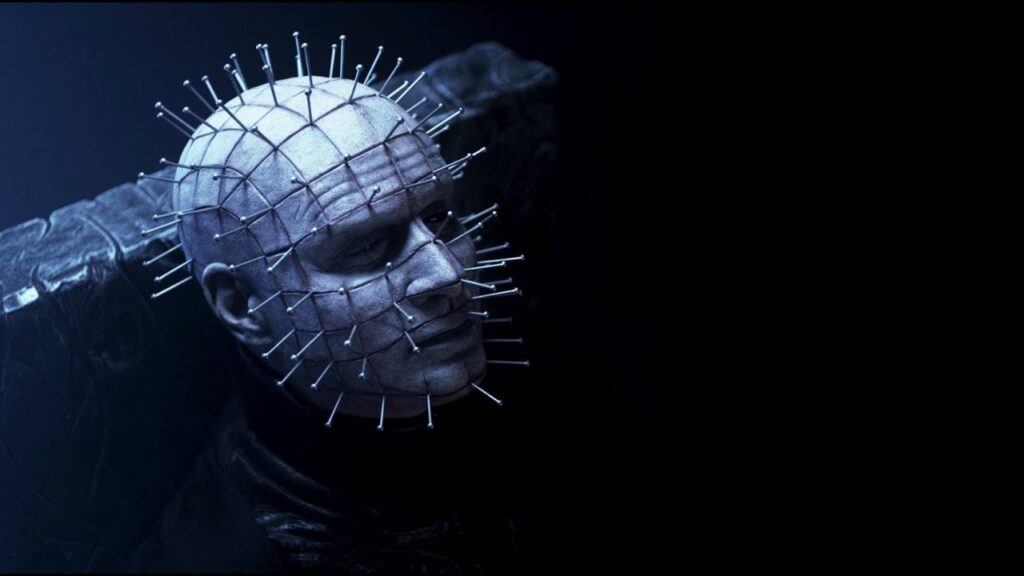
Hellraiser: Judgment and the End of Dimension’s Reign
After the disaster of Revelations, expectations for the next installment couldn’t have been much lower. By this point, the franchise had spent over a decade in direct-to-video limbo. Clive Barker remained on the outside. Doug Bradley was gone. Most fans had long since stopped expecting a genuine comeback.
And yet, Hellraiser: Judgment is one of the more interesting entries in the later years; not necessarily because of the movie itself, but because of the circumstances surrounding it.
Another Deadline, Another Sequel
Released in 2018, Hellraiser: Judgment was once again driven largely by rights-retention concerns. Like Revelations before it, the film was produced on a tiny budget, reportedly around $350,000. That fact alone should tell you how little confidence the studio had in the franchise.
Still, there was one significant difference. The filmmakers actually seemed to care.
Writer and director Gary J. Tunnicliffe had worked extensively on previous Hellraiser productions, primarily in makeup effects. Unlike some of the studio-driven projects that came before, Judgment felt like it was being made by people who genuinely loved the mythology.
Whether the final film succeeds is up for debate. But the effort is visible. And after years of cynical sequels, effort counted for something.
Why Doug Bradley Didn’t Return
Naturally, fans wanted to know whether Doug Bradley would finally return as Pinhead. The answer was no. And the reasons behind that decision reveal just how damaged the relationship between the franchise and its most iconic performer had become. Initially, Bradley declined because of the poor quality of the recent films and Dimension’s apparent lack of investment in the property. That’s understandable. After all, he’d watched the series spend years drifting further away from what made it special.
But then something even stranger happened. According to Bradley, Dimension wanted him to sign a non-disclosure agreement before he was even allowed to read the script. Think about that for a moment. This wasn’t a newcomer auditioning for a role. This was the man who had played Pinhead for nearly twenty years. The face of the franchise. The actor most responsible for turning Pinhead into a horror icon. And the studio wanted him to commit before seeing the material.
Bradley understandably wasn’t thrilled. The situation only reinforced the perception that the people controlling Hellraiser viewed it as intellectual property first and a creative endeavor second.
A Familiar Development Story
The irony is that Judgment followed a pattern that had become increasingly common throughout the franchise’s later years. At one stage, the script wasn’t even intended to be a Hellraiser film. Then it was. Then it wasn’t. Then it became one again.
That development history sounds absurd, but it perfectly encapsulates how Dimension handled the property during its final years. Instead of building stories around the mythology, the mythology was often forced into stories that had originally been something else.
Sometimes the approach worked. Often it didn’t. But it became one of the defining characteristics of the franchise’s later era.
Freedom After 26 Years
After twenty-six years and eight films under Dimension’s control, something finally changed. The franchise escaped.
For the first time since the early 1990s, Hellraiser had the opportunity to move forward without the studio that had spent decades managing it through budget cuts, rushed productions, and rights-retention exercises. More importantly, Clive Barker was welcomed back into the process. That alone felt monumental. The creator of Hellraiser was finally involved with Hellraiser again. And the results were immediately noticeable.
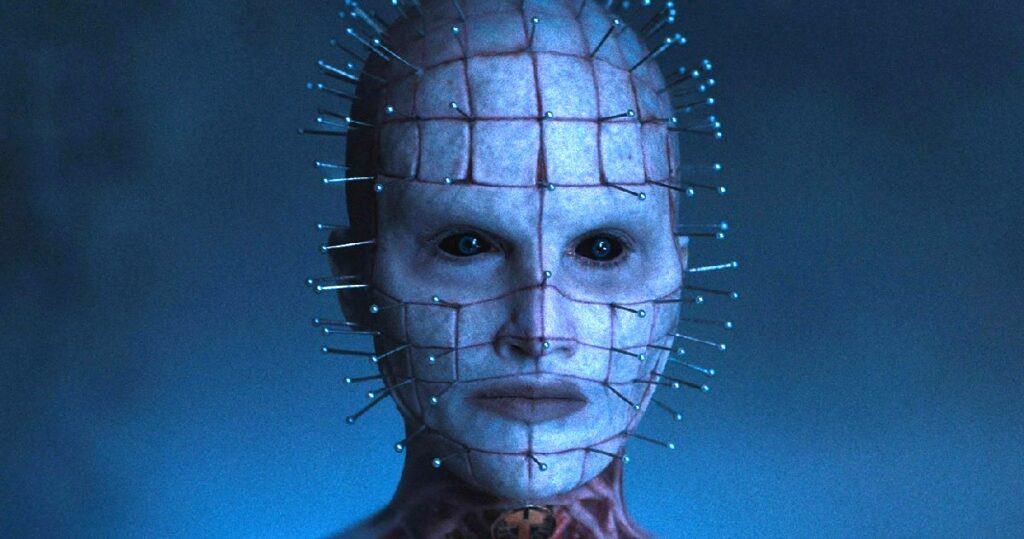
The 2022 Revival
Released through Hulu in 2022, Hellraiser represented the franchise’s most significant creative success in decades. Whether you rank it second or third behind the original films is ultimately a matter of personal taste. What isn’t debatable is that it felt like Hellraiser again. The movie embraced:
- The mythology.
- The mystery.
- The sensuality.
- The body horror.
- The philosophical ambiguity.
Rather than treating Pinhead as a generic slasher villain, the film returned the Cenobites to their roots as beings existing somewhere between torment and transcendence. The result was a horror film that felt connected to Barker’s original vision while still forging its own identity. For many fans, it was the first time in years that the franchise seemed to have a future.
| Film | Year | Release Type | Key Significance |
|---|---|---|---|
| Hellraiser | 1987 | Theatrical | Original film directed by Barker |
| Hellbound: Hellraiser II | 1988 | Theatrical | Expands Cenobite mythology |
| Hellraiser III: Hell on Earth | 1992 | Theatrical | Pinhead becomes franchise centerpiece |
| Hellraiser: Bloodline | 1996 | Theatrical | Final theatrical sequel of original era |
| Hellraiser: Inferno | 2000 | Direct-to-video | First DTV sequel |
| Hellraiser: Hellseeker | 2002 | Direct-to-video | Return of Kirsty Cotton |
| Hellraiser: Deader | 2005 | Direct-to-video | Frequently cited as unrelated-script adaptation |
| Hellraiser: Hellworld | 2005 | Direct-to-video | Online-gaming themed installment |
| Hellraiser: Revelations | 2011 | Direct-to-video | Produced primarily to retain rights |
| Hellraiser: Judgment | 2018 | Direct-to-video | Final Dimension installment |
| Hellraiser | 2022 | Streaming | Franchise revival under new stewardship |
How Dimension Repeatedly Undermined Hellraiser
Looking back at the franchise’s history, a pattern emerges. Again and again, promising ideas were abandoned or compromised. Dimension didn’t necessarily set out to destroy Hellraiser. But they repeatedly made decisions that weakened it.
Among the most damaging were:
Removing Clive Barker from the creative process
The franchise’s creator was gradually pushed further and further away until he had virtually no influence over its direction.
Prioritizing Pinhead over story
The studio increasingly viewed Pinhead as the franchise rather than as one component of a larger mythology.
Demanding rewrites and reshoots
Most famously during Hellraiser: Bloodline, where major studio interference permanently altered the film.
Slashing budgets
As the years progressed, productions became smaller, cheaper, and increasingly constrained.
Choosing rights retention over quality
By the end of the Dimension era, some films existed primarily to preserve ownership rather than to tell compelling stories.
Passing on stronger concepts
Crossovers, mythology-focused prequels, and Barker-backed projects were repeatedly abandoned in favor of lower-risk alternatives.
The Legacy That Survived Anyway
The remarkable thing is that Hellraiser survived despite all of this. While the films struggled, the franchise continued to thrive elsewhere. Fans received:
- Comic books
- Novels
- Short stories
- Documentaries
- Action figures and collectibles
- Video game appearances
- Expanded mythology across multiple media
Pinhead and the Cenobites even entered the world of Dead by Daylight, introducing the franchise to an entirely new generation of horror fans. There’s also a new Hellraiser video game in development, with Doug Bradley returning to voice Pinhead for the first time in years, a fitting reunion between the character and the actor most closely associated with him.
Frequently Asked Questions
Why did Clive Barker lose creative control of Hellraiser?
A combination of industry changes, the collapse of Film Futures, rights transfers, and growing studio control gradually reduced Barker’s influence. By the direct-to-video era, he had little meaningful input into the franchise’s direction.
Why did Hellraiser stop receiving theatrical releases?
The disappointing performance of Hellraiser: Bloodline convinced Dimension that the series was no longer a reliable theatrical property. Rather than rebuilding the franchise, the studio shifted toward lower-budget direct-to-video productions.
Was Hellraiser: Inferno originally a different movie?
No. Unlike several later sequels, Inferno was conceived as a Hellraiser film from the beginning. However, substantial studio-mandated rewrites, reshoots, and edits altered the final release significantly.
Were later Hellraiser movies originally unrelated scripts?
Some were. While the extent varies from film to film, movies such as Deader, Hellworld, and Judgment are frequently cited as examples of projects that underwent significant modification to fit the Hellraiser brand.
Why did Doug Bradley stop playing Pinhead?
Bradley became increasingly frustrated with the franchise’s direction and declined to participate in Revelations. He also chose not to return for Judgment after disagreements regarding the production process and the handling of the role.
Why didn’t the Halloween/Hellraiser crossover happen?
Several crossover concepts were discussed, including versions involving Clive Barker and John Carpenter. Ultimately, concerns from rights holders and uncertainty about audience reception prevented the projects from moving forward.
Was Hellraiser: Revelations really made to keep the rights?
That belief is widespread among fans, journalists, and many people associated with the franchise. The production’s speed, budget, and timing have made it one of the most frequently cited examples of a rights-retention sequel in horror history.
Why is the 2022 reboot viewed more positively?
The reboot returned many elements associated with Barker’s original vision, including complex Cenobites, elaborate mythology, body horror, and moral ambiguity, while introducing a new cast and narrative structure.
| Problem | Example |
|---|---|
| Creator exclusion | Barker gradually removed from decision-making |
| Budget reductions | Bloodline scale repeatedly reduced |
| Franchise simplification | Pinhead increasingly treated as the sole attraction |
| Rights-retention productions | Revelations, Judgment |
| Abandoned concepts | Halloween crossover, Barker projects, mythology prequels |
| Direct-to-video strategy | Inferno onward |
Conclusion
Few horror franchises have experienced a stranger journey than Hellraiser. It began as a daring, deeply personal creation from Clive Barker, produced independently and elevated by imagination rather than budget. It should have stood permanently alongside Halloween, Friday the 13th, and A Nightmare on Elm Street as one of horror’s defining series. Instead, it spent decades trapped in a cycle of interference, shrinking budgets, abandoned ideas, and increasingly desperate sequels.
And yet, somehow, it endured. Maybe that’s fitting. After all, suffering has always been part of Hellraiser’s mythology. The difference is that for nearly three decades, most of that suffering happened behind the camera. For a franchise built around eternal torment, that’s almost too perfect.
The post How Dimension Films Killed the Hellraiser Franchise (Again and Again) appeared first on JoBlo.


No comments:
Post a Comment