Monday, August 10, 2026

What Happened to Jaws 2? The Troubled Making of Universal’s Biggest Sequel

Tyler

There’s no task greater than creating a sequel to the biggest blockbuster of all time. Yet Universal wanted to do just that. Jaws 2 would eventually become a massive hit, but getting the sequel to theaters was anything but smooth. Steven Spielberg briefly considered directing it. The first director was fired after just 18 days of filming. Production moved from Martha’s Vineyard to Florida, Roy Scheider nearly fought with the replacement director, and real hammerhead sharks unexpectedly showed up during filming.

So, how did this movie go from being a potential prequel about the USS Indianapolis to what practically amounts to a slasher on the water? Why did the film’s first director get fired after nearly a month of filming? Why did they move the production to Florida?

Let’s find out how this movie became Universal’s most expensive movie ever, and so much more, as we look at what happened to Jaws 2.

How Jaws 2 Came Together

It can’t be overstated just how big of a deal Jaws was when it came out back in 1975. It completely changed the landscape of cinema by creating the summer blockbuster. And it was very early in its box office run that Universal demanded a sequel. While it seemed like a massive task, producers Richard D. Zanuck and David Brown knew that the film would get made with or without them, so they figured they may as well do it themselves.

Spielberg had a much different mindset, calling a potential sequel just a cheap carnival trick. Hilariously, he didn’t actually return the producers’ calls when they initially reached out about directing, which made sense. Spielberg had already made the definitive shark movie. How would he possibly top himself?

It didn’t help that his memories of the production were plagued with miserable conditions, so he didn’t want to put himself through that again.

But what would the story even be? The shark was blown up in quite magnificent fashion after eating Quint and taking out the Orca. Well, there were multiple ideas for where Jaws 2 could go. Peter Benchley, the original writer of the novel, had some ideas on where to take the story, but there wasn’t much interest. Science fiction writer Arthur C. Clarke even reached out with an idea about a mysterious object deep in the Indian Ocean, but the producers had difficulty even grasping the concept. So, they were rightfully worried that audiences wouldn’t be able to understand it either.

The USS Indianapolis Story

Howard Sackler, who had assisted in writing Quint’s USS Indianapolis speech in the first film, as well as an uncredited pass on the full script, wanted to make a movie out of that story. But there was concern that the iconography would be too different given the World War II setting and wouldn’t resemble Jaws.

At one point, there was a story about the sons of Quint and Brody hunting a new shark.

Eventually, Sackler was hired to write a draft that resembled the story we’d see in the finished film.

But what’s most shocking is that Spielberg actually considered making the movie himself. He even went so far as to write a draft of the script in July of 1976 based on Quint’s Indianapolis speech, which would have been so awesome. Unfortunately, he’d already signed a deal to make Close Encounters of the Third Kind, meaning he wouldn’t be able to work on Jaws 2 for another year. The producers had a timeline they had to make and simply couldn’t wait for his schedule to clear. So, they looked elsewhere.
Jaws 2

Roy Scheider Didn’t Want to Make Jaws 2

Eventually, Universal landed on John D. Hancock, who had only made three films at that time. He was a bit of an odd choice since he hadn’t directed anything of this scale before and had mostly worked in dramas, but I suppose something similar could have been said of Spielberg with the first film.

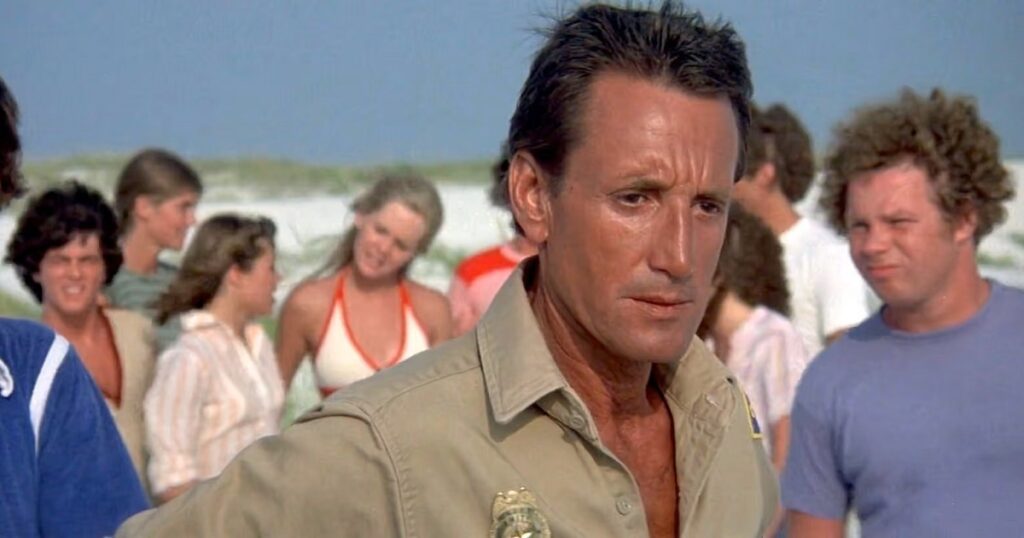
Roy Scheider had just left the production of The Deer Hunter due to creative differences when Universal approached him about Jaws 2. See, Scheider had signed a three-picture deal and was violating the contract by leaving The Deer Hunter. They said that all would be forgiven if he’d star in Jaws 2, but he was still reluctant. He simply didn’t see the point. So, in one of the craziest attempts to get out of a commitment, Scheider went nuts in his Beverly Hills hotel room and tried pleading insanity.

He really did not want to do the film. But Universal made him an offer that he couldn’t refuse. They quadrupled his salary and gave him points on the back end. Not only that, but given how overscheduled the first film went, they went as far as to offer $60,000 for each week that they went past the 12 weeks allotted. This was finally enough, and Scheider agreed to do the picture, which almost ended in fisticuffs between him and the director. But we’ll get into that in a bit.

While the producers wanted Richard Dreyfuss’ Matt Hooper to return as well, the actor didn’t want to do the film if Spielberg wasn’t involved.

Lorraine Gary would return in the role of Ellen Brody, which wasn’t a surprise given that she was married to Universal president Sid Sheinberg.

The Tragedy Behind Murray Hamilton’s Return

Sadly, the production of Jaws 2 was anything but easy for Murray Hamilton in his role as Mayor Vaughn. Producer David Brown had gotten word that Murray was heading to New York in the middle of production. Despite not being done with filming, Brown confronted Murray as he was leaving and was gobsmacked by what he found out. Murray was distraught, having found out that his wife was having a biopsy for cancer, and he refused not to be by her side during it. “To hell with my career,” were his words. Thankfully, Brown understood, but asked Murray if he’d stay on for just two days and they’d shoot all of his stuff in that time.

Murray agreed to do it, and after many phone calls to rearrange the schedule, was able to pull it off. Murray went to New York to be with his wife.

Who Were the Teenagers in Jaws 2?

The sailing teenagers were mostly made up of unknowns whose biggest role ended up being this film. Keith Gordon is probably the most recognizable of them, having appeared in Christine and Dressed to Kill in the years since.

Many of the extras in the film were recruited from the local high school, including the band itself. Though some of the locals actually revolted a bit against the film, wearing “Universal Go Home” shirts.

And while Jeffrey Kramer is great as Brody’s second-in-command, Hendricks, he wasn’t actually brought back until rewrites that would occur well into production.

Building the Sharks for Jaws 2

When it came to the killer shark that would serve as the film’s main antagonist, it was first thought that the production would be able to use the sharks from the original film. But everything had rusted and rotted to the point that very few pieces were even salvageable. They were essentially just able to use the frame.

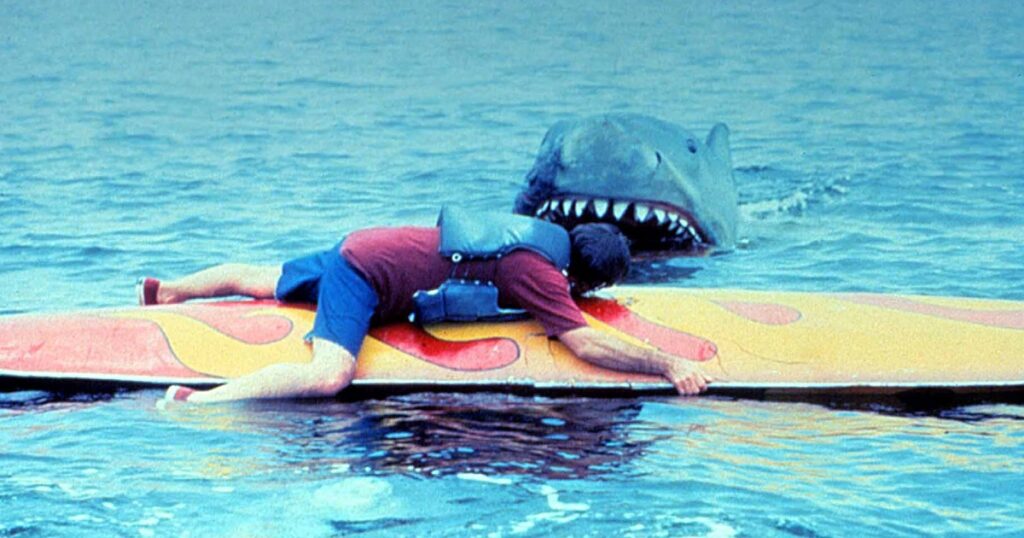
Even still, when the three new mechanical sharks were constructed, they were able to use the same body mold. Though there would be some tweaks made to the shark’s head.

Having not been a fan of the original mouth hinge, sculptor Chris Mueller made a brand-new mechanism, which used jowls to hide the hinge of the mouth. Sometimes it works, and other times it really doesn’t.

The original shark puppet was named Bruce, named after Spielberg’s lawyer, and the three new ones were called Bruce 2, Fidel, and Harold. Bruce 2 was the platform shark that would do the complicated movements with the mouth. Then there was a fin and full-scale shark that could be pulled by a boat.
Jaws 2

Why Jaws 2 Moved From Martha’s Vineyard to Florida

While they still used Martha’s Vineyard as some of Amity Island, they opted to shoot in Florida for the scenes taking place on the water. They chose Navarre Beach in the panhandle because the waters were just deep enough for their mechanical shark to operate in. The production was a massive boost to the local economy, with Universal spending over $400,000 on boats and equipment and around a million dollars for the cast and crew’s lodging.

The climax of the movie takes place at an island, but they couldn’t use a real one due to their need to get the shark up close to the shore, which would be impossible with a real island. So instead, they opted for a floating barge, which they then constructed massive rocks made out of fiberglass on. It’s an extremely impressive structure.

Why Was the First Jaws 2 Director Fired?

Filming began in June of 1977 but shut down after only 18 days. Studio executives did not like the dailies they were seeing, thinking the film’s tone was far too dark. They wanted something lighter and more adventurous and felt that Hancock was in over his head. So they fired him.

Hancock contends that it was the fact that he refused to let Lorraine Gary, who you’ll remember was married to someone quite important, go out on the boat with Brody in the final act, which would ultimately be his undoing. But even Zanuck had agreed that it would have been a terrible idea to include her during those sequences.

So, whoever’s side you believe, Jaws 2 was left without a director. The production shut down, and original writer Carl Gottlieb was brought aboard to lighten up the script, stripping down some of the violence and ratcheting up the humor. Due to the shifting screenplay, many actors were let go as their parts had been excised in the new draft.

At the suggestion of production designer Joe Alves, Jeannot Szwarc was brought aboard as the new director.

The Water-Skiing Scene

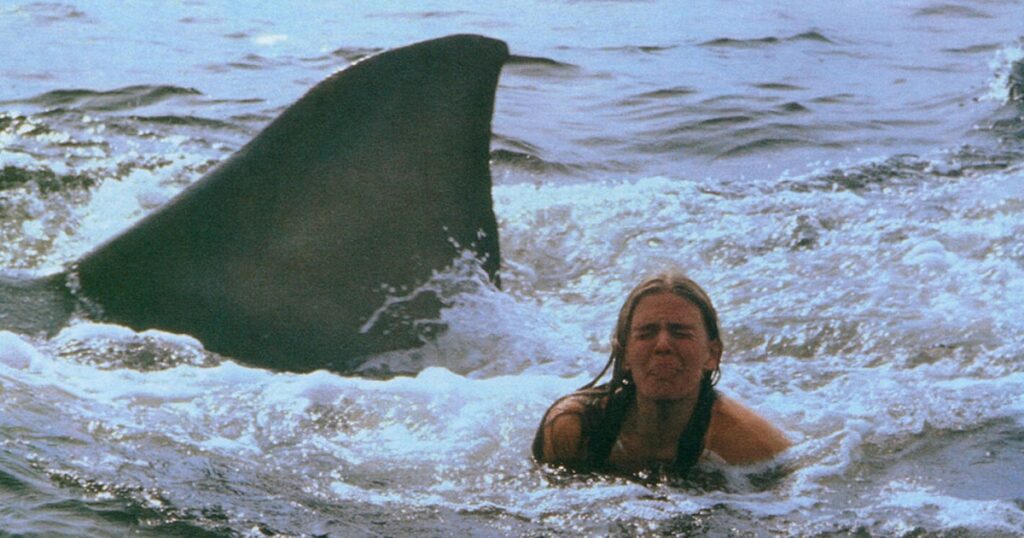
The first sequence that Szwarc filmed was the water-skiing incident, which also allowed Gottlieb enough time to do his new pass on the script. And there are few sequences as memorable as the water-skiing scene, followed up by the fiery attack from the shark itself. They even developed a new camera system for the sequence, wanting the camera to follow the water skier and the boat under the water. Then the fin prop was attached to a boat, which then pulled it off camera, giving us this great moment.
Jaws 2

Roy Scheider vs. Jeannot Szwarc

Scheider and his new director did not get along at first, and there was a lot of tension on set. They were constantly butting heads, with Scheider complaining that Szwarc was focused more on the extras and technical problems than any of the lead actors. It got so bad that David Brown and Vera Fields, who had been an editor on the first Jaws and was subsequently promoted to vice president of the company, tried to play mediators and had a sit-down between the two. But it became so heated that a fight broke out, and the director and actor had to be physically separated.

Scheider then requested an apology from the director for not being collaborative, who responded in the most non-apologetic way possible. “Time and pressure are part of my reality and priorities, something I must deal with. You have been consulted and your suggestions made part of my scenes many times. Whenever they did not contradict the overall concept of the picture. If you have to be offended, I deplore it, for no offense was meant. At this point in the game, your feelings or my feelings are immaterial and irrelevant. The picture is all that matters. Sincerely, Jeannot.”

Come on, man. Take some responsibility. Even still, they pushed their rift to the side and completed the rest of the film without coming to blows again.

Real Sharks and a Floating Island

During one scary moment, real hammerhead sharks showed up and started circling the sailing actors. The actors even tried informing the crew, but since the characters are meant to be acting scared and worried, the crew failed to realize that their calls for help were real. Thankfully, there was no incident with the real sharks.

Another crazy moment happened when the island that they’d constructed broke away during an intense storm and started floating away. Thankfully, they were able to retrieve it.

It was a production fraught with difficulties.

What Is Jaws 2 About?

Okay, but what is the story of Jaws 2 about exactly? Set four years after the events of Jaws, we see the aftermath of the Orca as it’s on the ocean floor. Two scuba divers are checking it out when they get attacked in the most ludicrous way that you could imagine. Going from this to this can be quite jarring, but it gets across the point that the director wanted to make right away. They were not going to hide the shark.

Amity Island gets expanded upon a little bit more, and we see the Brodys attending a scholarship fund. It’s an easy way to reintroduce some of the characters from the first film while sprinkling in some of the teens that would take center stage later on. I like that they establish that going out on the water is just an everyday part of living on the island.

Eventually, after the shark almost chomps down on a parasailor, it sets its sights on a water skier. It’s a great way of showing how much more in-your-face the shark would be, and it’s an awesome moment. Even better, they decided that the shark needed to look a little different, so they burn its face when it attacks the boat. God, I love a battle-damaged look.

Sadly, no one saw what happened, so they simply think that it was a boating accident. But when a whale washes up on the beach with a large bite mark, Brody thinks it must be another shark. There’s even a fun little moment where Brody tries to get Hooper’s help, but he can’t be reached because he’s on a research expedition in Antarctica. Total Hooper move.

Brody tries to inform Mayor Vaughn, but he’s treated like a lunatic, which is so disrespectful given what he did for the town in the first film. Though he definitely doesn’t help out his case when, in a fit of paranoia, he starts shooting at a school of bluefish thinking it’s the shark. This is enough to get Brody removed from his position as police chief, despite the fact that Brody discovers pictures proving that a shark attacked the divers.

And this is when the film turns into a slasher movie, switching mostly to the kids’ perspective as this shark starts hunting them down.

Jaws 2 Turns Into a Shark Slasher

Though, I’ve always been very confused by the scene where the group of divers are swimming out in the ocean and the shark essentially just comes by to jump-scare this one dude. Look, I know it’s so that he serves as the catalyst for getting Brody out on the water, but why the hell does a shark not eat any of these divers? He’s proven to be quite the fat bastard in terms of appetite, so why not chomp on one of them?

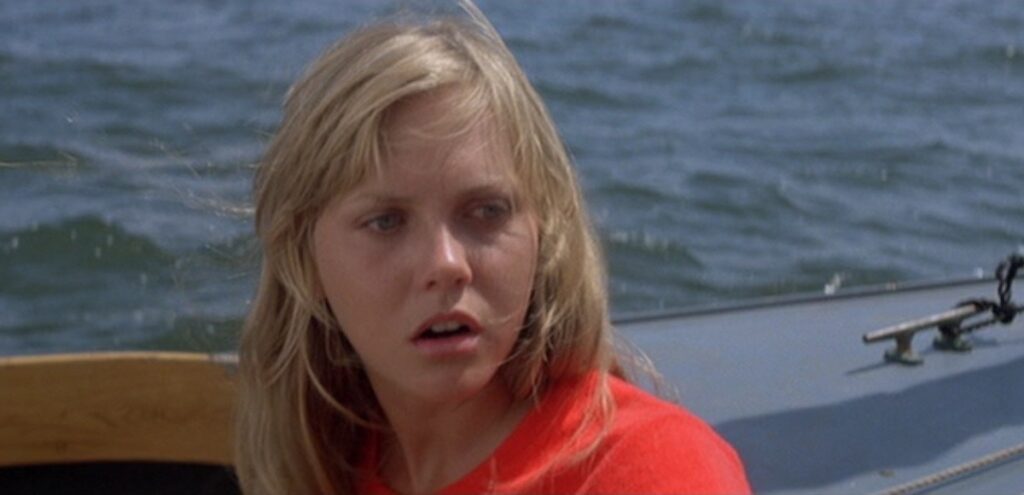
Back with the teens, one of the sailboats gets separated from the group and attacked by the shark, which is arguably the scariest moment in the film. The shark going under the boat or dragging the poor boy under in just an explosion of blood. All terrifying. And it’s made even better by the performance of Ann Dusenberry, whose shocked look sells the magnitude of the shark even further.

The shark keeps attacking the sailboats, with most of them capsizing and drifting. Some of the teens die, though shockingly less than you’d think. Then a helicopter even comes to help them, but is quickly taken out by the shark.

They find themselves nearing a floating island, which could serve as their salvation. But the shark is relentless and keeps coming after them.

Thankfully, Brody shows up at the perfect time and saves the day. He lures the shark and tricks it into biting on the underwater cable, electrocuting it to death. Appropriately, this was the final scene filmed.
Jaws 2

Deleted Scenes From Jaws 2

There were a few scenes removed from the final cut, mostly due to pacing, but there’s one I really wish we’d gotten. First, there’s a very unnecessary subplot where Brody is being antagonistic towards his wife’s boss, Len, who clearly has a thing for her. It’s almost like they were trying to pay homage to the cheating storyline that was in the first book. As much as I dislike it, it does mean that we lose out on a scene where Len convinces the city council to get Brody fired, and Mayor Vaughn is the only person opposed. It’s a nice moment that shows that the mayor hasn’t forgotten what Brody has done. So, it sucks to lose. It makes his character look so much more callous in the final cut.

But the biggest loss was the helicopter attack getting severely trimmed down. We were originally supposed to see the pilot struggling under the water as the shark tries to reach him. It’s very effective and so much scarier than the theatrically released scene.

John Williams’ Jaws 2 Score

John Williams returned to compose the sequel, bringing back the classic tune that became synonymous with sharks. It takes on a bit of a different flavor, as in the first film, the score practically worked as a signal of the shark’s presence. It was an essential tool, but when the shark is being shown so much more, that certainly changes the score’s relationship with it. There are still brief moments where it can really make the most of the tension, like the shark coming up below the parasailor, who escapes only at the last second.

Williams reused certain elements while creating something adventurous to try to energize the film, and it works pretty well.

How Much Money Did Jaws 2 Make?

Jaws 2 released in the United States on June 16, 1978, and brought in $9.8 million in its opening, making it the highest-grossing opening weekend ever at the time. What’s even more impressive is that the film actually opened up on the exact same day as Grease, which brought in a similar $9 million. So, I guess you could call Jaws 2 and Grease the original Barbenheimer.

Either way, given its $30 million budget, it was a massive hit. While the film wouldn’t bring in quite as much as its predecessor, it was still a major box-office success. Critics and audiences were a bit sour on the film, with it earning a 56% critics score and 40% audience score on Rotten Tomatoes.

The consensus was that Jaws 2 never approaches the lingering thrills of its classic predecessor, but it’s reasonably entertaining for a sequel that had no reason to exist.

Jaws 2 Merchandise and Books

Universal went hard with merchandise, releasing all sorts of Jaws-branded products. They also made two pretty interesting books. The first was Ray Loynd’s behind-the-scenes look at the film, titled The Jaws Log. Taking after Carl Gottlieb’s popular book chronicling the making of the first film, it’s not quite as informative, but still manages to paint an interesting picture of the production.

The second was a novelization written by Hank Searls that was actually based on an earlier script. Because of this, the story is greatly different.

The Alternate Jaws 2 Novel

The shark was actually pregnant, which drives her into a feeding frenzy, giving a bit of perspective on the shark’s behavior.

While Brody’s main job in the film is to claim there’s a shark with no one believing him, only for him to eventually save the day, the book takes things in a very different direction. In the book, Brody is completely ignorant to it being a shark and makes himself look like a bit of an idiot. In fact, he thinks some cop named Jeff is a murderer and the actual culprit behind these murders. Wowza.

Then there’s the mob element, which was taken from Benchley’s original novel. See, the town had built a casino after the incident with the first shark, and it’s run by the mob. They even kill Jeff. It’s fucking crazy.

And remember those divers at the beginning of the film? Well, their film role is taken to get developed, and the worker discovers the photos of the giant shark. He wants to sell his place and leave town and is worried that the shark will plummet property values. So Brody never gets the photo evidence, and it’s instead destroyed.

The book eventually ends up in the same place as the film, with the showdown between the shark and Brody.

Anyone that likes the movie should definitely check out the book just to see this alternate timeline version of Jaws 2.

Why Jaws 2 Still Works

While this sequel certainly doesn’t live up to the quality of the first film, it’s still an entertaining shark thriller with some very memorable sequences. The production was clearly anything but easy, but it certainly gave us some great stories.

And that, my friends, is what happened to Jaws 2.

Jaws 2 At a Glance

Release Date: June 16, 1978
Director: Jeannot Szwarc
Original Director: John D. Hancock
Screenplay: Carl Gottlieb, Howard Sackler
Starring: Roy Scheider, Lorraine Gary, Murray Hamilton
Music: John Williams
Budget: $30 million
Studio: Universal Pictures
Setting: Amity Island
Major Filming Locations: Martha’s Vineyard, Florida

A couple of previous episodes of this show can be seen below. For more, check out the JoBlo Horror Originals YouTube channel—and don’t forget to subscribe!

The post What Happened to Jaws 2? The Troubled Making of Universal’s Biggest Sequel appeared first on JoBlo.


James Cameron says the theatrical cut of Aliens is better, and he has one reel to thank for it

James Cameron has apparently joined one of the longest-running debates among Aliens fans: the 1986 theatrical cut versus the later Special Edition (often called the Director’s Cut).

The filmmaker made a surprise appearance at the American Cinematheque’s 70mm screening of Aliens on August 8, and his introduction offered a glimpse into how he thinks about the. During this intro, Cameron revisited the story of how producer Gale Anne Hurd convinced him to remove an entire reel from the movie. A decision that, according to Cameron, made Aliens better.

James Cameron’s Reel 2 revelation

Cameron explained that the original version of Aliens ran approximately two hours and 35 or 40 minutes. As he and his team looked for ways to shorten it, Hurd came up with a radical suggestion: remove Reel 2 entirely. Cameron’s initial reaction was that this suggestion was the worst idea he had ever heard. That’s understandable considering what Reel 2 contained: it introduced Newt and her family, established the colony, took the audience back to the alien derelict, and built toward the family’s encounter with a facehugger.

In other words, Reel 2 contains a substantial amount of story and world-building.

But Cameron eventually agreed to try Hurd’s suggestion. He said he sat down at the editing system, removed the reel and watched the movie. His conclusion: “That’s the movie.”

Cameron’s argument for the shorter Aliens

Cameron described the experience as an example of the value of an outside perspective. A director can become so immersed in a movie that it becomes difficult to judge what the audience actually needs to see. Hurd, as the producer, was able to look at the film with enough distance to recognize that the story might be stronger without an entire section of it. Cameron said that a talented studio executive who understands and cares about story can provide that same kind of objectivity.

The director doesn’t necessarily have to follow every suggestion, Cameron explained, but he should listen, process the idea and recognize when it resonates with something he already knows to be true about the movie. For Cameron, the Reel 2 experiment apparently became one of those moments.

So does James Cameron prefer the theatrical cut?

His comments strongly suggest that he does, or at least that he considers the theatrical cut, without Reel 2, to be the definitive version of the story.

Material removed from the theatrical version was later restored in the Special Edition, which has become the preferred version of Aliens for many fans. The expanded cut restores Reel 2 and adds several other scenes.

Cameron’s comments don’t necessarily mean that he believes every single addition in the Special Edition damages the film, but his Reel 2 story is clear: he personally tested the shorter version, saw that the movie worked without the material, and has apparently carried that lesson with him ever since. In other words, the argument isn’t simply “the theatrical cut has fewer scenes, therefore it’s better.” This is a filmmaker who has gone on to make multiple 3-hour movies, so brevity isn’t high on his list of priorities. The Aliens lesson was that removing information can sometimes make a movie more effective.

Theatrical Aliens vs. Special Edition

The debate over the two versions has always been interesting because both cuts offer something different. The Special Edition gives viewers more context. It expands the world of LV-426, provides more information about the colony and Newt’s family, and gives Ripley’s personal story additional weight.

The theatrical version moves with greater momentum. That may be what Cameron was getting at. Aliens begins as a mystery, becomes a military operation, and then descends into survival horror. The theatrical cut gets the audience to the conflict faster.

Cameron also defended the theatrical experience

Cameron’s surprise appearance wasn’t solely about the different cuts of Aliens. He also used the introduction to celebrate the theatrical experience and the importance of presenting movies in premium formats. He explained that Aliens was actually shot on 35mm film rather than 70mm, using the best high-speed, low-light negative available to the production at the time. Cameron nevertheless insisted on a 70mm release and personally handled the film’s color timing.

He recalled experimenting with the presentation in ways that pushed the laboratory and negative-cutting process to its limits, including frame-by-frame lighting changes during flamethrower bursts and white frames inserted when characters fired their machine guns.

His larger message: cinema isn’t dying. Cameron pointed to the younger members of the audience at the screening as evidence that people still want the communal experience of watching movies in theaters and argued that better, more premium presentation, including 70mm, can make that experience even better.

James Cameron may have settled the Aliens cut debate for himself

For years, fans have argued over whether the theatrical version or Special Edition is the best way to watch Aliens. Cameron’s story doesn’t necessarily end that debate for everyone, but it does provide something the discussion rarely gets: the director’s own explanation for why one of the biggest cuts in the movie’s history was made.

For Cameron, the experience became a filmmaking lesson he says he has followed ever since: sometimes the person who is less emotionally attached to the movie can see what the director cannot. And in the case of Aliens, that outside perspective helped create the version audiences saw in theatres in 1986. So while fans can continue arguing over the Special Edition, Cameron’s own recollection makes his position clear: when it comes to Aliens, less really can be more.

Which version of Aliens do you prefer, the theatrical cut or the Special Edition? Let us know by leaving a comment below.

The post James Cameron says the theatrical cut of Aliens is better, and he has one reel to thank for it appeared first on JoBlo.


Sunday, August 9, 2026

Every Season of Dexter Ranked From Worst to Best

Cody

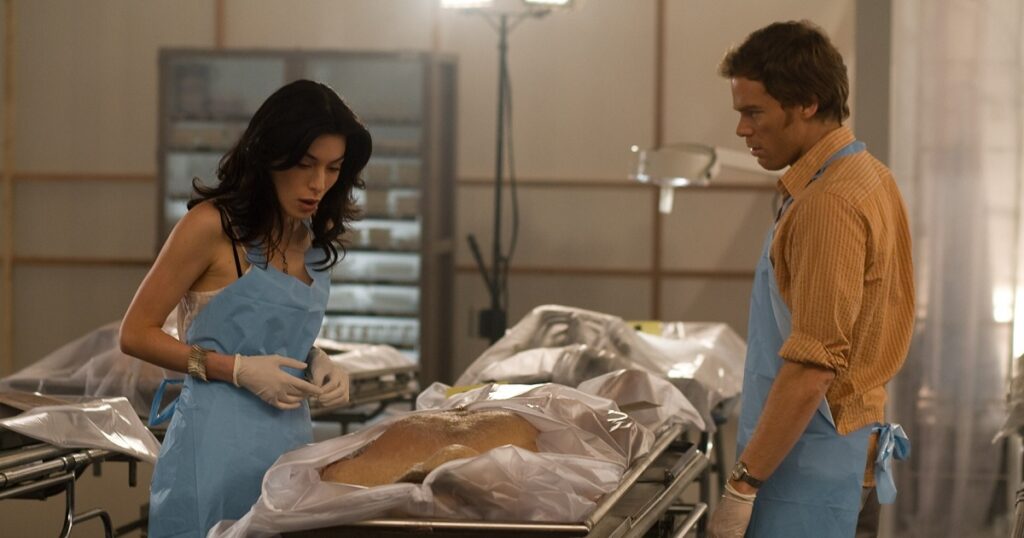
Somehow, I managed to miss Dexter when it originally aired. Despite having Showtime and despite the premise of a serial killer who hunts other serial killers sounding like exactly the sort of thing I would enjoy, I never watched a single episode during its original eight-season run. It wasn’t until years later, after binge-watching Six Feet Under and becoming more familiar with Michael C. Hall, that I finally decided to see what all the fuss was about. Now, having made my way through the original series, Dexter: New Blood, Dexter: Original Sin, and Dexter: Resurrection, I can finally understand why this character has remained so popular for two decades.

Created by James Manos Jr. and based on Jeff Lindsay’s Dexter novels, the series follows Dexter Morgan, a blood spatter analyst who secretly happens to be a serial killer. Guided by the Code taught to him by his adoptive father Harry, Dexter directs his homicidal urges toward murderers who have escaped justice. Over the years, the franchise has put Dexter up against some memorable killers, introduced complicated relationships that repeatedly challenged his carefully constructed identity, and put his secret life in jeopardy more times than he probably deserved to survive.

Of course, Dexter has also had its share of controversy. Some seasons are much stronger than others, some creative decisions have been questionable, and the original series finale became infamous for disappointing fans. Even the revival Dexter: New Blood failed to provide the ending viewers were hoping for. But rather than disappearing, the franchise kept evolving, first by going back to Dexter’s early years in Original Sin and then by bringing Michael C. Hall back for Resurrection. And, at least from my perspective, some of the newer chapters have proven that there is still plenty of life left in this troubled character.

What makes a great season of Dexter? For me, it’s not necessarily the biggest villain or the most shocking twist. The best seasons are the ones that put Dexter’s carefully constructed world under pressure, force him to confront his own humanity, and give Michael C. Hall great characters to play against.

So, after finally catching up with Dexter Morgan’s entire television saga, here is my ranking of every Dexter season and series installment, from worst to best.

Dexter season 6

#11. DEXTER SEASON 6

  • Release Year: 2011
    Showrunner: Scott Buck
    Primary Antagonist: Travis Marshall / The Doomsday Killer
    Key Characters: Dexter Morgan, Debra Morgan, Travis Marshall, Professor Gellar, Brother Sam
    Why It Ranks #11: An inconsistent tone, questionable creative decisions, and increasingly out-of-character behavior from Dexter make this the weakest season of the series.

New showrunner Scott Buck took over as of this season (and would remain at the head of the writers room for the next two seasons), and something is off about it from the start. The tone is strangely inconsistent, with goofy scenes appearing alongside some very dark material, and there are multiple occasions when Dexter behaves in ways that feel completely out of character. Some of these choices are so strange that it’s surprising Michael C. Hall was willing to go along with them.

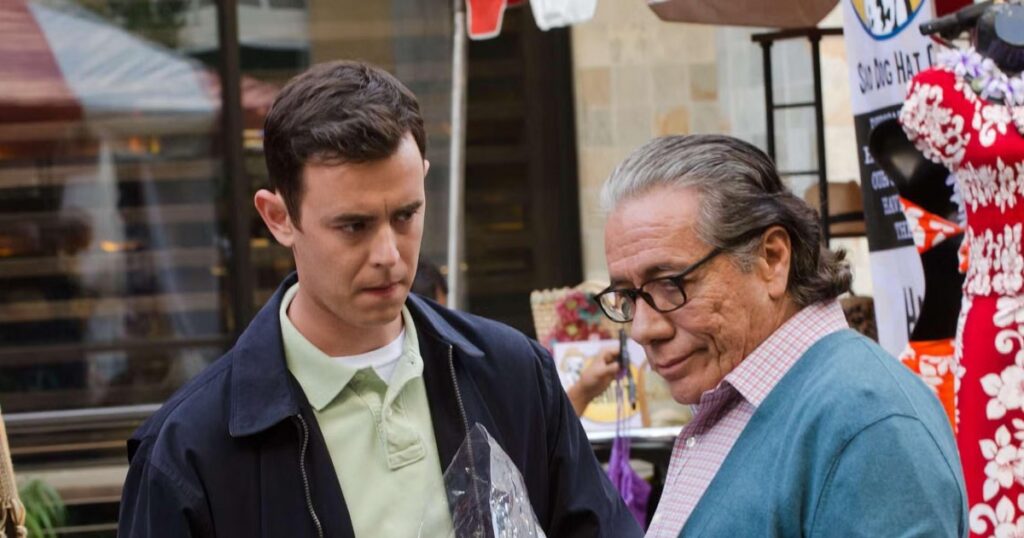
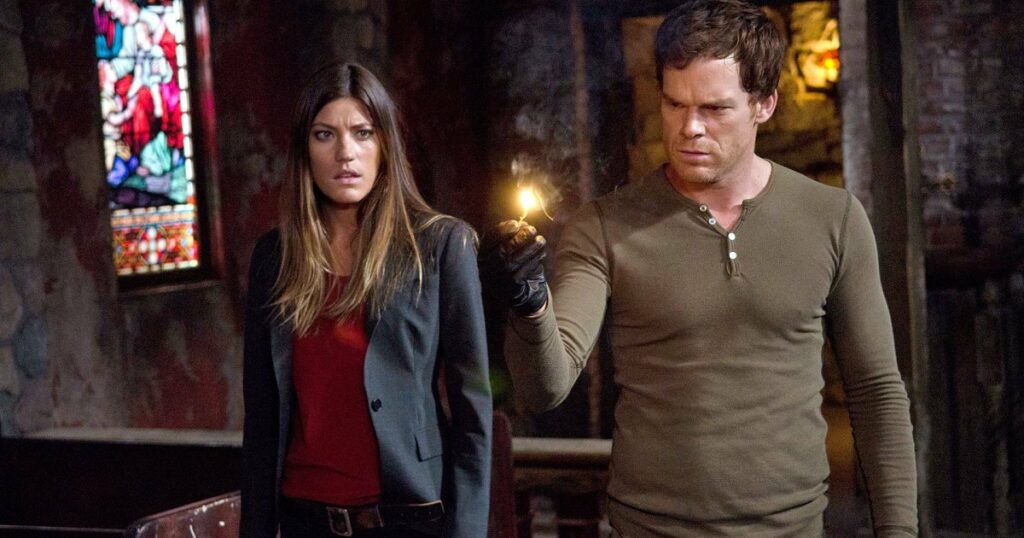
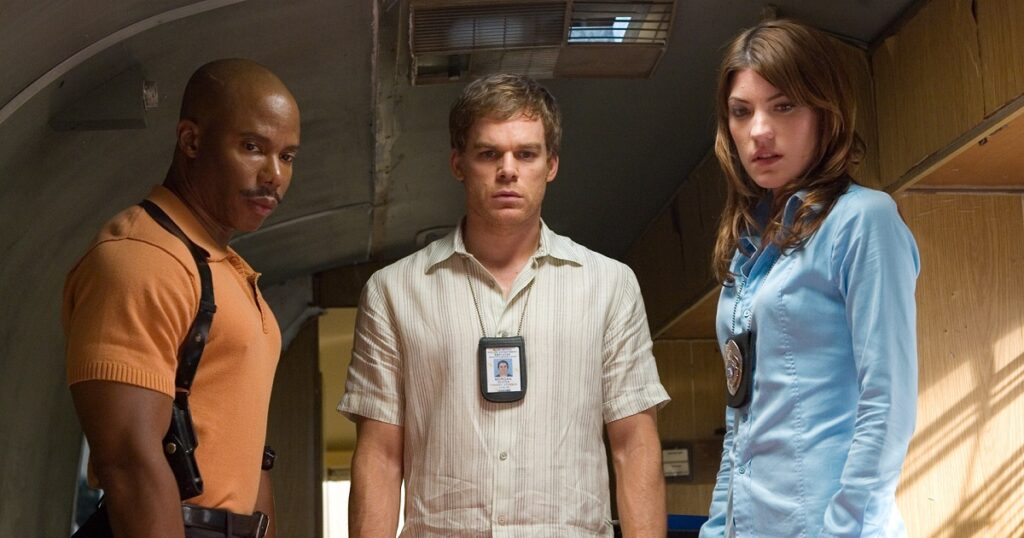
Dexter’s latest target is the Doomsday Killer, a murderer who stages elaborate crime scenes inspired by the Book of Revelation as part of an apocalyptic plan. The investigation centers on Travis Marshall (Colin Hanks), a seemingly ordinary man manipulated by Professor Gellar (Edward James Olmos) into carrying out disturbing acts. Meanwhile, Dexter develops an unexpected friendship with Brother Sam (Yasiin Bey), a reformed killer whose faith and search for redemption challenge Dexter’s worldview. Dexter’s adoptive sister Debra Morgan (Jennifer Carpenter) also takes a major step in her career as a homicide detective, though her personal struggles lead her into therapy sessions that complicate her relationship with Dexter.

While the Doomsday Killer storyline has some effective moments and the exploration of faith provides interesting ideas, this doesn’t even come close to working as well as some of the other serial killer scenarios the show has given us. The most problematic moments don’t involve the Doomsday Killer, but some of the scenarios Dexter finds himself in and, as mentioned, the way Dexter behaves in some moments. Dexter season 6 is a fine watch overall, but there are enough missteps that it ends up paling in comparison to the other seasons.

Dexter season 7

#10. DEXTER SEASON 7

  • Release Year: 2012
    Showrunner: Scott Buck
    Primary Antagonists: Isaak Sirko and María LaGuerta
    Key Characters: Dexter Morgan, Debra Morgan, Hannah McKay, Isaak Sirko, María LaGuerta
    Why It Ranks #10: Debra discovering Dexter’s secret creates powerful character drama, but uneven storytelling, questionable decisions, and the Hannah storyline keep Season 7 from reaching the show’s best.

After the controversial events of Season 6, this one finally brings Dexter’s biggest secret into the open. Season 7 changes the dynamic of the entire series when the person closest to Dexter, his sister Debra Morgan, discovers the truth about who he really is. She finds Dexter standing over the body of his latest victim and learns that her brother is not only a serial killer, but the infamous Bay Harbor Butcher who was once investigated by Miami Metro. Instead of turning him in, Debra struggles with the impossible choice of accepting Dexter’s actions while confronting the fact that the man she loves as a brother (or possibly more) is capable of murder.

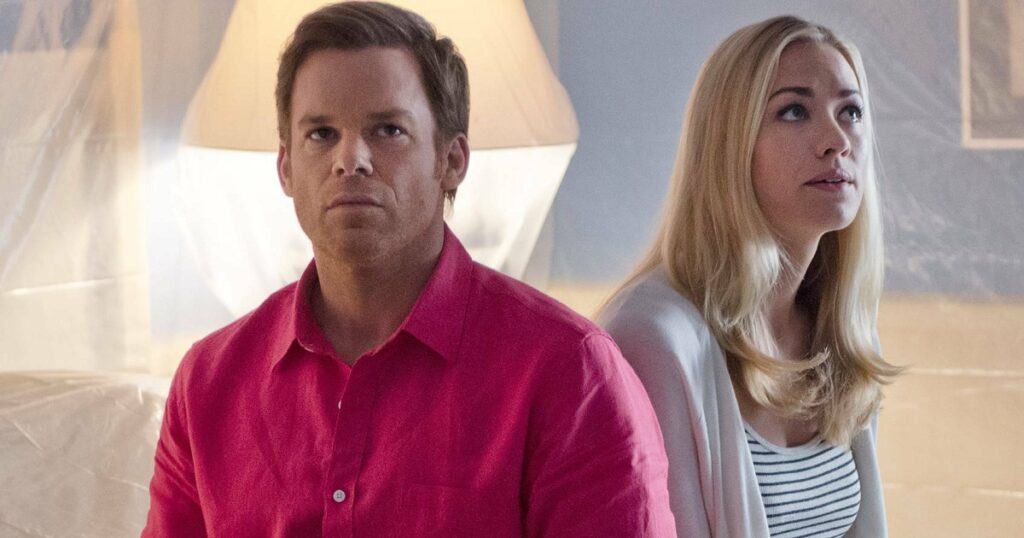
Meanwhile, Dexter becomes involved with Hannah McKay (Yvonne Strahovski), a woman with her own violent past who challenges his beliefs about his code, while Ukrainian crime boss Isaak Sirko (Ray Stevenson) targets Dexter after a murder connects him to the organization. At the same time, Captain LaGuerta (Lauren Vélez) continues investigating the Bay Harbor Butcher case, bringing Dexter’s secret closer than ever to being exposed to the public.

Season 7 was a mixed but often compelling return after the disappointing sixth season. Jennifer Carpenter delivers some of the strongest work of the entire series as Debra deals with the emotional fallout of learning Dexter’s secret, and she deserved far more awards recognition for the complexity she brought to the role. While some of Dexter’s decisions feel inconsistent with the character established in earlier seasons and the Hannah storyline was not particularly engaging, the season still delivers several powerful moments, especially through the conflict between Dexter and Debra and the growing threat of LaGuerta’s investigation. It may not reach the heights of the show’s best years, but Season 7 showed that Dexter still had strong stories left to tell.

Dexter season 8

#9. DEXTER SEASON 8

  • Release Year: 2013
    Showrunner: Scott Buck
    Primary Antagonist: Oliver Saxon / Daniel Vogel
    Key Characters: Dexter Morgan, Debra Morgan, Dr. Evelyn Vogel, Hannah McKay, Zach Hamilton
    Why It Ranks #9: A surprisingly strong season for much of its run is dragged down by an infamously disappointing series finale.

The eighth and final season of Dexter‘s original run brings the story of Dexter Morgan to what was meant to be its conclusion, while revisiting the origins of Dexter’s code by introducing the psychiatrist who helped shape his path and forcing him to confront the consequences of the life he has chosen.

Dexter forms a connection with Dr. Evelyn Vogel (Charlotte Rampling), a psychiatrist who reveals that she helped his late adoptive father, Harry Morgan (James Remar), develop Dexter’s code years earlier. Their relationship becomes complicated when a new serial killer known as the Brain Surgeon begins targeting victims connected to Vogel. Meanwhile, Dexter attempts to repair his damaged relationship with Debra, who has abandoned her career in law enforcement after helping protect Dexter’s secret at a devastating personal cost. Dexter’s former love Hannah McKay returns to his life, while he also becomes interested in the future of young potential killer Zach Hamilton (Sam Underwood), creating another opportunity to question whether his violent nature can be controlled or redirected.

Season 8 was a frustrating end to the original Dexter run. For much of its twelve episodes, the season is surprisingly strong, with interesting ideas surrounding Dexter’s origins, his relationship with Vogel, and his attempt to reconnect with Debra. However, the series finale delivers an extremely disappointing conclusion that fails to provide the satisfying resolution the character deserved. After years of hearing fans were unhappy with the ending, watching it firsthand made the criticism completely understandable. Thankfully, the later continuation projects allowed the Dexter story to continue beyond this finale rather than leaving this as the definitive ending. This was showrunner Scott Buck’s best season, but he was just saving his worst decisions for the series finale. I won’t mince words: that finale sucks.

Dexter: New Blood

#8: DEXTER: NEW BLOOD

  • Release Year: 2021–2022
    Showrunner: Clyde Phillips
    Primary Antagonist: Kurt Caldwell
    Key Characters: Dexter Morgan, Harrison Morgan, Debra Morgan, Angela Bishop, Kurt Caldwell
    Why It Ranks #8: A successful reinvention of the series with a new setting and strong character drama that ultimately stumbles when it tries to give Dexter another definitive ending.

After the controversial ending of Dexter‘s original eight-season run, Showtime revived the character with Dexter: New Blood, a limited series designed to revisit Dexter Morgan’s story and provide a more satisfying conclusion. Michael C. Hall returns as Dexter, with Clyde Phillips, the showrunner of the first four seasons of the original run, coming back to craft a story that’s set years after Dexter faked his death and disappeared. The revival explores what happens when he attempts to leave his violent past behind, only for his old instincts and unresolved family issues to resurface.

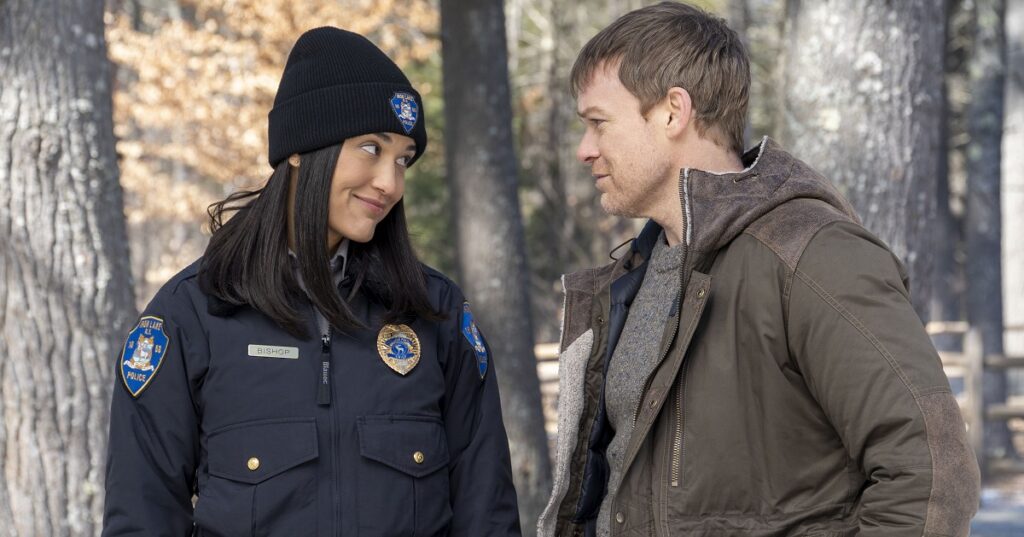
Nearly a decade after the original series finale, Dexter is living under the name Jim Lindsay in the small town of Iron Lake, New York, where he works at a sporting goods store and has avoided killing for years. His quiet existence begins to collapse when his teenage son Harrison (Jack Alcott) arrives, revealing that Dexter’s former partner Hannah has died and leaving Dexter to confront the possibility that his son may have inherited his own violent tendencies. When Dexter returns to killing after encountering someone who fits his code, he draws attention from local law enforcement, true crime podcaster Molly Park (Jamie Chung), and Police Chief Angela Bishop (Julia Jones), who begins investigating the town’s missing women. Meanwhile, Dexter crosses paths with Kurt Caldwell (Clancy Brown), a respected local businessman hiding disturbing secrets of his own.

Dexter: New Blood was an impressive return for much of its run, successfully creating a different atmosphere through its small-town setting while still capturing the appeal of the original series. Hall remains excellent in the role, and the addition of Harrison adds an interesting emotional conflict as Dexter is forced to examine the impact his choices have had on his family. The return of Jennifer Carpenter as Dexter’s imagined conscience in the form of Debra is also a welcome addition. However, despite building toward what seemed like a more satisfying conclusion, the finale once again left many viewers disappointed. It was a strong continuation of Dexter’s story that struggled to deliver the ending fans were hoping for… which is a good thing in the long run, because it allowed for more continuations.

Dexter season 2

#7. DEXTER SEASON 2

  • Release Year: 2007
    Showrunner: Clyde Phillips
    Primary Antagonists: James Doakes and Lila West
    Key Characters: Dexter Morgan, James Doakes, Rita Morgan, Frank Lundy, Lila West
    Why It Ranks #7: Turning Dexter’s own murders into the central investigation creates tremendous suspense and deepens the show’s exploration of its morally complicated protagonist.

Rather than repeating the formula that made its debut season such a success, Dexter immediately raises the stakes by turning its central premise against its protagonist, with his crimes attracting the attention of law enforcement.

When the bodies Dexter has dumped in the ocean are discovered, Miami Metro launches an investigation into the elusive Bay Harbor Butcher, unaware they’re searching for one of their own. As suspicion mounts, Sgt. Doakes (Erik King) relentlessly closes in on Dexter while FBI Special Agent Frank Lundy (Keith Carradine) joins the case. At the same time, Dexter’s personal life becomes even more chaotic when his relationship with his girlfriend Rita (Julie Benz) is strained by his suspicious behavior, leading him to Narcotics Anonymous, where he meets the dangerously obsessive Lila (Jaime Murray), whose unpredictable actions threaten everyone close to him.

I was impressed that Dexter tackled such a high-stakes storyline this early in its run instead of saving it for later seasons. The constant pressure of Dexter trying to stay ahead of both the police investigation and Lila’s increasingly reckless behavior makes for an intensely suspenseful season filled with satisfying twists. I especially enjoyed how the season further explores Dexter’s emotional contradictions, making him an even more fascinating character. I also liked that the season occasionally embraced the idea that Dexter is essentially a twisted version of a comic book vigilante, with Dexter himself even starting to see himself as a messed-up hero.

Dexter: Original Sin

#6. DEXTER: ORIGINAL SIN

  • Release Year: 2024–2025
    Showrunner: Clyde Phillips
    Primary Antagonists: Brian Moser and the mysterious killer targeting children
    Key Characters: Young Dexter Morgan, Harry Morgan, Debra Morgan, María LaGuerta, Angel Batista, Vince Masuka
    Why It Ranks #6: Patrick Gibson and the supporting cast successfully recreate the spirit of the original series while expanding Dexter’s backstory with an entertaining new mystery.

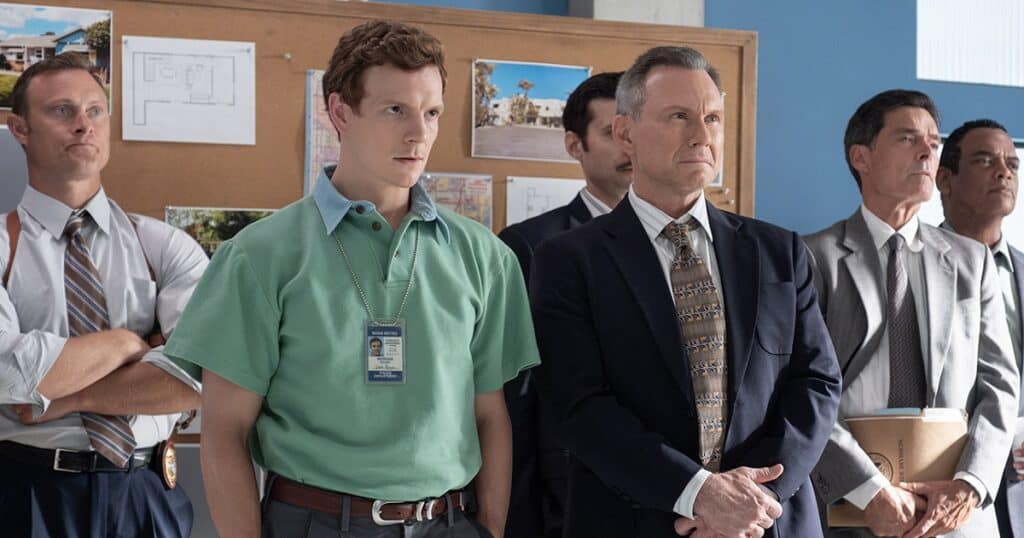
After the success of Dexter: New Blood, original Dexter showrunner Clyde Phillips returned to expand the franchise with Dexter: Original Sin, a prequel series exploring the early years of Dexter Morgan’s transformation into a serial killer. Set before the events of the original series, the show introduces younger versions of familiar characters while examining how Dexter developed his code under the influence of his adoptive father Harry Morgan. With the challenge of recasting iconic roles previously played by beloved actors, the series had to prove that a younger version of Dexter could still capture the spirit of the original.

Set in 1991, Dexter: Original Sin follows a young Dexter (Patrick Gibson) as he begins an internship at Miami Metro while learning to control his homicidal urges. After Harry (Christian Slater) suffers a heart attack, Dexter saves his life by killing a nurse who has been abusing her power by deciding which patients live and die, marking his first kill under the beginnings of Harry’s guidance. As Dexter works alongside younger versions of familiar characters like Debra Morgan (Molly Brown), María LaGuerta (Christina Milian), Angel Batista (James Martinez), and Vince Masuka (Alex Shimizu), he investigates a series of crimes involving abducted children while also suspecting another emerging serial killer is operating in Miami. The series also explores Harry’s early involvement in Dexter’s life and revisits key events involving Dexter’s biological family.

Dexter: Original Sin succeeds where many prequels struggle by creating a story that feels like more than just an excuse to revisit familiar characters. Patrick Gibson does an impressive job capturing Michael C. Hall’s mannerisms and the unsettling charm that made Dexter such an appealing character, while the supporting cast largely succeeds in bringing younger versions of these familiar faces to life. Although there are some continuity issues and moments where Dexter’s early actions don’t completely align with the careful killer he eventually becomes, the season delivers an entertaining expansion of the franchise. It’s a shame that Showtime decided to cancel this show after one season (backtracking from a season 2 announcement to do so), because I was all-in on following the continuing adventures of young Dexter and wanted to see more of this cast as these characters.

Dexter

#5. DEXTER SEASON 1

  • Release Year: 2006
    Showrunner: Clyde Phillips
    Primary Antagonist: The Ice Truck Killer / Brian Moser
    Key Characters: Dexter Morgan, Debra Morgan, Harry Morgan, Rita Morgan, Brian Moser
    Why It Ranks #5: An outstanding introduction to Dexter’s world, anchored by Michael C. Hall’s performance and an engrossing mystery that makes the series immediately addictive.

Premiering on Showtime in 2006, Dexter introduced one of television’s most unusual antiheroes… and audiences loved him.

While Dexter dispatches multiple killers over the course of the season, the central storyline revolves around the hunt for the mysterious Ice Truck Killer, a methodical murderer who drains victims of their blood before dismembering and freezing their bodies. As Miami Metro investigates the case, the killer begins taunting Dexter directly, leaving clues in his apartment and demonstrating an unsettling knowledge of Dexter’s secret life and forgotten childhood. The investigation gradually evolves into a deeply personal game of cat and mouse that forces Dexter to confront long-buried truths about his past.

Despite arriving nearly two decades late to the phenomenon, I was immediately hooked by Dexter‘s premise, strong writing, and Michael C. Hall’s charismatic performance. The show strikes an impressive balance between its procedural elements, dark humor, and psychological drama, while the Ice Truck Killer storyline provides an engrossing season-long mystery that continually raises the stakes. By the finale, I completely understood why Dexter became such a television sensation and was eager to dive into the next season. Season 1 ranking at #5 on this list isn’t a strike against its quality, but a testament to how great some of the follow-up seasons were.

Dexter season 5

#4. DEXTER SEASON 5

  • Release Year: 2010
    Showrunner: Chip Johannessen
    Primary Antagonists: Jordan Chase and his accomplices
    Key Characters: Dexter Morgan, Lumen Pierce, Debra Morgan, Jordan Chase, Joey Quinn
    Why It Ranks #4: Dexter’s partnership with Lumen creates one of the show’s best explorations of his humanity while delivering a gripping revenge story.

Following the departure of original showrunner Clyde Phillips, Dexter entered its fifth season under new leadership with Chip Johannessen taking over top creative duties. After years of exploring Dexter’s struggle to control his urges and maintain a normal existence, Season 5 pushes further into the question of whether Dexter is capable of genuine human connection.

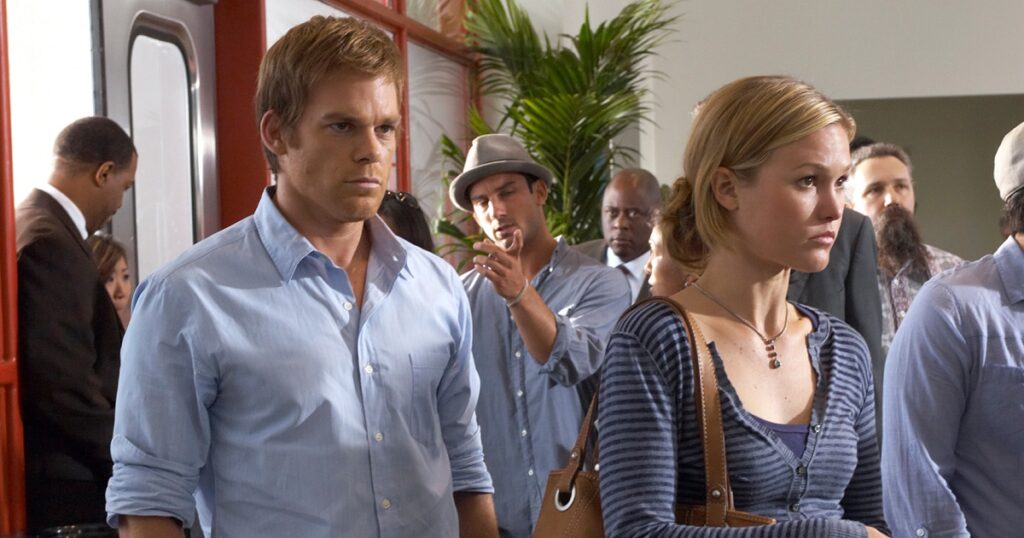
Still dealing with the aftermath of the previous season’s devastating events, Dexter finds himself drawn into the life of Lumen Pierce (Julia Stiles), a woman who survived a brutal series of murders and torture carried out by a group of powerful men. After discovering the extent of what happened to Lumen and realizing the full network of killers involved, Dexter helps her seek revenge by targeting those responsible. As the two work together, Dexter begins experiencing emotions and attachments he once believed he was incapable of, while other storylines involve Debra’s relationship with Dexter’s suspicious co-worker Quinn (Desmond Harrington), tensions between co-workers Batista (David Zayas) and LaGuerta, and several people getting dangerously close to uncovering Dexter’s secret.

Despite the change in showrunners, Dexter remained a strong series in Season 5, and I found the story of Dexter and Lumen to be one of the show’s most interesting arcs. Julia Stiles brings a strong emotional presence to her role, and watching Dexter move from using Lumen as part of his vigilante mission to developing a genuine bond with her adds another layer to his character. The season successfully continues the show’s exploration of Dexter’s humanity while delivering another suspenseful revenge story. Johannessen should have stuck around instead of passing the showrunner baton to Buck.

Dexter: Resurrection

#3. DEXTER: RESURRECTION SEASON 1

  • Release Year: 2025
    Showrunner: Clyde Phillips
    Primary Antagonist: Leon Prater and his circle of serial killers
    Key Characters: Dexter Morgan, Harrison Morgan, Angel Batista, Leon Prater, Charley
    Why It Ranks #3: A wildly entertaining continuation that embraces what makes Dexter interesting while expanding his world with a bizarre and memorable collection of serial killers.

Following the controversial endings of both the original Dexter series and Dexter: New Blood, Dexter: Resurrection serves as an ongoing continuation of the franchise. Michael C. Hall returns as Dexter, and the series explores what happens when he survives his supposed final fate and is forced to confront unfinished business with his past, his son, and the consequences of the life he has lived.

After being shot by his son Harrison at the end of New Blood, Dexter survives after spending ten weeks in a coma. When he learns Harrison has followed in his footsteps by killing a dangerous predator, Dexter heads to New York City to reconnect with his son and prevent him from making the same mistakes. Meanwhile, former Miami homicide detective Angel Batista continues pursuing the truth about Dexter’s identity as the Bay Harbor Butcher. In New York, Dexter encounters a new generation of potential victims, including a rideshare murderer known as the Dark Passenger and wealthy serial killer enthusiast Leon Prater (Peter Dinklage), who collects murder memorabilia and secretly gathers active killers together. Dexter infiltrates their world while attempting to eliminate these dangerous criminals, all while protecting Harrison and avoiding detection.

Dexter: Resurrection is a surprisingly strong continuation and ranks among the best seasons of the franchise. After years of disappointing attempts to end Dexter’s story, this season embraces what made the character engaging in the first place while expanding the world in new directions. Hall is clearly enjoying returning to the role, and the combination of Dexter’s relationship with Harrison, Batista’s pursuit, and the bizarre collection of serial killers creates an entertaining and suspenseful season. While some emotional moments are softened by the fact that Dexter’s imagination frequently brings back characters from his past, the overall result is a thrilling return. More Dexter is a glorious thing to have, especially when the quality level is this high.

Dexter season 3

#2. DEXTER SEASON 3

  • Release Year: 2008
    Showrunner: Clyde Phillips
    Primary Antagonist: Miguel Prado
    Key Characters: Dexter Morgan, Miguel Prado, Rita Morgan, Debra Morgan, The Skinner
    Why It Ranks #2: Dexter’s relationship with Miguel Prado provides exceptional character drama as Dexter discovers what happens when someone else embraces his twisted form of vigilante justice.

After two seasons built around Dexter Morgan’s secret nearly being exposed, Dexter Season 3 explores what happens when someone doesn’t condemn his vigilante lifestyle and embraces it instead. This time, Dexter is forced to consider whether his deadly mission can actually be shared with someone else.

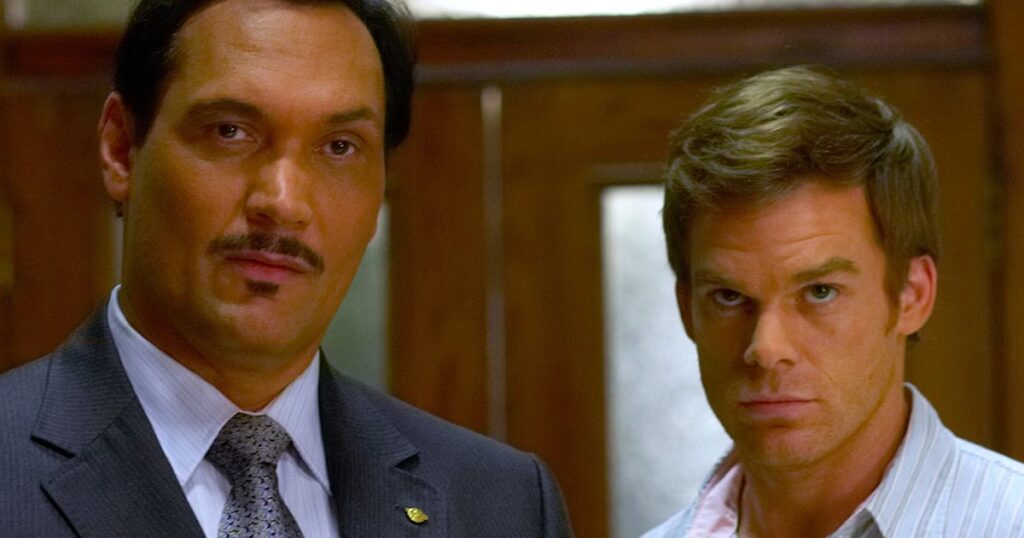
Dexter’s latest hunt takes an unexpected turn when he accidentally kills a man in self-defense, drawing the attention of the man’s brother, Assistant District Attorney Miguel Prado (Jimmy Smits). Once Miguel discovers Dexter’s true nature, he becomes fascinated by his brand of vigilante justice and proposes they work together to eliminate criminals. As their unlikely partnership deepens, conflicting moral boundaries gradually drive the two men toward an inevitable collision, while Dexter also faces major personal changes with Rita’s pregnancy and a season-long hunt for the serial killer known as the Skinner.

Season 3 became one of my favorite installments of the series thanks to the relationship between Dexter and Miguel Prado. Hall and Smits have terrific chemistry, and Smits delivers a captivating performance as a man whose enthusiasm for vigilantism slowly spirals into something far more dangerous. Although the Skinner storyline feels secondary, the season excels because of its character drama, memorable confrontations, and emotional stakes, making it one of the most engrossing chapters of Dexter.

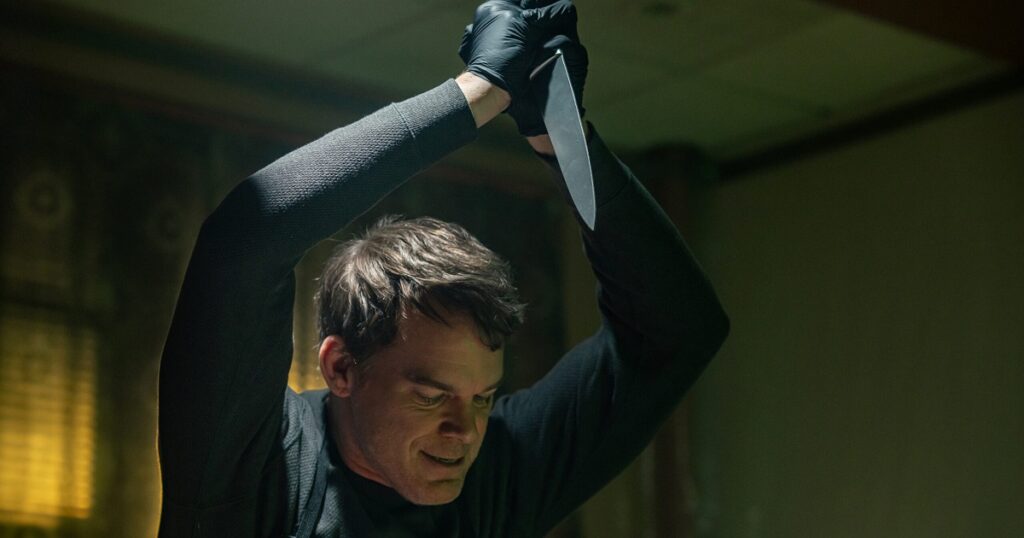
#1. DEXTER SEASON 4

  • Release Year: 2009
    Showrunner: Clyde Phillips
    Primary Antagonist: Arthur Mitchell / The Trinity Killer
    Key Characters: Dexter Morgan, Arthur Mitchell, Rita Morgan, Debra Morgan, Frank Lundy
    Why It Ranks #1: John Lithgow’s unforgettable Trinity Killer pushes Dexter to his limits, making Season 4 the most powerful combination of suspense, character development, and emotional stakes in the franchise.

By its fourth season, Dexter had established itself as a unique crime thriller built around a morally complicated protagonist, with Dexter working as a vigilante serial killer while trying to maintain the appearance of a normal life with his girlfriend Rita and their family. Season 4 explores what happens when Dexter encounters someone who appears to have mastered the same impossible balance he struggles with.

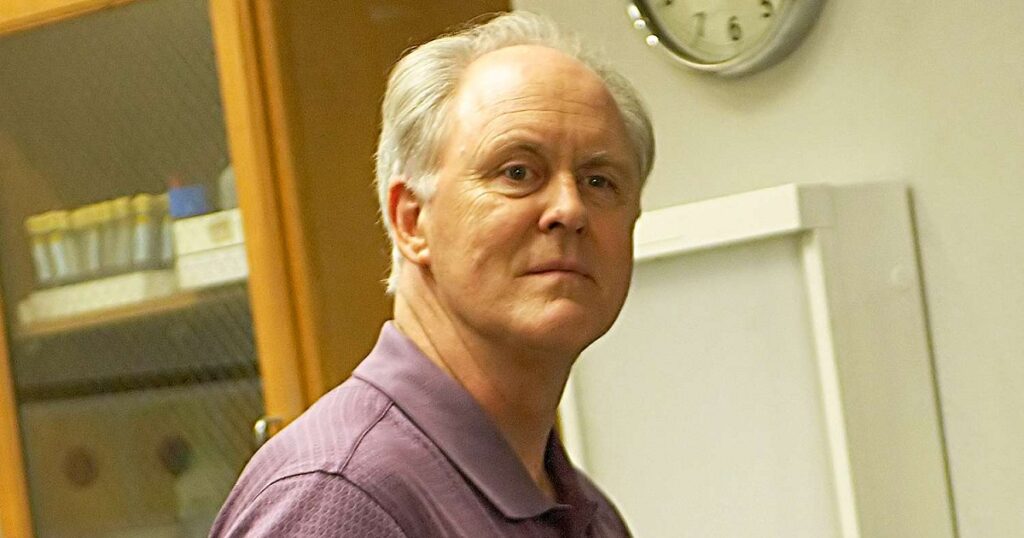
Dexter’s latest target is Arthur Mitchell (John Lithgow), better known as the Trinity Killer, a decades-long serial murderer whose ability to hide behind the image of a devoted family man makes him one of Dexter’s most dangerous opponents. When former FBI agent Frank Lundy returns to investigate Trinity’s crimes, Dexter quickly discovers Arthur’s identity but hesitates to kill him, fascinated by how he manages to maintain a seemingly ordinary life. Dexter secretly studies Arthur, hoping to learn how to better balance his own violent urges with his responsibilities as a husband and father. As Dexter’s obsession grows, his decision to keep Trinity alive creates increasingly dangerous consequences.

Season 4 is the strongest installment of Dexter, thanks largely to John Lithgow’s unforgettable performance as Arthur Mitchell. Lithgow creates a villain who is both terrifying and disturbingly human. The season works because Dexter’s own flaws and curiosity repeatedly put him in danger, and watching him struggle with the consequences of his choices creates suspense. While the series had already been impressive, Season 4 demonstrated just how powerful Dexter could be when it pushed its central character to his limits.

FINAL THOUGHTS

The franchise has certainly had its ups and downs, and some of its attempts to wrap up Dexter’s story have been considerably less successful than others. But even after the original series finale, New Blood, and everything that followed, I still don’t think we’ve seen the last of what makes Dexter Morgan such a fascinating character.

What surprised me most about putting this ranking together was how much I enjoyed the newer chapters. Dexter: Original Sin showed that there was still something worthwhile to explore in Dexter’s early years, while Dexter: Resurrection demonstrated that the best way to please the fans may be to stop trying so hard to end the story and just embrace the fact that we want this to keep going for as long as possible. Meanwhile, the original series still contains some of the franchise’s strongest material, particularly the Dexter/Miguel relationship in Season 3 and the unforgettable showdown between Dexter and the Trinity Killer in Season 4.

So while Season 4 remains my favorite, I’m glad I didn’t stop with the original series. I came to Dexter nearly twenty years late, but after making it through all eleven seasons and series installments, I can finally say I understand what everyone was so excited about. And if the first season of Resurrection is any indication of what’s still ahead, I’m more than happy to keep following Dexter Morgan wherever this strange, bloody story takes him next.

The post Every Season of Dexter Ranked From Worst to Best appeared first on JoBlo.


Big Directors Are Embracing AI — But Is It Backfiring?

Tyler

It really feels as though filmmakers are testing the waters with what they can get away with, with Artificial Intelligence. We’ve seen in pop up in various films, with the shark movie Chum from earlier this year using AI for nearly every moment involving a shark. Yet I’m always impressed with how much shame is thrust upon these filmmakers whenever they even speak somewhat positively about the technology. Because people online absolutely hate it. As soon as there’s even a hint of its usage, they’re like sharks smelling blood in the water, and it’s all the conversation around the film becomes.

And it’s understandable, for a variety of reasons. There’s the moral argument of supporting real human beings versus the AI data centers that are bad for the environment. But the simple fact that cannot be ignored is that AI-generated footage does not look good.

Eli Roth is getting destroyed online for his AI usage

When I first saw Ice Cream Man, I had my suspicions about there being some AI being used in the film. But, at the time, it was just speculation, so I gave Roth the benefit of the doubt. So to then see it confirmed is very disappointing. The biggest issue with Roth’s usage of AI is that it’s absurdly lazy. It was used to create shots that could have been easily filmed with a crew for very minimal money during the initial shoot. Instead, he opts for AI, and it immediately stands out. There was an audible groan from the crowd during one particularly egregious moment. Because as much as they try to convince us otherwise, AI footage simply looks bad.

It’s a problem that isn’t going away anytime soon. Every AI shot is immediately recognizable and looks like crap. The lighting is off and there’s a weird wiggle to everything in the frame. Even the good ones: it’s there. It’s the “Uncanny Valley” problem that video games had for so long. Will it eventually get to a place where it’s indistinguishable from practically shot footage? Absolutely. But it’s not there yet, and highlights how sterile that entire creation process ends up being.

Neil Blomkamp is taking a mixed approach

Neill Blomkamp has fully joined the dark side, releasing a 13-minute proof-of-concept titled Nightborne. He used Seedance 2.0 to create his AI short. Where Neill differs from your average person putting prompts into a program, he did still incorporate concept art and performances from 32 real people. It feels like a bit more of a bridging of the gap, but it still draws into question the ethical nature of it all. But at least he’s still hiring real artists and then tweaking it from there. It’s not much better, but I acknowledge that it is more moral.

The short itself feels awkward, with flat lighting and inhuman performances. I had to scrub through it because everything was so unnatural and soulless. I could not imagine trying to watch an entire film from something like this. But that’s exactly what Blomkamp is doing, and I’m sure others who can’t get traditional movies made are sure to follow.

Is there ANY positive to AI for filmmakers?

I’m not going to pretend that there’s not some usage for AI on a film. Rotoscoping is a very tedious process that can be drastically reduced by utilizing it. Logging footage can also be a massive pain in the ass. But that’s all it should ever be: a tool used by a human to help them do their job better. Instead, it’s being used to eliminate work from actual artists. There is without a doubt that there is AI being used on everyday films and television that we don’t even realize. From storyboarding to development, it’s around somewhere. But it’s up to us to say when enough is enough.

An argument can be made that AI is the future, and those who don’t embrace it are cursed to be stuck in the past. I find any use of Generative AI in a movie absolutely abhorrent.

I really hope that other filmmakers are taking notice of the reaction to legitimate filmmakers using AI. Because sure, they’ll laugh at it when some amateur is using it to make two celebs fight that you can watch for free on your phone. But when you’re paying for a product made by professionals, you expect it to be handcrafted by professionals, not written down into a prompt and then regurgitated.

Is AI a dealbreaker for you? Will more filmmakers use generative AI to complete the vision for their films? Let us know in the comments!

The post Big Directors Are Embracing AI — But Is It Backfiring? appeared first on JoBlo.

Friday, August 7, 2026

New Leprechaun movie in development with Saw writers Patrick Melton and Marcus Dunstan

The Leprechaun is coming back!

A new Leprechaun horror movie is in the works at Lionsgate, with horror veterans Patrick Melton and Marcus Dunstan writing the screenplay. The new movie’s plot is being kept under wraps. Oren Koules and Miles Koules will produce through their Koulest Productions banner, with Dan Heffner and Ketura Kestin executive producing.

The project gives the long-running horror franchise another chance at a comeback after Lionsgate previously attempted to develop a new Leprechaun movie a couple of years ago.

Patrick Melton and Marcus Dunstan Are Writing the New Leprechaun

Melton and Dunstan are no strangers to horror franchises. The pair previously teamed up on The Collector, The Collection, Scary Stories to Tell in the Dark, and Unhuman, with Dunstan directing several of their collaborations. They also have extensive experience with the Saw franchise. Melton and Dunstan co-wrote Saw IV, Saw V, Saw VI, and Saw 3D.

That makes their involvement particularly interesting for a Leprechaun movie, considering the franchise has always mixed horror with dark comedy and outrageous kills.

Oren Koules is also closely connected to Saw. He produced all 10 movies in the original Saw film series, which collectively earned more than $1 billion at the worldwide box office.

“After producing all the Saw films, and twenty-three wonderful years at Lionsgate, I’m thrilled to be working again with the Lionsgate team, Patrick and Marcus, and my son, Miles, on a terrifying new way into the rich world of Leprechaun,” Koules told Deadline.

Lionsgate Previously Tried to Reboot Leprechaun

This isn’t Lionsgate’s first attempt to bring the Leprechaun franchise back. In 2023, Lionsgate announced that filmmaker Felipe Vargas was attached to direct a new Leprechaun movie from a screenplay by Mike Van Waes. Roy Lee and Miri Yoon were set to produce.

That version did not make it into production.

Now Lionsgate is taking another swing at the franchise with Melton and Dunstan.

The Leprechaun Franchise Explained

The Leprechaun franchise began in 1993 with writer-director Mark Jones’ original Leprechaun, starring Warwick Davis as the murderous, wisecracking creature. Davis would go on to play the Leprechaun in six of the franchise’s eight movies. The original film also featured Jennifer Aniston in one of her earliest movie roles, years before she became one of Hollywood’s biggest stars.

The basic premise of the series is wonderfully simple: The Leprechaun is a murderous creature who will do just about anything to recover his pot of gold. From there, the movies have taken the character to a variety of locations, including Las Vegas, outer space, and the hood.

The franchise currently consists of eight movies released between 1993 and 2018.

Lionsgate became the owner of the Leprechaun franchise after acquiring Trimark Pictures in 2000. The most recent entry was 2018’s Leprechaun Returns, which brought the series back to its original setting and featured Linden Porco taking over the role of the Leprechaun from Warwick Davis.

The franchise has remained a cult favorite over the years, with the movies regularly receiving marathon treatment on the Syfy network around St. Patrick’s Day.

When Will the New Leprechaun Movie Be Released?

There is currently no release date for the new Leprechaun movie. The project is still in development, and details about the story, cast, director, and production schedule have not been announced.

It also remains unclear whether the new movie will continue the existing Leprechaun continuity or serve as another reboot of the franchise.

For now, all we know is that Lionsgate is developing the movie with Patrick Melton and Marcus Dunstan writing and Oren and Miles Koules producing. Are you glad to hear that there’s still life in this franchise? Let us know by leaving a comment below.

The post New Leprechaun movie in development with Saw writers Patrick Melton and Marcus Dunstan appeared first on JoBlo.


Teenage Sex and Death at Camp Miasma Review: Jane Schoenbrun’s meta riff on 80s slashers is wild

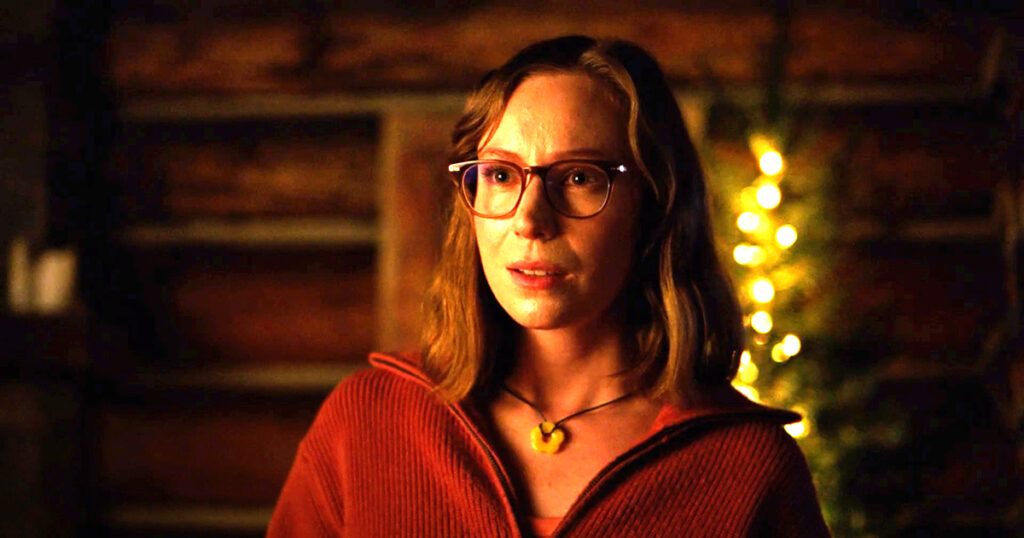
PLOT: A young arthouse director, Kris (Hannah Einbinder), seeks to reboot her favorite horror franchise, Camp Miasma, by tracking down the reclusive final girl from the first film, Billy (Gillian Anderson).

REVIEW: Teenage Sex and Death at Camp Miasma is director Jane Schoenbrun’s follow-up to I Saw the TV Glow. That movie was a solid arthouse hit following its acclaimed run at Sundance, and Camp Miasma is clearly designed to scratch a similar itch, with the two thematically similar in some ways. I Saw the TV Glow was an allegory for the transformative effect of the content we watch at an early age, and Miasma is similar in that way. Yet, where I Saw the TV Glow had a more complicated mythology, with the leads obsessing over a TV show (and expanded universe) called “The Pink Opaque,” Miasma is more universal. Who among us wasn’t obsessed with teen slashers while coming of age?

The Camp Miasma franchise, which we learn spanned the nineties and 2000s across multiple entries, is presented very much in the mold of Friday the 13th, with the original classic giving way to a whole variety of installments, including the inevitable sci-fi entry, Miasma 3000 — a riff on Jason X. But it’s also heavily influenced by Sleepaway Camp (although both franchises actually exist in the world of this film), particularly the shock ending.

Teenage Sex and Death at Camp Miasma, for the first half, anyway, is Schoenbrun’s most accessible film to date, functioning as a fairly knowing satire of the current state of horror franchises and how studios handle them. Kris, whose first feature was a Sundance hit but bombed (it’s described as Psycho from the POV of the shower curtain), has been hired to reboot Camp Miasma because the original has been deemed transphobic, but because she’s queer, the studio believes she will deliver a woke reboot that will relaunch what she dubs “zombie IP.”

Teenage Sex and Death at Camp Miasma largely splits the narrative into two. Half of the movie focuses on Kris as she visits Gillian Anderson’s Billy, who has become a recluse but now actually lives on the set from the first film. The two have a unique dynamic, with Billy not quite understanding Kris’s high-minded ideas for a reboot, even if there’s something else at play, with the vibe between the two immediately turning flirtatious. A KFC fried chicken-eating scene is this movie’s riff on the famous chess sequence from The Thomas Crown Affair.

Einbinder plays Kris with the right amount of pretentiousness and likability, making her easy to invest in—a good thing, as, through the film’s surreal twists and turns, she effectively becomes a kind of final girl, even if it’s not quite as simple as that. Anderson plays Billy to the hilt as a kind of sexy Norma Desmond type (she even wears a similar hat with a diamond), but the film is knowing enough to basically name-check the character outright.

Teenage Sex and Death at Camp Miasma

But a big chunk of the movie is Schoenbrun’s recreation of the original Camp Miasma, which plays out as a nostalgic, nearly pitch-perfect recreation of these kinds of slasher movies (I say “nearly” because too much CGI blood is used, which lessens the impact of the gore and makes it cartoonish). We get our slasher, Little Death (Jack Haven — star of I Saw the TV Glow), his origin story, and a group of teens ready to be slaughtered. The casting is a hoot, with deliberately too-old actors, including the great Zach Cherry from Severance and Sorry, Baby’s Eva Victor sporting a mohawk.

Where the film will prove divisive is in the highly meta final third, in which it becomes more of an allegory for Kris’s sexual awakening, with both her and Billy presented as being in a sort of erotic thrall to Little Death and his murders. They become excited at the prospect of being one of his victims — but he’s not real, right? Or is he?

What’s real and what isn’t doesn’t matter all that much in Schoenbrun’s film, which is highly surreal and not open to easy interpretation. This isn’t that different from I Saw the TV Glow, but I found Camp Miasma to be more openly entertaining, with a great sense of humor that Schoenbrun’s last film only showed in brief flashes. Teenage Sex and Death at Camp Miasma is amusing from start to finish, and it’s gorgeously assembled.

With backing from Mubi and Brad Pitt’s Plan B, it seems to have been made on a healthy budget, and it boasts beautiful cinematography by Eric Yue, with cigarette burns and print damage worked into the Camp Miasma scenes, as though we’re watching a battered 16mm print. The soundtrack is also well assembled, with Alex G’s score and the needle drops carefully curated.

It will be interesting to see how hardcore horror fans take to Teenage Sex and Death at Camp Miasma. While it’s probably too meta to actually be scary, it does have a strong love for the genre running through it, as well as nostalgia for the movies it riffs on. It’s lovingly made and certainly a unique experience that should become a cult hit — particularly for younger viewers, who it could serve as a gateway to some of the classics it references.

The post Teenage Sex and Death at Camp Miasma Review: Jane Schoenbrun’s meta riff on 80s slashers is wild appeared first on JoBlo.