
After the critical failure but financial success of Alien 3 (1992), it was only a matter of time before 20th Century Fox launched another Alien movie out of the airlocks. But what direction would they go? They needed something big. Something shocking. In fact, they needed a full-blown resurrection, figuratively and literally.
- Which major directors were considered to helm the film?
- What scene nearly killed multiple actors during filming?
- And what bizarre, very French creative choice was ultimately deemed too much?
Let’s head back to the Betty and find out what happened to Alien: Resurrection.
The Script: Joss Whedon’s Unusual Starting Point
When 20th Century Fox decided to revive their action-horror franchise, they turned to a rising writer: Joss Whedon. Fresh off Buffy the Vampire Slayer and his Oscar-nominated work on Toy Story, Whedon was tasked with writing the fourth installment. There was just one problem: Ellen Ripley was dead. She had gone out in Alien 3 in spectacular fashion, falling into molten metal while clutching a chest-bursting Alien queen. Not exactly sequel-friendly.
The Newt Clone Idea
Whedon’s initial solution? Not Ripley, but Newt. His early concept centered on a clone of Newt, the fan-favorite child survivor from Aliens, who (along with Hicks) had been unceremoniously killed off in Alien 3, a decision fans never forgave. This new version of Newt would have enhanced DNA and elite combat skills. Whedon even wrote a 30-page treatment with five different endings, including one set on Earth.
The studio passed. They feared audiences wouldn’t accept an Alien film without Ripley.
Bringing Ripley Back (With a Price Tag)
The idea of cloning Ripley came from longtime franchise producers Walter Hill and David Giler. Ironically, both of them were hesitant about making the film at all. But there was an even bigger obstacle: Sigourney Weaver didn’t want to return. Until she received what she famously described as a “dump truck full of cash.” She was paid $11 million to reprise her role.
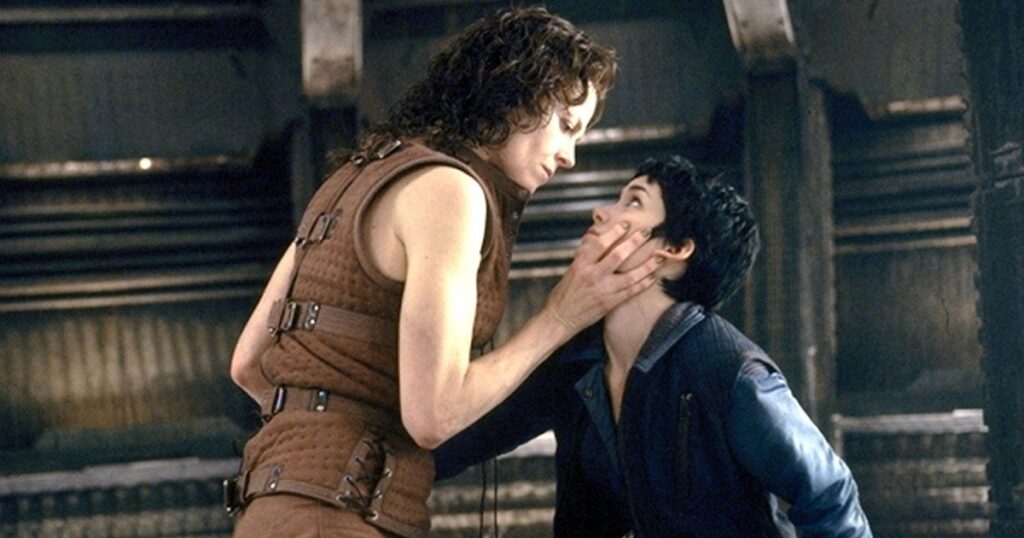
To her credit, Weaver was intrigued by the concept: a Ripley clone infused with both human and Alien DNA, creating internal conflict about where her loyalties truly lay.
The Director Carousel
With the script locked and Weaver on board, the search for a director began. The list of candidates was surprisingly stacked:
- Danny Boyle (Shallow Grave, Trainspotting) — Passed after early meetings
- Peter Jackson (Lord of the Rings) — Not interested
- Bryan Singer (The Usual Suspects) — Declined
- David Cronenberg (The Fly) — Famously said he doesn’t even make sequels to his own films
Enter Jean-Pierre Jeunet
Eventually, the job went to French filmmaker Jean-Pierre Jeunet, known for Delicatessen and The City of Lost Children. He was shocked to even be offered the role and initially thought making a fourth film was a bad idea. Still, he accepted:
- $70 million budget
- Full creative control
- An interpreter on set (he spoke very little English)
He brought in key collaborators, including:
- Cinematographer Darius Khondji
- Effects supervisor Pitof
- Production designer Nigel Phelps (Batman, Judge Dredd)
Casting the Crew of the Betty
Alongside Weaver, the film assembled a memorable cast:
- Winona Ryder as Call (who signed on immediately, before reading the script)
- Ron Perlman
- Brad Dourif
- Michael Wincott
- Dan Hedaya
- Gary Dourdan
- Dominique Pinon (a Jeunet regular)
Ryder later said she didn’t care if her character died in the first scene, she just wanted to be in an Alien movie.

Designing the Creatures
Amalgamated Dynamics returned to design the Xenomorphs, making them:
- More aggressive
- Sharper in design
- Shot from harsher, more threatening angles
The Newborn Hybrid
The film’s strangest addition was the human-Alien hybrid. Originally, it looked more human, even incorporating features inspired by Sigourney Weaver, but it was scrapped for resembling the creature from Species too closely. The final version included:
- Eyes
- A nose
- More emotional expression
The “Too French” Problem
Jean-Pierre Jeunet initially pushed the design much further. The hybrid was going to have:
- Pronounced genitalia
- A sexual dynamic with the Ripley clone
20th Century Fox shut it down quickly. Even Jeunet later admitted it was “too much, even for a Frenchman.” Probably the right call.
Production Challenges
Filming took place in Los Angeles from October 1996 to February 1997, making this the first Alien film not shot in England. But soundstage space was limited due to other major productions filming at the same time:
- The Lost World: Jurassic Park
- Titanic
- Starship Troopers
As a result, many scenes reused the same hallways dressed differently.
The Infamous Underwater Scene
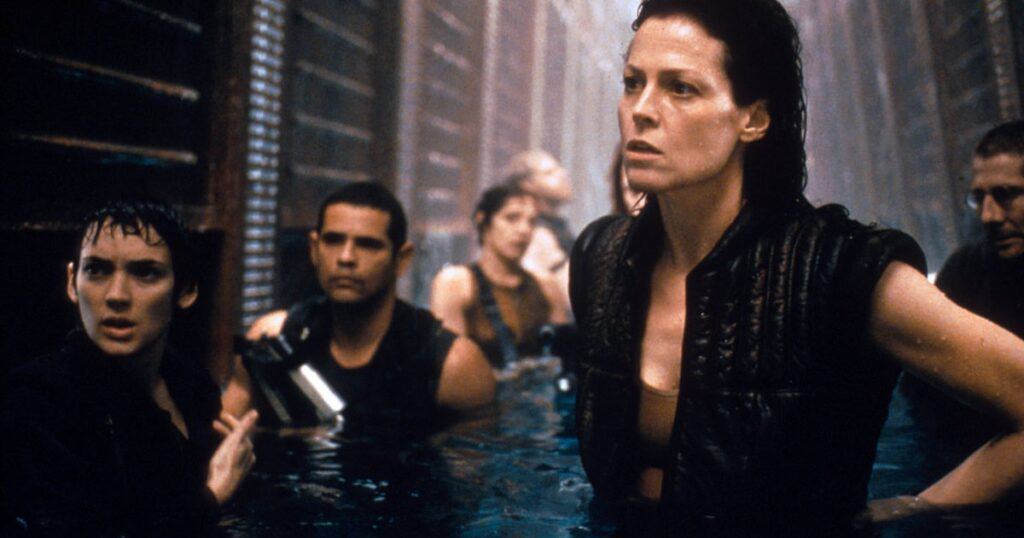
The film’s most dangerous sequence? The underwater escape. It required:
- 2 weeks of training before filming
- 2 additional weeks on set
- A massive tank filled over several days (with milk added for visual texture)
Multiple Near-Death Incidents
- Winona Ryder had a panic attack due to a childhood near-drowning
- Ron Perlman knocked himself unconscious underwater
- Leland Orser was left without oxygen when his diver stepped away
- Creature performer Tom Woodruff Jr. had extremely limited visibility and air
The sequence took three weeks to shoot and nearly cost lives.
Sigourney Weaver’s Impossible Shot
One of the film’s coolest moments wasn’t CGI. Sigourney Weaver practiced for weeks to make a backward basketball shot. Despite skepticism from Jeunet, she pulled it off either on the first try or after multiple attempts, depending on who you ask.
Ron Perlman’s reaction? Completely genuine. He broke character laughing.
Weaver later ranked it as one of the best moments of her life.
Release and Reception
Alien: Resurrection hit theaters on November 26, 1997.
- Budget: $70 million
- Box office: $161 million
- Shortest runtime in the franchise
- First Alien film with zero Oscar nominations
The Whedon vs. Jeunet Feud
Joss Whedon was extremely critical of the final product: “Everything I wrote was shot… just wrong.”
Jeunet fired back, saying Whedon was great at making films for “American geeks and morons.” Not exactly a friendly collaboration.
Legacy of Alien: Resurrection
While often considered a step down from Alien and Aliens, the film has gained appreciation over time. It returned to a more action-driven, fan-service-heavy approach, especially compared to later entries by Ridley Scott. More importantly, it marked:
- The final appearance of Ripley
- A lasting expansion into comics, games, and merchandise
Love it or hate it, Alien: Resurrection carved out a strange, unforgettable place in the franchise.
And now you know what happened to Alien: Resurrection.
A couple of previous episodes of this show can be seen below. For more, check out the JoBlo Horror Originals YouTube channel—and don’t forget to subscribe!
The post Why Alien: Resurrection Is the Weirdest Movie in the Franchise appeared first on JoBlo.


No comments:
Post a Comment