
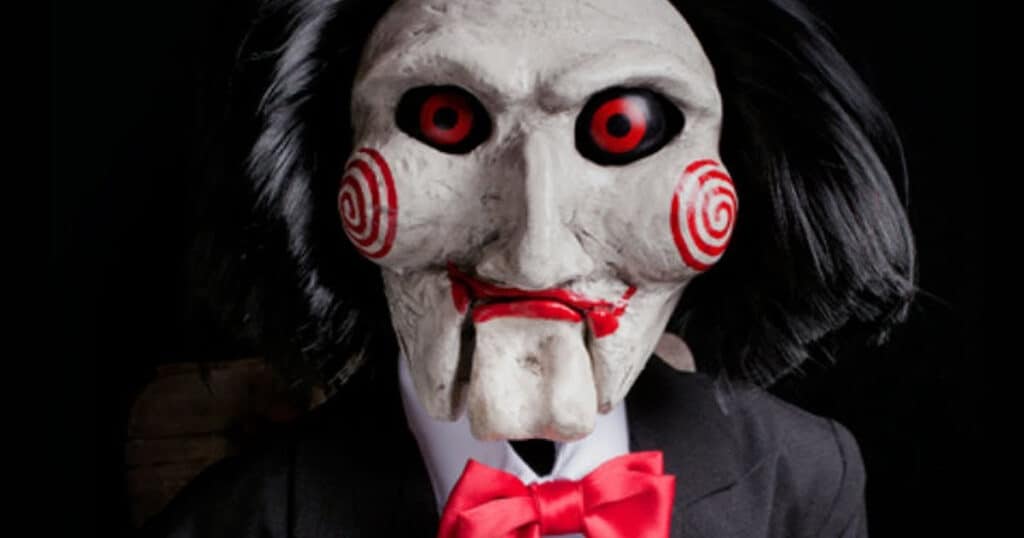
Saw is the series that just won’t stop. Some horror fans love these movies, others write them off as nothing but torture porn, but movie-goers usually show up to give them healthy box office returns. Not only did the most recent film, Saw X, wind up making over $100 million worldwide, but it also earned the franchise’s best reviews since the original. Now, Blumhouse Productions is gearing up to show us what they can do with the property. But, how does the entire series rank? You can check out our Saw Movies Ranked list below – then let us know how you would rank the movies by leaving a comment!
Saw Movies Ranked (Worst to Best)
- 10. Saw 3D (2010) – Worst entry, messy finale
- 9. Jigsaw (2017) – Repetitive and forgettable reboot
- 8. Saw V (2008) – Strong moments, weak overall story
- 7. Saw IV (2007) – Convoluted but expands mythology
- 6. Saw III (2006) – Dark, emotional, but unpleasant
- 5. Saw VI (2009) – Surprisingly fun with social commentary
- 4. Spiral: From the Book of Saw (2021) – Refreshing standalone
- 3. Saw X (2023) – Strong return with character focus
- 2. Saw II (2005) – Bigger sequel
- 1. Saw (2004) – Best overall, genre classic

10. SAW 3D (2010)
Why it ranks here: A rushed, messy finale that fails to deliver a satisfying conclusion.
What works:
- Bringing back Dr. Gordon was a smart idea
- Some of the most ambitious traps in the series
What doesn’t:
- Disjointed story due to last-minute director change
- Weak payoff for Hoffman’s arc
- The fake Jigsaw survivor storyline feels irrelevant
Bottom line:
Despite its scale, Saw 3D is an underwhelming and chaotic ending to the original run.
Envisioned as the “Final Chapter”, the seventh Saw movie was released in 3D so it could throw some of the biggest, most over-the-top traps of the franchise right in the viewer’s face. Saw 3D was directed by Saw VI’s Kevin Greutert, who was forced to replace Saw V director David Hackl just two weeks before filming was to begin. A move like that is just asking for a mess, and that’s exactly what the finished film turned out to be. A mess. Bringing Dr. Lawrence Gordon / Cary Elwes from the first movie back for the “last one” was a good idea, but it could have been handled better. The storyline following a guy who lied about being a Jigsaw survivor as he’s put to the test feels irrelevant. The way-too-long saga of Jigsaw’s follower Mark Hoffman is finally brought to an end, but in the most underwhelming way possible. He deserved worse.

9. JIGSAW (2017)
Why it ranks here: A failed attempt to reboot the franchise that repeats old ideas without adding anything meaningful.
What works:
- A new creative team offers a slightly different perspective
- A few traps stand out visually
What doesn’t:
- Retreads familiar twists (secret apprentice, timeline tricks)
- Forgettable characters
- Doesn’t resolve lingering questions from earlier films
Bottom line:
Jigsaw feels like a stale continuation rather than a true reinvention, making it one of the least memorable entries.
You might think the Saw franchise would be refreshed and rejuvenated after a seven year rest, with new writers crafting the story and new directors (Michael and Peter Spierig) at the helm. But Jigsaw feels like just another in the previous line of sequels, and even falls into the same traps that dragged down the series the first time around: timeline tricks, flashbacks, forgettable characters going through a bunch of traps, and a secret apprentice. Questions left unanswered at the end of Saw 3D remain unanswered, as Jigsaw goes off in its own direction with a new Jigsaw follower we had never seen or heard of before. The most memorable thing about this movie is the fact that there’s a trap involving lazers at one point.

8. SAW V (2008)
Why it ranks here: A sluggish installment that prioritizes lore over engaging storytelling.
What works:
- The Strahm vs. Hoffman dynamic adds tension
- The tracheotomy trap is one of the franchise’s most memorable moments
What doesn’t:
- The group trap storyline lacks emotional investment
- Heavy reliance on flashbacks slows pacing
- Feels like it’s going through the motions
Bottom line:
While it has standout moments, Saw V is ultimately a dull and overextended chapter in the saga.
Now we know that Mark Hoffman is the apprentice carrying on Jigsaw’s work, and FBI agent Peter Strahm is figuring this out as well. While Hoffman and Strahm play cat and mouse through dimly lit scenes, there’s also a group of five people going through a series of tests / traps. But it’s difficult to care what’s going on with them when the real focus of the movie is Strahm’s pursuit of Hoffman and flashbacks to Hoffman being recruited by Jigsaw. Directed by David Hackl (who was production designer and/or second unit director on previous sequels), Saw V has one of the coolest moments in the franchise – Strahm giving himself a tracheotomy with a pen to survive a water trap – but otherwise feels like it’s just trudging through the motions. It’s a dull, tired entry in the franchise. Which isn’t surprising, since they were pumping these sequels out so quickly.

7. SAW IV (2007)
Why it ranks here: Expands the mythology but pushes the series deeper into convoluted territory.
What works:
- Deeper exploration of Jigsaw’s backstory
- Continues the franchise’s expanding narrative
What doesn’t:
- Overcomplicated storytelling
- Increasing reliance on twists and timelines
- Begins the “soap opera” phase of the series
Bottom line:
Saw IV adds to the lore but sacrifices clarity, marking the point where the franchise becomes overly convoluted.
Saw II and III director Darren Lynn Bousman stuck around for this sequel, but the story came from a new team of writers who had to figure out how to continue the franchise now that Jigsaw and his apprentice Amanda (Shawnee Smith) were dead. One choice was obvious: Jigsaw needed a new apprentice. But some other choices were unexpected, like the fact that they still have Donnie Wahlberg hanging around as Saw II’s Eric Matthews, six months after he appeared to be as good as dead. They also dive deeper into Jigsaw’s back story than ever before, giving him even more reasons for getting into the business of making death traps. Terminal cancer and a car accident / failed suicide attempt weren’t the only things that drove him over the edge, there was also a tragic romance and a lost child. This is when the Saw franchise becomes a convoluted, gory soap opera, which is part of its charm as far as some fans are concerned.

6. SAW III (2006)
Why it ranks here: A bold and emotional entry that’s weighed down by its extreme bleakness.
What works:
- Strong emotional core centered on grief and forgiveness
- High-stakes narrative involving Jigsaw’s survival
- Memorable and intense traps
What doesn’t:
- Excessively dark and unpleasant tone
- Some traps feel more grotesque than meaningful
Bottom line:
Saw III tells a compelling story but is so bleak and brutal that it becomes difficult to revisit.
Franchise creators James Wan and Leigh Whannell still receive executive producer credits on every new Saw movie, but their creative involvement with the series really ended with Saw III. And they saved the grossest for last. Even Whannell was reportedly sickened by the sight of the traps in this one, which feels much darker and meaner than its predecessors. And includes a trap that involves rotten pig guts. While the terminally ill Jigsaw and his apprentice Amanda are forcing a surgeon to give him brain surgery, a grieving man played by Angus Macfadyen is made to go through rooms where he has to decide whether or not to save people connected to his son’s death in a drunk driving incident (the driver, the witness who didn’t testify, the judge who gave a lenient sentence). This is a bleak, ugly movie that tells an interesting story, but it’s really not pleasant to sit through.

5. SAW VI (2009)
Why it ranks here: A surprisingly strong late sequel that injects energy and social commentary into the formula.
What works:
- Unique focus on a health insurance executive adds thematic depth
- More engaging and “fun” tone compared to earlier entries
- Creative traps tied to moral choices
What doesn’t:
- Continued reliance on Hoffman as the central villain
- Still weighed down by unnecessary flashbacks
Bottom line:
Saw VI stands out as one of the better sequels, offering a fresh angle even as it remains tied to the franchise’s baggage.
Mark Hoffman is not an interesting villain, and it’s really annoying to watch multiple movies of him slipping out of situations you hope will remove him from the franchise. But while we’re still stuck with Hoffman and we’re still being shown a ridiculous amount of flashbacks designed to answer questions we didn’t even know to ask (three movies later, we’re still getting details about what was going on in Saw III), Saw VI does manage to be a step up from a few previous installments. Director Kevin Greutert, who edited the previous films, made a movie that brings an element of fun back into the proceedings, and the screenwriters had the great idea of putting a health insurance executive from Jigsaw’s past at the center of the games being played in this one. Unfortunately, Saw VI was the least successful Saw up to this point because movie-goers were giving up on the franchise.
4. SPIRAL: FROM THE BOOK OF SAW (2021)
Why it ranks here: A refreshing standalone that breaks away from the franchise’s tangled continuity.
What works:
- Simpler, more straightforward story
- Chris Rock brings a different energy to the series
- Doesn’t rely heavily on past mythology
What doesn’t:
- Villain lacks impact
- Tone can feel uneven when shifting between humor and seriousness
Bottom line:
Spiral works best as a standalone thriller, offering a break from the franchise’s increasingly complex timeline.
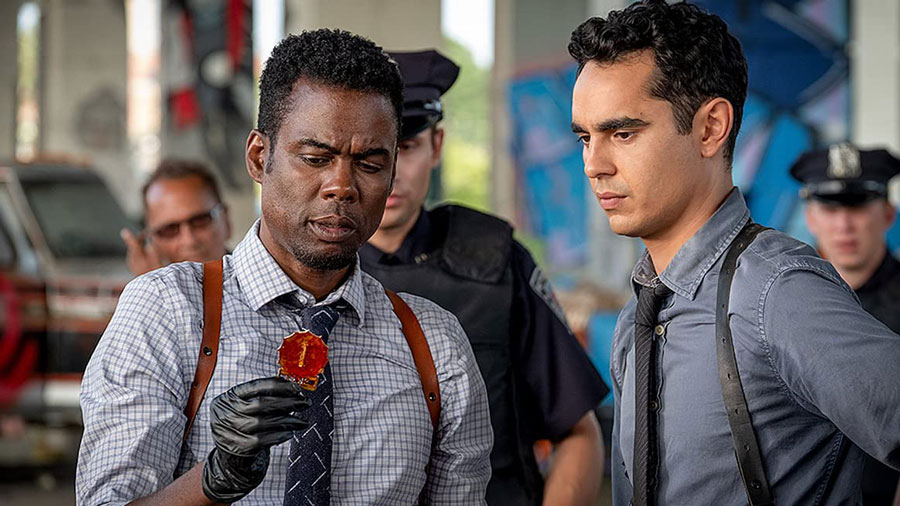
Saw II, III, and IV director Darren Lynn Bousman returned to direct this entry about a Jigsaw copycat. Sort of the Friday the 13th: A New Beginning of Saw movies. Chris Rock stars as a detective trying to figure out who keeps killing cops with elaborate traps, and his performance is at its best when he’s cracking jokes. When Rock tries to be serious and intense, it’s not quite convincing. Samuel L. Jackson plays his dad, who gets stuck in a trap along the way – and it is fun to see an icon like SLJ strung up in a Jigsaw-style device. Other than the traps and references to Jigsaw, Spiral: From the Book of Saw has little to do with other Saw movies… which was kind of refreshing at this point. There’s no reason to worry about continuity, you can just sit back and take it in as a simple, straightforward revenge movie.

3. SAW X (2023)
Why it ranks here: A strong return to form that refocuses the story on Jigsaw himself.
What works:
- Character-driven approach centered on John Kramer
- Simpler timeline avoids unnecessary confusion
- More emotionally engaging than most sequels
What doesn’t:
- Still part of a messy timeline
- Some familiar formula elements remain
Bottom line:
Saw X revitalizes the franchise by stripping things back and putting the focus where it belongs: on Jigsaw.
I find several of the Saw sequels tough to sit through. Not because of the violence and gore, but because they get bogged down with excessive flashbacks, timeline tricks, and soap opera-esque dramatic elements. I got so tired of that stuff, I even found the generally unpopular “spin-off” Spiral to be a refreshing entry in the franchise because it didn’t attempt to further (or further convolute) the story of John “Jigsaw” Kramer… So it’s surprising to find that Saw X was able to get me interested in another Jigsaw story – and it was able to do so by jumping back in time, being set in between the first and second movies. Before the franchise got so messy. This time Jigsaw himself is the star and we follow him as he falls prey to a medical scam, then gets revenge on the scammers by playing his usual games with them. Not only was this the most enjoyable Saw sequel in quite a while, it was also the first time I had any interest in John Kramer as a character. In the other movies I always found him to be a pompous, hypocritical ass.

2. SAW II (2005)
Why it ranks here: A smart and effective sequel that successfully expands the original concept.
What works:
- Expands from a single room to a larger, more complex game
- Strong tension between Jigsaw and Detective Matthews
- Memorable traps like the syringe pit
What doesn’t:
- Slightly less tight than the original
- Relies more on scale than precision
Bottom line:
Saw II builds on the original in meaningful ways, delivering a bigger but still engaging experience.
Like any self-respecting sequel, director Darren Lynn Bousman’s Saw II takes the concept introduced in the first movie and goes bigger with it. Instead of two people trapped in a room we get seven people trapped in a house, hit with nerve gas and forced to participate in a series of games that have been set up throughout the rooms so they can retrieve vials of antidote. While they’re playing their games, deeply flawed detective Eric Matthews and a SWAT team have stormed a warehouse and caught Jigsaw himself… and yet Jigsaw, who we learn more about this time around, still manages to be in control of the situation. The traps are gruesome and cringe-inducing (the syringe pit is one of the most memorable moments in the series), but there’s still a sense of fun to the sequel. It doesn’t feel as bleak and mean-spirited as future installments in the franchise would.
1. SAW (2004)
Why it ranks here: The original remains the most effective and iconic entry in the franchise.
What works:
- Simple but brilliant concept
- Strong performances and tension
- One of the most memorable twists in horror history
What doesn’t:
- Lower budget limits some production elements
Bottom line:
Saw is a modern horror classic that proves simplicity and strong storytelling can outshine even the most elaborate sequels.
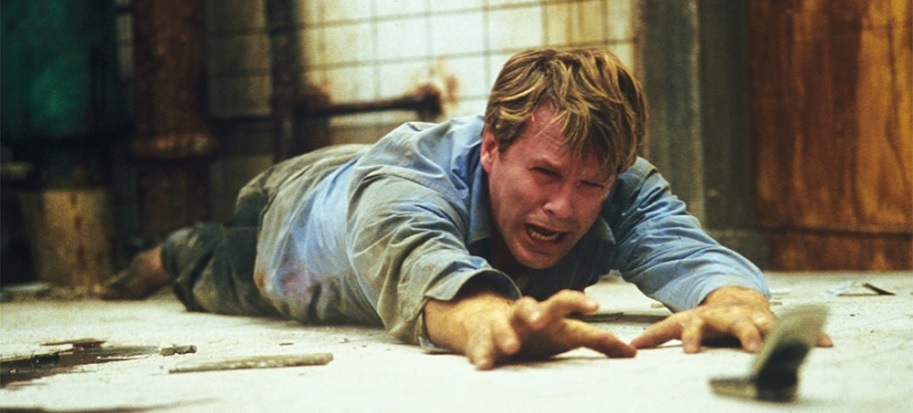
The Saw franchise has become so big and convoluted, you might forget that it all started with a simple little serial killer thriller. Director James Wan and screenwriter Leigh Whannell came up with an idea they could bring to the screen for very little money: two men trapped in a room with chains on their ankles and hacksaws at hand. Then they built a fascinating story around those two men. The story of the Jigsaw Killer, who forces victims to play dangerous “games” to decide their fate. Most of them don’t survive. There’s also a mother and daughter being held at gunpoint, an obsessed detective chasing the wrong suspect, and a Jigsaw survivor who is grateful for the experience. And a jaw-dropping twist. Even if no sequels had ever been made, we’d still be talking about Saw as a classic thriller along the lines of Seven.
Final Thoughts
The Saw franchise starts as a tight, inventive thriller, peaks early with Saw II, then spirals into increasingly convoluted sequels before finding new life with Saw X. While later entries lean too heavily on timelines and twists, the series at its best delivers clever concepts, memorable traps, and one of horror’s most iconic villains.
Saw Movies Comparison
| Movie | Rank | Strength | Weakness |
|---|---|---|---|
| Saw | 1 | Original concept, twist | Low budget limits |
| Saw II | 2 | Expands concept | Less tight than original |
| Saw X | 3 | Character focus | Still part of the messy timeline |
| Spiral | 4 | Standalone story | Weak villain |
| Saw VI | 5 | Social commentary | Hoffman fatigue |
| Saw III | 6 | Emotional weight | Extremely bleak |
| Saw IV | 7 | Mythology expansion | Overly convoluted |
| Saw V | 8 | Strong moments | Dull pacing |
| Jigsaw | 9 | New attempt | Repetitive formula |
| Saw 3D | 10 | Big scale | Messy execution |
The post Saw Movies Ranked: From Worst to Best appeared first on JoBlo.


No comments:
Post a Comment