

Religious horror has always been one of the most powerful subgenres in film, as it taps into primal fears of faith, evil, and the unknown. From demonic possession and Satanic conspiracies to fallen angels and spiritual crises, these films explore what happens when belief systems collide with terror.
Below is a curated ranking of the most essential religious horror films, blending classic masterpieces with modern entries.
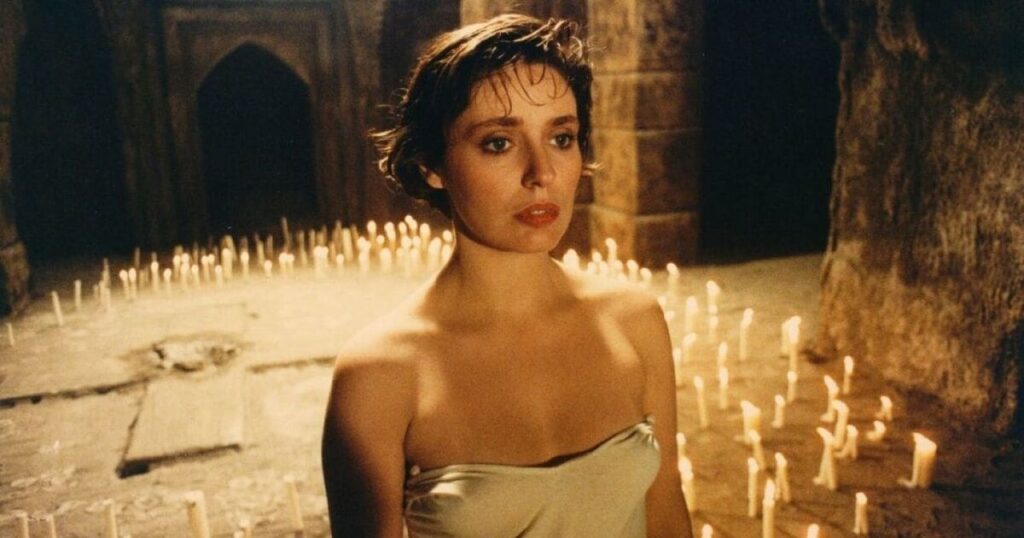
Honorable Mention: The Church (1989)
Why It’s Essential: A chaotic, visually striking slice of Italian religious horror that embraces pure madness over coherence
Subgenre: Demonic / Gothic Religious Horror
What It’s About:
A group of people become trapped inside a Gothic cathedral built over a mass grave, where ancient demonic forces begin to resurface and unleash terror.
Italian director Michael Soavi is most recognized, with good reason, for his superb 1994 zombie joint Cemetery Man, but for our purposes here, his 1989 cult-debacle The Church (a.k.a. Demons 3) needs to be brought to light. Why? It’s off-the-wall insanity, that’s why! A good film? A bad film? Who the hell knows? Uneven describes it best. What else do you expect with 8 writers credited? For those who missed this Argento-inspired tale about a 12th century demonic scourge plaguing people trapped in a Gothic cathedral, it’s everything you’d expect from a exorbitant Italian schlock-fest. Zanily energetic, grandly grue-filled, shamelessly unoriginal, The Church is a much-welcomed dose of cartoonish levity. Attend The Church at least once if you haven’t already!
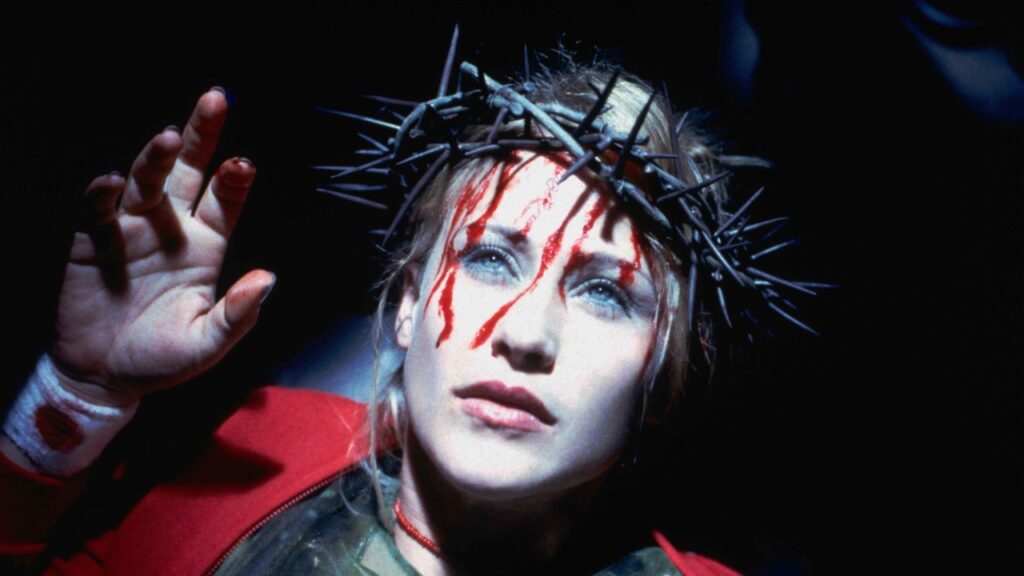
10. Stigmata (1999)
Why It’s Essential: A wildly stylized and controversial take on faith, possession, and religious conspiracy
Subgenre: Possession / Religious Conspiracy Horror
What It’s About:
A young woman begins exhibiting the wounds of Christ, drawing the attention of a Vatican investigator as supernatural forces spiral out of control.
I can’t say Rupert Wainwright’s Stigmata is a terribly good film, but part of its fun rests in how absolutely absurd it’s theological viewpoint is sermonized. Now, I’m no expert on the matter… far from it. But when you can contract a Stigmata from a rosary like it were a virus, it doesn’t take a priest to know something’s afoul. Unless, of course, you’re Gabriel Byrne and Jonathan Price! Y’all know what’s up. When Father Kierman (Byrne) is dispatched in Brazil to vet and suss the mysterious Stigmata wounds of Frankie Paige (Patricia Arquette), an inexplicable stretch of wildly entertaining phenomena occurs. Stylistically, the film has the subtlety of a jackhammer. At times charged with a frenzied MTV style, the film soaked in cold blues and hot firelight. Maybe it’s my love of Patty Arquette or seeing capable actors bob and weave through dubious material, but Stigmata is somewhat of a guilty pleasure.
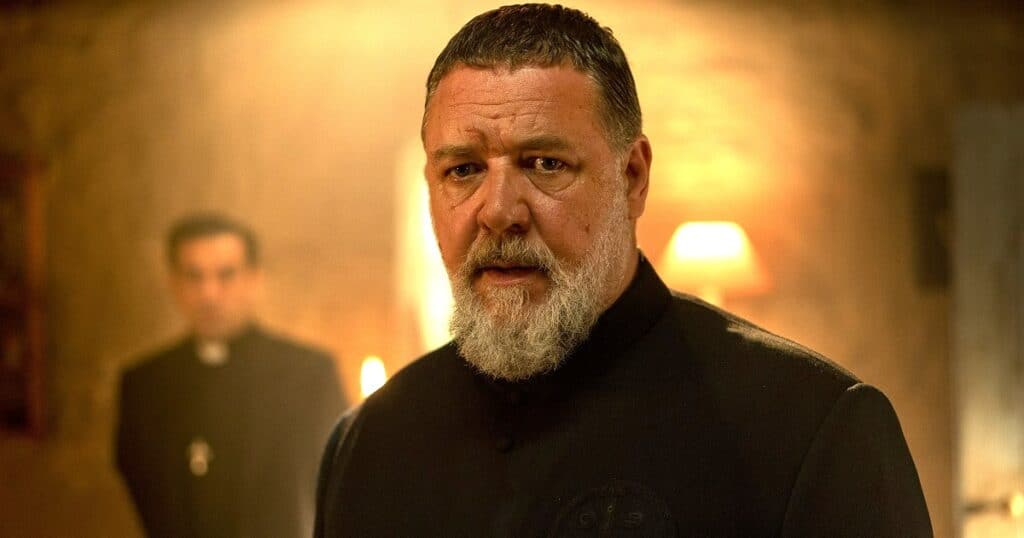
9. The Pope’s Exorcist
Why It’s Essential: A modern exorcism film elevated by a larger-than-life lead performance
Subgenre: Possession / Exorcism Horror
What It’s About:
A Vatican priest investigates a young boy’s possession, uncovering deeper secrets tied to the Church itself.
Exorcism movies tend to follow a familiar playbook, and The Pope’s Exorcist doesn’t exactly reinvent it, but what it does have is Russell Crowe going all-in as real-life Vatican exorcist Father Gabriele Amorth, and that’s half the fun right there. Sure, you’ve got the usual setup (a possessed kid, creepy old abbey, dark secrets bubbling up) but the film leans into its pulpy energy just enough to stay interesting, with Crowe chewing scenery, cracking wise, and battling demons like a grizzled gunslinger. It’s not breaking new ground, but sometimes sticking to the formula works, especially when you’ve got this much personality.

8. Prince of Darkness (1987)
Why It’s Essential: A unique blend of science, religion, and cosmic horror
Subgenre: Apocalyptic / Science-Religion Horror
What It’s About:
Scientists and priests investigate a mysterious substance that may represent the physical embodiment of evil.
First off, I’m not sure which is more unsettling: Donald Pleasance playing a priest, or the filthy 14th century poet goatee he was rockin’ in John Carpenter’s oft-overlooked chiller Prince of Darkness. Either way, there’s no way in hell (pun?) I’m leaving this bad boy out. When a mysterious canister is unearthed below an abandoned Los Angeles church, the contents of which (a green ooze) turn out to be the liquid manifestation of Satan. That is to say, anyone who comes into contact with this sludge is immediately morphed into a malefic minion of Lucifer himself. Made at the height of Carpenter’s career, the film isn’t his best, but with mainstays like Pleasance and Victor Wong doing work, a kickass theme song by Alice Cooper, and a thought-provoking stance on religion vs. science make Prince of Darkness more than a worthy contender.

7. Frailty (2001)
Why It’s Essential: A chilling exploration of faith twisted into fanaticism
Subgenre: Psychological / Faith-Based Horror
What It’s About:
A father claims divine visions are commanding him to destroy demons disguised as humans, dragging his sons into a terrifying moral spiral.
Who’d have thought that Bill Paxton, in his feature directorial debut, craft one of the most disturbing and bloodcurdling religious thrillers ever assembled? What makes Frailty so affective is how austere the material is played. These are very sincere performances, a risky choice that could have easily pushed the film over the top into laughable histrionics. Instead, everyone in the film seems to so wholeheartedly believe in what they’re doing and saying (Paxton in particular) – a nice allegory for faith in general – to the point where we the audience start to believe. It’s that powerful. Also, the snap denouement is both fresh and unpredictable. That’s a credit to both Brent Hanley’s script, the child actors (Matt O’Leary, Jeremy Sumpter) and support from Powers Boothe and Matthew McConaughey. A great film!
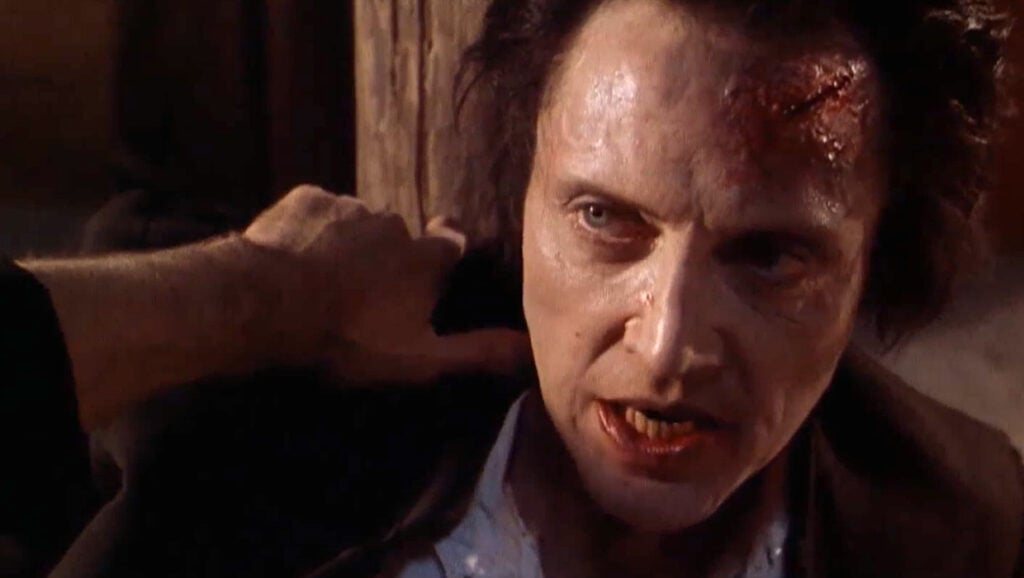
6. The Prophecy (1995)
Why It’s Essential: A dark, grounded take on angelic warfare
Subgenre: Angelic / Biblical Horror
What It’s About:
An angel wages war on humanity, seeking a soul that could tip the balance between Heaven and Hell.
As if Christopher Walken isn’t frightening enough on his own, when you put him side by side with the always intimidating Elias Koteas, Eric Stoltz, and an unheralded Viggo Mortensen as Lucifer – in a story about an unforgiving angel cast down to Earth to retrieve a human soul – frankly, just writing about this creeps me out! Sure, the original The Prophecy has been somewhat sullied by subsequent, often stultifying sequels (as is the case with a lot of flicks on this list), but Gregory Widen’s movie is a true force to be reckoned with. Why? It’s a stripped down, no frills, $8 million dollar pious-punch to the gut. The blistering performance of Walken as an evil angel consigned to inflicting the lord’s wrath is nothing short of spellbinding. Props to Virginia Madsen and Amanda Plummer for their excellent supporting work as well.
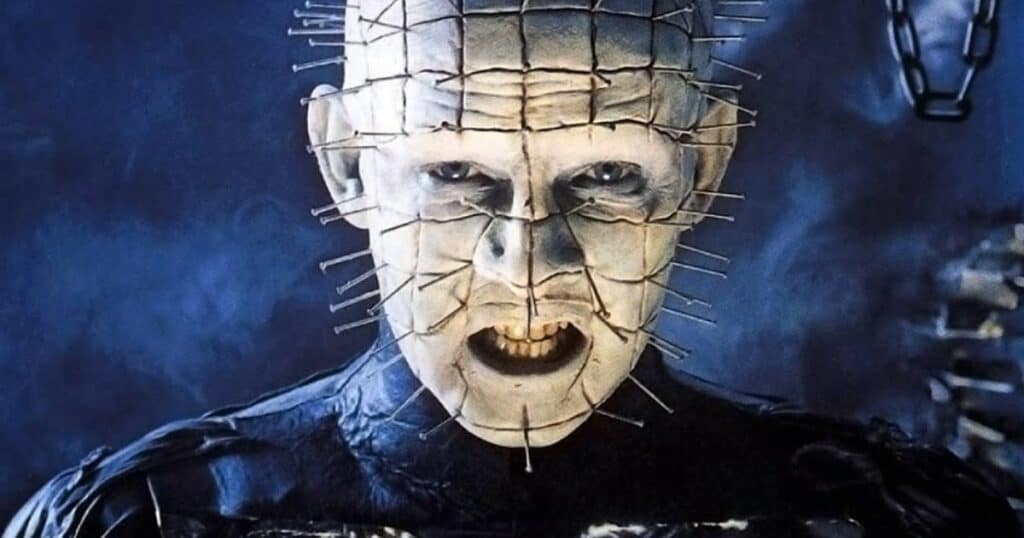
5. Hellraiser (1987)
Why It’s Essential: A mythology-heavy descent into a hellish dimension of pain and pleasure
Subgenre: Mythological / Hell Horror
What It’s About:
A puzzle box opens a gateway to a nightmarish realm ruled by the Cenobites, where suffering becomes something far more sinister.
Some would argue that this doesn’t belong on a “best religious horror movies” list and okay, Clive Barker’s 1987 S&M spookster Hellraiser does sharply depart from the church-chillers that comprise the better part of this list, but there’s no denying the sinister undertones and overt references to the netherworld. The word “hell” is in the title! Besides, is there any other flick that relies so heavily on its own mythology, its own course of chaos and disorder? Big ups to Barker and his intricate detail, his elaborate imagination, and his ability to create a hellish world so foreign to our own, yet so rooted in universal themes of good and evil, nobility vs. corruption. The Cenobites, in all their sadomasochistic servitude, bow to the feet of Pinhead (Doug Bradley) as any true minion of Mephistopheles would. Then there’s Kristy (Ashley Laurence), an innocent child thrust into a more than horrifying scenario. And of course Julia (Clare Higgins), torn between human sacrifice for her former lover and her desire to live a normal life. Hell indeed!
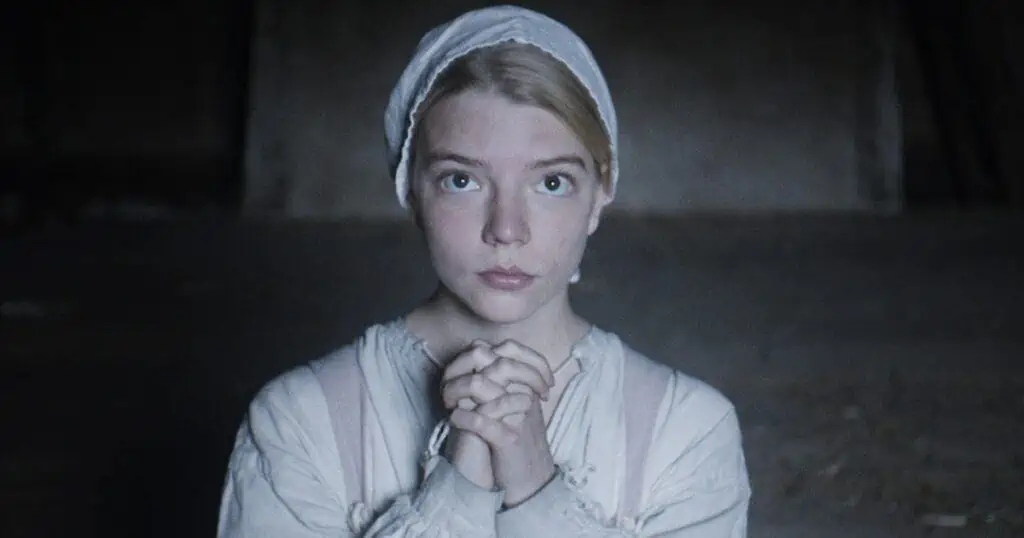
4. The Witch (2015)
Why It’s Essential: A modern masterclass in religious paranoia and psychological dread
Subgenre: Psychological / Religious Horror
What It’s About:
A Puritan family in 1630s New England begins to unravel as supernatural forces and religious hysteria take hold.
Robert Eggers’ The Witch ain’t your typical horror flick. No cheap jump scares, no easy thrills, just a slow-burn descent into religious paranoia so thick it almost suffocates. Set in 1630s New England, the film tracks a Puritan family tearing itself apart under the crushing weight of its own faith, where sin isn’t just feared, it’s inevitable. What makes this one hit so hard is how it turns religion itself into the source of dread, with every whispered prayer and shadowy corner causing the heebie-jeebies. Anchored by a breakout performance from Anya Taylor-Joy, this is less about what’s lurking in the woods and more about the darkness already inside the home.
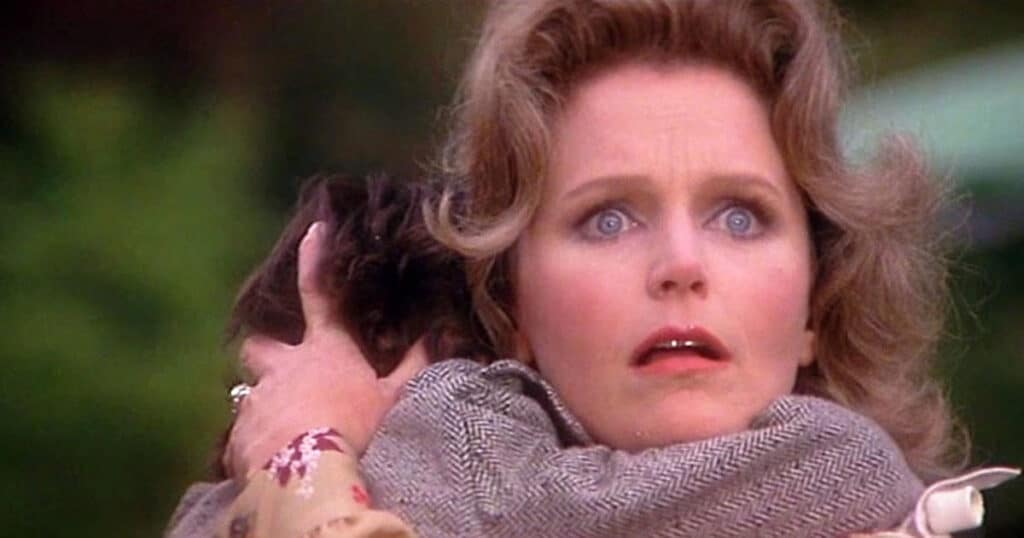
3. The Omen (1976)
Why It’s Essential: The definitive Antichrist horror story
Subgenre: Satanic / Antichrist Horror
What It’s About:
A couple discovers their young son may be the Antichrist, triggering a series of increasingly terrifying events.
Dick Donner may get the bulk of his recognition for directing such populist fare as Superman, Lethal Weapon, and The Goonies, but there’s no refuting that his deeply haunting work on the 1976 creeper The Omen – about a pristine American couple who discover their son is the literal Anti-Christ – is one of the man’s crowning achievements. With two extremely grounded performances by screen vets Gregory Peck and Lee Remick, a deliberate directorial pace born out of a patient, well plotted script by David Seltzer, and a downright soul-cringing score by Jerry Goldsmith, Donner’s film has held up over many decades as one of the (sub)genre’s untouchables.
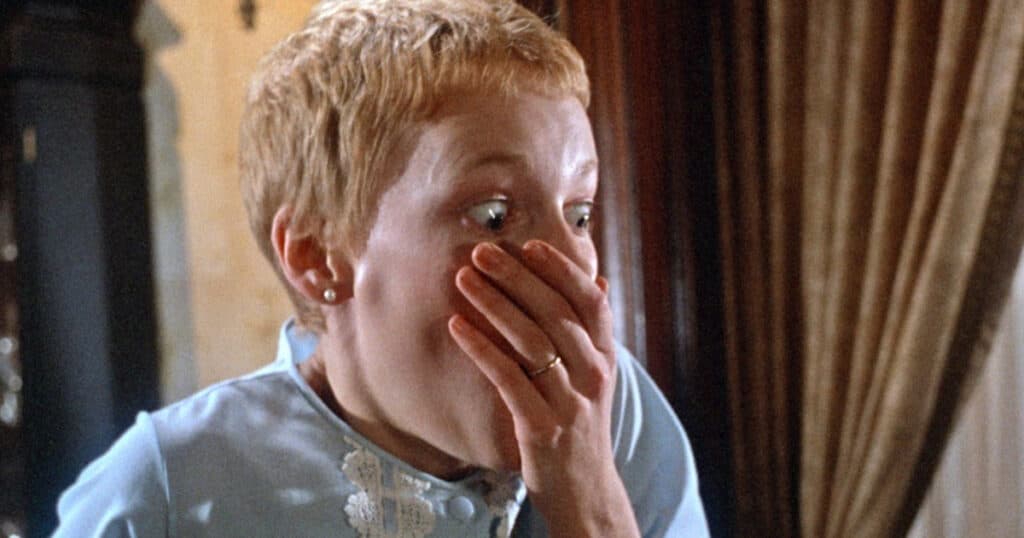
2. Rosemary’s Baby (1968)
Why It’s Essential: A masterclass in slow-burn satanic horror
Subgenre: Psychological / Satanic Horror
What It’s About:
A pregnant woman begins to suspect her neighbors and even her husband are part of a sinister cult with plans for her child.
Before Roman Polanski went off the rails, the dude was at the height of international filmmaking. Aside from perhaps Chinatown, one could argue his finest hour was the 1968 psycho-Satanic worship picture Rosemary’s Baby. The slow-burning tension, the slightly off-kilter tone, the great ensemble work, all of it converges to become, all these decades later, probably one of the five or ten best the entire horror genre’s ever seen.
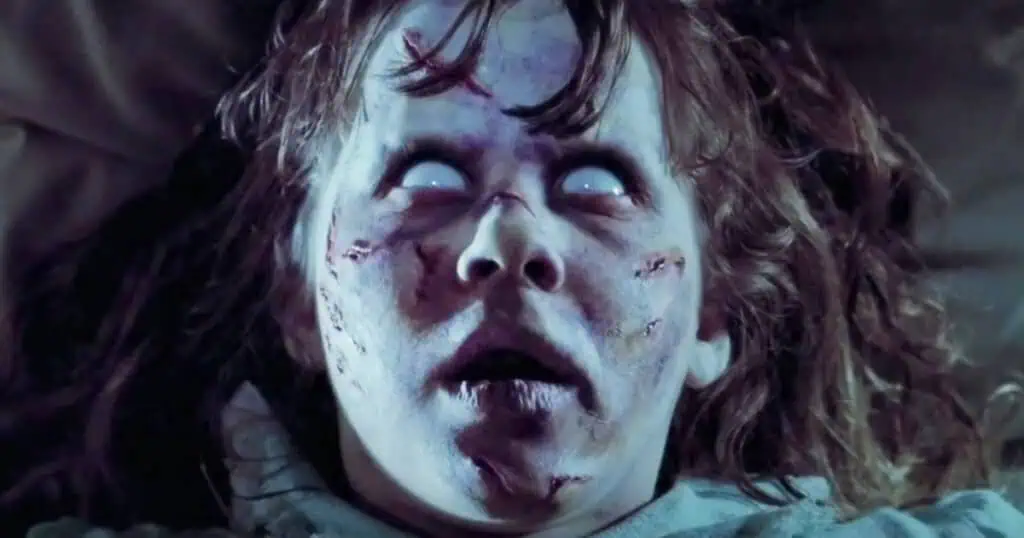
1. The Exorcist (1973)
Why It’s Essential: The definitive religious horror film ever made
Subgenre: Possession / Exorcism Horror
What It’s About:
A young girl becomes possessed, forcing two priests to confront faith and evil in a desperate exorcism.
Who the hell didn’t see this one coming? Seriously, William Friedkin’s 1973 masterwork is not only one of the best religious horror movies ever constructed, it’s one of the all time finest pieces of cinema, period! Crafted during the apogee of the 70s American film movement, the results speak for themselves. A true masterpiece!
FAQ
What is a religious horror movie?
A religious horror film is a movie that incorporates spiritual or theological elements (such as demons, possession, exorcisms, angels, or prophecy) into its central conflict.
What is the scariest religious horror movie?
Many consider The Exorcist the scariest due to its realism, performances, and intense depiction of possession, though films like The Omen and The Witch are also frequently cited.
Are religious horror movies based on real events?
Some are inspired by real cases or beliefs. For example, The Exorcist was loosely based on a documented exorcism, while others draw from religious texts, folklore, or historical superstition.
Why are exorcism movies so common in horror?
Exorcism stories combine several powerful fears (possession, faith, and the supernatural) into a single narrative, making them especially effective and widely appealing within the genre.
Why Religious Horror Works
Religious horror has stuck around for decades because it taps into fears that go deeper than most subgenres.
- It weaponizes belief systems
These stories draw from real-world religions, making the horror feel grounded and disturbingly plausible. - It explores the battle between good and evil
Whether it’s demons, angels, or the AntiChrist, the stakes are often cosmic and deeply personal. - It plays on fear of possession and loss of control
The idea that something can take over your body or soul is about as primal as horror gets. - It blurs faith and doubt
The best films in the genre force characters and audiences to question what they believe, and what happens if they’re wrong.
The post 10 Best Religious Horror Movies (Ranked and Explained) appeared first on JoBlo.


No comments:
Post a Comment